
Aiming for 6 Per Cent Growth, Purbaya Ensures 2027 Draft State Budget Deficit Maintained at 2.4 Per Cent
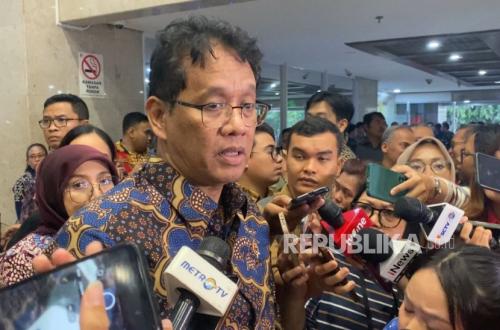
The government is targeting 6 per cent economic growth for Indonesia in 2027, while maintaining a budget deficit of 2.40 per cent of Gross Domestic Product (GDP). This target serves as the direction for economic and fiscal policy within the 2027 Draft State Budget (RAPBN).
Finance Minister Purbaya Yudhi Sadewa stated that the 2027 economic and fiscal strategy is designed to stimulate economic growth. This move aims to simultaneously increase public welfare amidst global uncertainty.
“By closely observing recent economic developments and future prospects, the direction of economic and fiscal policy for 2027 is designed to encourage higher economic growth while accelerating the improvement of public welfare,” said Purbaya during a Working Meeting with Commission XI of the House of Representatives (DPR RI) regarding the Introduction of Basic Assumptions in the 2027 Draft State Budget at the Parliament Complex, Senayan, Central Jakarta, on Tuesday (1/9/2026).
In the 2027 Draft State Budget, state revenue is planned to reach Rp 3,426 trillion, while state expenditure is set at Rp 4,097.2 trillion. With this structure, the budget deficit is maintained at 2.40 per cent of GDP. Purbaya noted that achieving 6 per cent growth requires policy synergy between the government, Bank Indonesia, the financial sector, the business world, and regional governments.
“Strong synergy and collaboration are required between fiscal and monetary policies, the financial sector, and the business world so that each instrument can work optimally, proportionally, and mutually reinforce one another,” said the former Chairman of the Board of Commissioners of the Indonesia Deposit Insurance Corporation (LPS).
According to Purbaya, the government will also maintain macroeconomic stability, particularly through inflation control to preserve public purchasing power and consumption. The government is also striving to keep interest rates competitive to support financing and investment.
From a fiscal perspective, he added, the government will continue reforms through the optimisation of state revenue, efficiency and refocusing of spending, as well as more productive and result-oriented budget allocation. Deficit financing will also be directed to be carried out cautiously and sustainably.
Furthermore, Purbaya stated that the government is encouraging strategic sectors, including oil and gas. An increase in oil and gas lifting will be achieved through the reactivation of inactive wells, accelerated development of reserves, the use of technology, and strengthened supervision.
The growth target is accompanied by welfare objectives. The government targets a poverty rate of 6-6.5 per cent, an open unemployment rate of 4.3-4.87 per cent, and a Gini ratio of 0.362-0.367. The Human Capital Index is targeted to rise to 0.575.
“With the right economic strategy and strong fiscal policy, the government is optimistic that the Indonesian economy in 2027 will be able to grow by 6 per cent with inflation remaining controlled,” said Purbaya.