
AIGCC: Indonesia’s Power-Sector Transition Direction Has Global Implications
Jakarta (ANTARA) — The Asia Investor Group on Climate Change (AIGCC) says the direction of Indonesia’s energy transition will not only determine the future of the country’s power sector, but also influence the energy transition in Southeast Asia and have global implications.
AIGCC chief executive Rebecca Mikula-Wright said Indonesia was one of Asia’s most consequential power-sector transition markets, making implementation of its policies a focus for investors.
“Indonesia is one of Asia’s most consequential power-sector transition markets. The direction of the transition here will influence the direction of the transition across Southeast Asia and have global implications,” Rebecca said in an official statement received in Jakarta on Monday.
AIGCC’s latest report, Investor Expectations for Power-Sector Transition Roadmaps in Asia, features Indonesia as one of three case studies, alongside South Korea and Malaysia.
The report highlights investors’ need for power-sector transition roadmaps that do more than set targets: they must also provide clarity on implementation and investment certainty.
According to the report, Indonesia is strategically positioned as ASEAN’s largest economy, faces rapidly growing electricity demand and remains reliant on coal. At the same time, the country has renewable energy potential and clean-energy supply chains that could support the transition.
The development of the critical minerals industry also creates investment opportunities, but could increase electricity demand from industry and the use of captive power plants.
Rebecca said Indonesia already had a strong foundation for electricity-sector planning through the National Electricity General Plan (RUKN), the Electricity Supply Business Plan (RUPTL) and the power-sector energy transition roadmap.
AIGCC said the main challenge was no longer the absence of plans, but aligning the various policies and translating them into projects that could attract financing.
The 2025–2034 RUPTL estimates investment needs of US$188 billion, around 73 per cent of which is expected to come from private capital. Investors therefore need clarity on project procurement mechanisms, revenue sources, risk allocation and grid readiness.
“About 73 per cent of the US$188 billion in investment required under the RUPTL is expected to come from private capital. This means the plan’s success depends heavily on investors being ready to participate,” she said.
AIGCC also highlighted the importance of clarifying the direction of the transition away from coal-fired power plants, including captive plants, and ensuring that technology and project implementation are ready to proceed as planned.
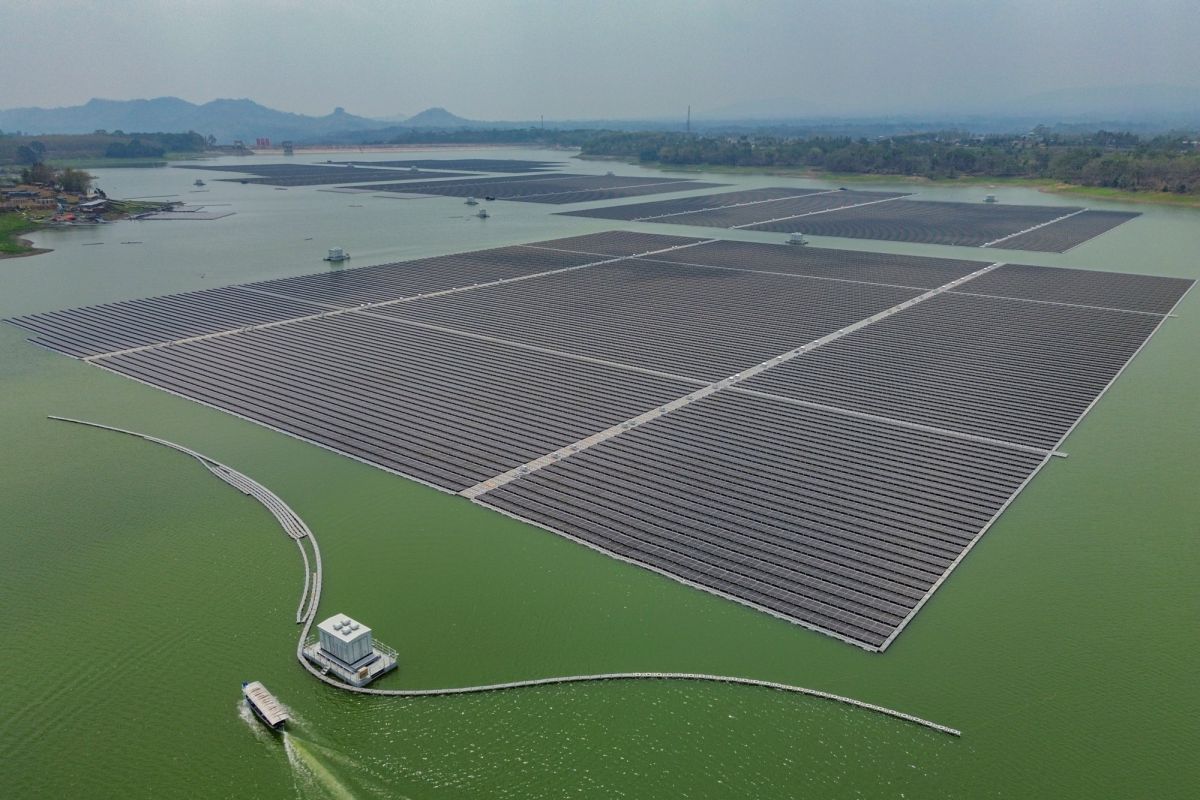
AIGCC welcomed the programme to build 100 gigawatt-peak (GWp) of solar power capacity as a signal of Indonesia’s direction for electricity-sector development. However, investors will be watching how the programme moves from announcement to implementation.
AIGCC said a clear power-sector transition roadmap was important for attracting large-scale private investment to support an accelerated energy transition in Indonesia.
Clarity on financing needs, the readiness of the project pipeline and risk allocation are crucial to turning energy-transition targets into actual investment.