
AI Use Surges as Deepfakes, Bots and Disinformation Mark Israel’s Election
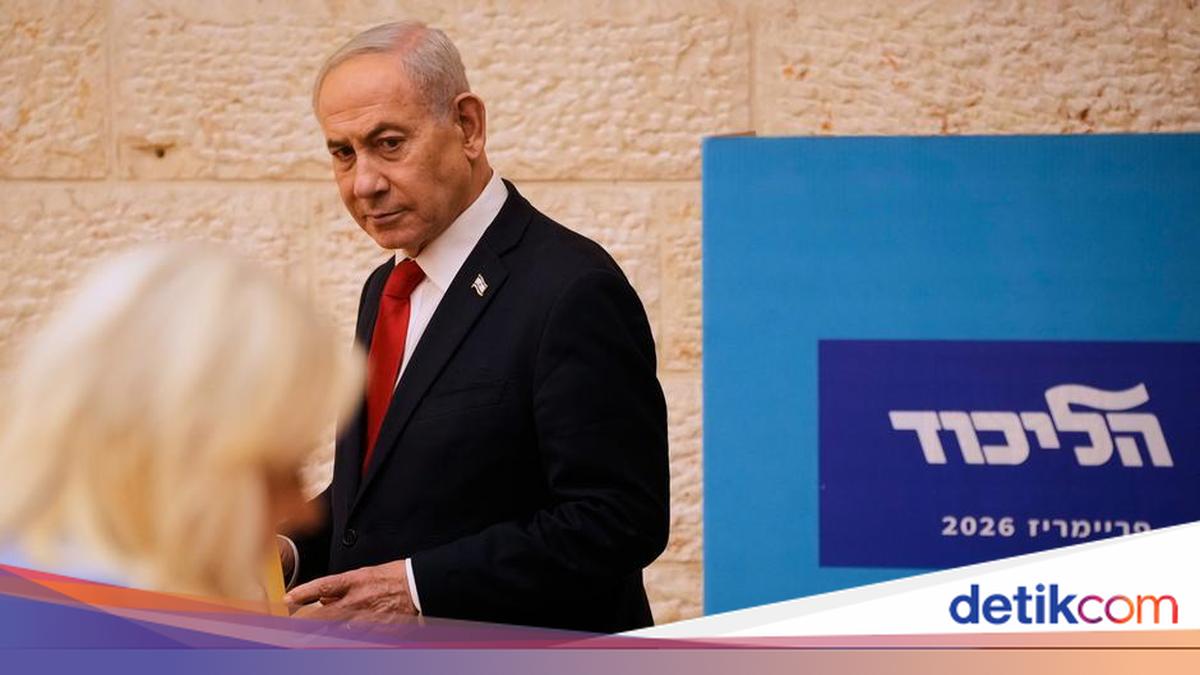
For the first time, artificial intelligence is being used on a large scale in an Israeli election. Deepfakes and campaign bots have consequently flooded social media, while foreign monitors warn that disinformation could affect the final result.
In a 19-second video posted on X, Gadi Eisenkot, a candidate for prime minister, appears standing with his arms outstretched and a broad smile. In slow motion, he runs across a field towards a figure resembling his son, wearing a T-shirt bearing the words “Israeli Unity”.
But instead of embracing the young man, Eisenkot walks past him and hugs Mansour Abbas, a prominent Arab politician who leads the Ra’am party and is also contesting the election.
The video was posted from Prime Minister Benjamin Netanyahu’s account. Polls show Netanyahu and Eisenkot, a former chief of staff of the Israel Defense Forces (IDF), in a close contest for government. The AI-generated video appears designed to exploit anti-Arab sentiment, one of the main themes of Netanyahu’s campaign.
The clip was viewed more than a million times and triggered a wave of public anger. Eisenkot’s son was killed in 2023 during the Israel-Hamas war.
According to Ze Be AI, a research project at the Open University of Israel monitoring AI use in the 2026 legislative election campaign, the video was just one of more than 1,800 AI-based posts produced by Netanyahu’s Likud party by mid-October. That amounted to about a quarter of all Likud social media material analysed by the research team.
An election that could change Israel
On 27 October, Israelis will decide the country’s political direction in an election that could end Netanyahu’s rule or strengthen his position for years to come. Political scientists have begun describing the contest as Israel’s first AI election.
AI technology has entered almost every aspect of campaigning, from sensational videos intended to provoke controversy and automated calls to voters, to the spread of bot networks on social media.
“In certain scenarios, right before polling day, AI could be used to create a controversy that might shift the election result,” said Anat Ben-David, a media researcher leading the Ze Be AI project.
AI videos enter the mainstream
Since late July, Ben-David and her team have tracked all social media content published by Israeli politicians. By mid-October, they had collected more than 44,000 posts from Facebook, Instagram, X and TikTok. They found that more than 14 per cent of campaign material used AI in some form.
The most common approach was a hybrid model, in which AI was used for only some elements of an advert, such as images, music, subtitles, logos or even entirely synthetic deepfakes.
Smaller parties had higher proportions of AI-generated content. But in terms of volume, Likud was far ahead of its rivals. It was followed by the left-wing Democrats party, then Eisenkot’s Yashar party, though by a considerable margin.
In July, Israel’s Central Elections Committee required all campaign material created or manipulated using AI to be labelled. Beyond that rule, however, there are almost no specific restrictions.
“There is no AI Act, no Digital Services Act, and our privacy laws are very outdated,” Ben-David said. “As a result, there are various uses of AI that might be impossible in Europe.”
Old political games, new technology
Some of Israel’s most prominent political figures have also used AI in their campaigns.
Democrats party leader Yair Golan tried to ride an internet trend. In a video labelled as AI-generated content, he sits beneath a ceiling fan. Each time the blades turn, his clothes change: from a military uniform to a T-shirt bearing the popular slogan “Bring Them Home Now”, referring to the Israeli hostages in Gaza, and then to a formal suit.
Finance Minister Bezalel Smotrich posted a photorealistic AI video in September showing Israel’s attorney-general and Supreme Court judges being arrested during an anti-government demonstration. Attorney-General Gali Baharav-Miara has frequently clashed with the governing coalition.
Greater controversy erupted after National Security Minister Itamar Ben-Gvir shared an AI video depicting Palestinians being pushed along a conveyor belt towards a building resembling a concentration camp. The post drew widespread condemnation. Germany’s Foreign Ministry called it “absolutely unacceptable” and “disgusting”.
Even so, the election authorities have shown a willingness to act. In July, the head of the elections committee ordered Smotrich to remove an unlabelled AI video considered misleading to the public.
A new generation of automated calls
AI is being used not only in adverts and deepfakes, but also to contact voters directly.
Some Israelis have received sophisticated AI-powered automated calls, a significant advance on older-generation robocalls. Nitsan Yasur, a disinformation researcher at the Israel Internet Association, shared a four-minute recording of a call with DW.
During the conversation, a voice introduced itself as Danielle, a survey interviewer from an Israeli polling organisation. When Yasur asked whether she was speaking to a human, the voice replied: “There is no human agent on this line,” before continuing with the survey questions.
The bot was able to answer Yasur’s questions but repeatedly steered the conversation back to his political preferences. Notably, after being asked five times who had commissioned the survey, the system never gave an answer.
For Tehilla Shwartz Altshuler, a senior researcher at the Israel Democracy Institute, these advances show how AI has changed campaign practices.
“You no longer need real people to make calls one by one, which is obviously limited by time and capacity,” she said.
Influencing chatbot answers
Some Israelis are also beginning to consider AI as a source of information when deciding how to vote.
A survey by the Israel Internet Association found that around a quarter of respondents would be willing to use an AI chatbot or another online service to help inform their choice before voting.
This has raised new concerns about what is known as Generative Engine Optimisation (GEO): the creation of online content deliberately designed to be picked up by AI chatbots and influence the answers they give users.
The Israeli government itself has used this kind of practice. Documents filed under the United States’ Foreign Agents Registration Act show that the government previously paid a US company to build websites supplying pro-government content to large language model (LLM) systems, with the aim of prompting AI chatbots to produce answers more favourable to Israel.
“The same industry could now potentially be used domestically to influence the election,” Shwartz Altshuler said.
Bot networks supporting Netanyahu
Alongside fake content, there is also the phenomenon of fake audiences.
Israeli media-monitoring company Scooper said it had found a network of inauthentic accounts actively boosting Netanyahu’s image on social media. On X, more than 1,000 new accounts appear each day and immediately follow the prime minister’s account. Netanyahu’s Instagram follower count has also risen sharply in recent weeks.
According to Scooper research manager Gil Feldman, about 70 per cent of accounts sharing Netanyahu’s posts on X are based outside Israel and display bot-like characteristics. The research team identified them through indicators including uninterrupted activity around the clock, very recent account creation dates and missing profile pictures.
Netanyahu is not the only one. Monitoring group FakeReporter also found a bot campaign linked to Ben-Gvir’s camp, although the minister’s office denied involvement. The organisation identified more than 100 accounts using AI-generated identities and images to attack Smotrich and several other figures.
Bot networks are not new. But AI has made them much cheaper, faster and easier to operate.
Because Israeli society is known for adopting new technology quickly, Shwartz Altshuler sees the country as a global laboratory for understanding how AI will shape the future of democracy.
“The entire political propaganda machine is changing completely,” she said.