
AI Triggers Fake Interview Crisis as White-Collar Job Hunt Gets Harder
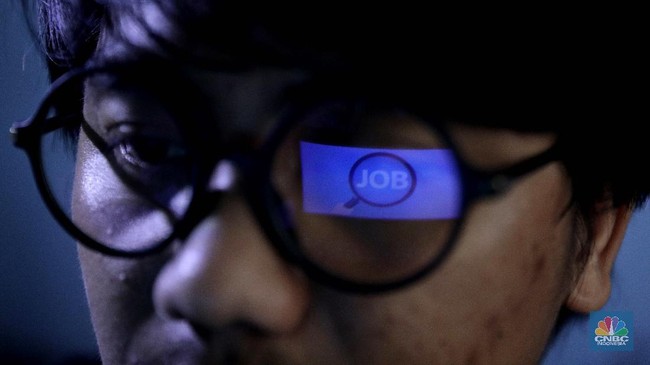
For decades, corporate recruitment favoured candidates with polished resumes and well-structured interview answers. However, the advent of generative artificial intelligence (AI) is now changing the game. Anyone can now refine their resume and interview responses in seconds, triggering a new crisis in recruitment at a time when unemployment is soaring, layoffs are continuing, and finding an office job is increasingly difficult. The ability to appear convincing in an interview has become easily manipulated, even for free, thanks to AI technology.
Recent operational research based on a study of 120 talent acquisition leaders from 87 companies, along with an analysis of 6,380 interview recordings, reveals systemic vulnerabilities in the corporate recruitment pipeline. The damage is occurring at two main points in the hiring funnel. First, at the initial stage, documents like resumes and cover letters have lost their value as indicators of qualification because they are so easily optimised with AI. Second, remote video interviews, long considered the most powerful test of authenticity, can now be manipulated in real-time using AI tools.
For C-suite executives, this is not just an HR administrative issue but a strategic risk. If the initial filters fail, companies risk hiring candidates who are merely skilled at gaming the selection process rather than those most competent to do the job. Research firm Gartner projects that by 2028, one in four candidate profiles will be fake. Global giants like Google and McKinsey have reportedly started reinstating in-person interviews to stem this tide of manipulation. The cost of a bad hire is significant; a SHRM 2025 report notes the average cost-per-hire for non-executive roles is US$5,475, while for executive roles it reaches US$36,000. Gallup estimates the cost of replacing an employee can be 1.5 to 2 times their annual salary.
The use of AI tools during live video interviews is becoming rampant. Tools like Final Round AI and Parakeet can feed answers instantly to a candidate’s screen without being detected by older camera systems. An analysis of 6,380 interview sessions found the highest suspicion of AI use in technical positions. For non-technical roles like sales, the suspicion rate was under 10%, but it jumped to nearly 40% for mid-level tech positions and reached 60% for new graduate software engineer roles. Standard behavioural questions are easily answered by AI due to their uniform patterns, whereas adaptive reasoning interviews, where the interviewer continuously probes the candidate’s logic and decision-making trade-offs, are far harder to manipulate.
To address this talent quality crisis, recruitment leaders are urged to adopt five strategic changes: separate authenticity checks from skill assessments to ensure candidates can think independently; replace standard behavioural questions with adaptive case studies requiring spontaneous reasoning; allow AI use in later stages to test a candidate’s ability to evaluate AI output, spot errors, and correct logic; prioritise intellectual honesty by encouraging candidates to admit uncertainty rather than deliver polished answers; and mandate in-person interviews for crucial or senior roles as a final verification step.