
AI Technology Does Not Take Over Researchers' Scientific Responsibility, Expert Says
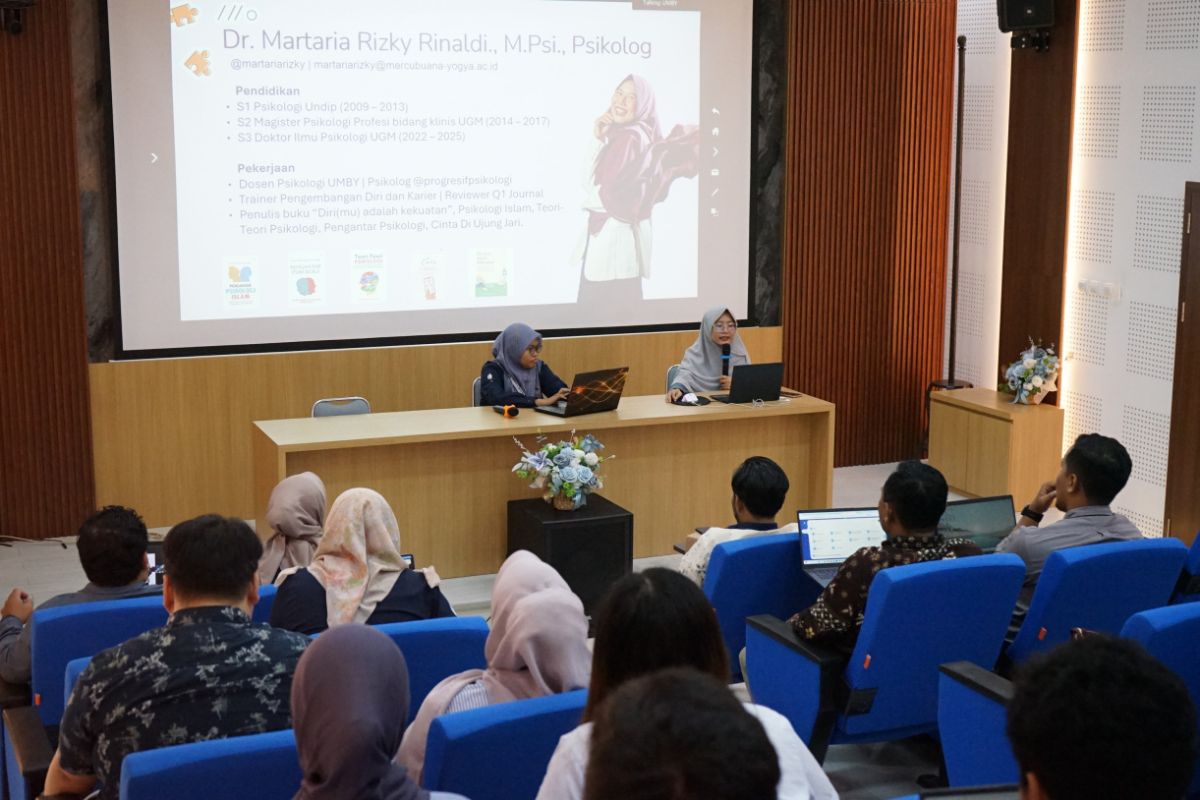
Academic and researcher from Mercu Buana University Yogyakarta, Martaria Rizky Rinaldi, has stated that artificial intelligence (AI) technology does not take over the scientific responsibility of a researcher conducting a study. “The presence of artificial intelligence does accelerate research work, but this technology in no way takes over the scientific responsibility of a researcher,” she said in a statement in Yogyakarta on Friday.
During a workshop and technical guidance session titled “Academic Writing with AI: Ethical Use of Artificial Intelligence to Improve the Quality of Scientific Publications”, Martaria highlighted the significant paradigm shift in research between traditional methods and AI-assisted methods. “At the literature search stage, where researchers previously had to search for articles one by one manually, AI now actively helps develop keywords and map literature so that the search is much broader and more structured,” she said.
In terms of literature comprehension, researchers no longer need to read entire articles manually to find the essence of the writing, because AI can filter initial information and provide quick summaries, allowing researchers to know which articles are relevant for deeper review. Even at the writing and revision stage, artificial intelligence is capable of evaluating structure and readability from the outset and providing real-time feedback as the manuscript is developed. “This saves a lot of time compared to the old way, where language revisions were usually only done after the entire manuscript was typed up,” she said.
Academic from Universitas Muhammadiyah Magelang, Muji Setiyo, stated that the manuscripts most sought after by editors are those whose discussions can refute or update previous findings. “AI is not here to replace the researcher’s thoughts, but to make technical work more efficient. However, researchers must not forget to always carry out human verification or manual fact-checking,” he said.
According to him, before compiling a publication, a researcher must be able to answer five key formulations in their manuscript and must be able to explain the strong reasons behind conducting the research and articulate the scientific concerns driving the writing of the article. “Researchers are required to describe their research methods by highlighting the novelty of the approach compared to previous studies. Ultimately, all ideas must lead to the researcher’s ability to present a new story and perspective,” he said.
Head of the Research and Community Service Institute (LPPM) at UMBY, Nanang Khuzaini, said the workshop was initiated to straighten out academics’ perceptions regarding the role of artificial intelligence in scientific writing. “This is to provide an understanding of how we use AI appropriately in scientific writing. There may be some lecturers who consider AI unethical to use, whereas in fact AI is a tool that we can utilise,” he said. Through the event, he expressed hope that lecturers can optimise artificial intelligence to boost the quantity and quality of scientific publications with dignity and always uphold the academic code of ethics.