
AI Restores Dragon Jars in Two Months, a Task That Took 40 Years
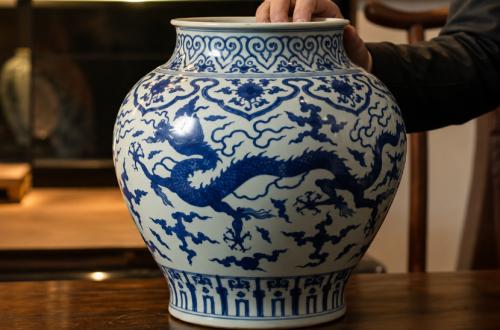
Thousands of porcelain fragments buried for centuries beneath the former Chinese imperial kiln complex are beginning to find their matches. Researchers in Jingdezhen, Jiangxi Province, are using artificial intelligence (AI) to speed up the restoration of dragon vases, one of the most difficult types of large porcelain to produce and restore.
The technology helps researchers sift through more than 15,000 fragments found in a Ming Dynasty stratum at the Jingdezhen imperial kiln site. Work that previously relied heavily on human observation and memory is now reinforced by algorithm-based matching and a database of each fragment’s characteristics.
Xinhua news agency reported on Wednesday (29/7/2026) that the Jingdezhen Imperial Kiln Institute team spent nearly 40 years manually matching and restoring three dragon vases. After adopting AI, the team is said to have restored the equivalent of one and a half vases in less than two months.
The comparison shows a dramatic acceleration at the matching stage. However, the report does not specify whether the scope of work, level of completion, and conservation stages were entirely identical between the manual and AI-assisted restorations. AI is mainly used to identify possible connections between fragments, not to take over the entire restoration process.
The breakthrough came only days after the Jingdezhan Craft Porcelain Industrial Site was officially inscribed on the UNESCO World Heritage List on Saturday (25/7/2026), during the 48th session of the World Heritage Committee in Busan, South Korea. UNESCO recorded the site as a serial heritage property comprising five components, reflecting the development of porcelain production from the 10th to the 19th century.
Only Five in 100 Made the Cut
Dragon vases are large porcelain vessels made specifically for the imperial court during the Ming Dynasty (1368–1644) and the Qing Dynasty (1644–1911). Their name derives from the dragon motifs depicted moving among clouds on their walls.
Their large size made the shaping process intricate. The porcelain clay had to be precisely formed, dried without cracking, painted, glazed, and then fired at high temperatures with a considerable risk of deformation.
According to the Xinhua report citing Jingdezhen researchers, only about five out of every 100 finished vases passed imperial quality inspection. Vases that were cracked, deformed, off-colour, or judged below standard had to be destroyed and buried near the production site. Rejected items were forbidden from circulating among the public.