
AI reads X-rays, hunting TB before it is too late
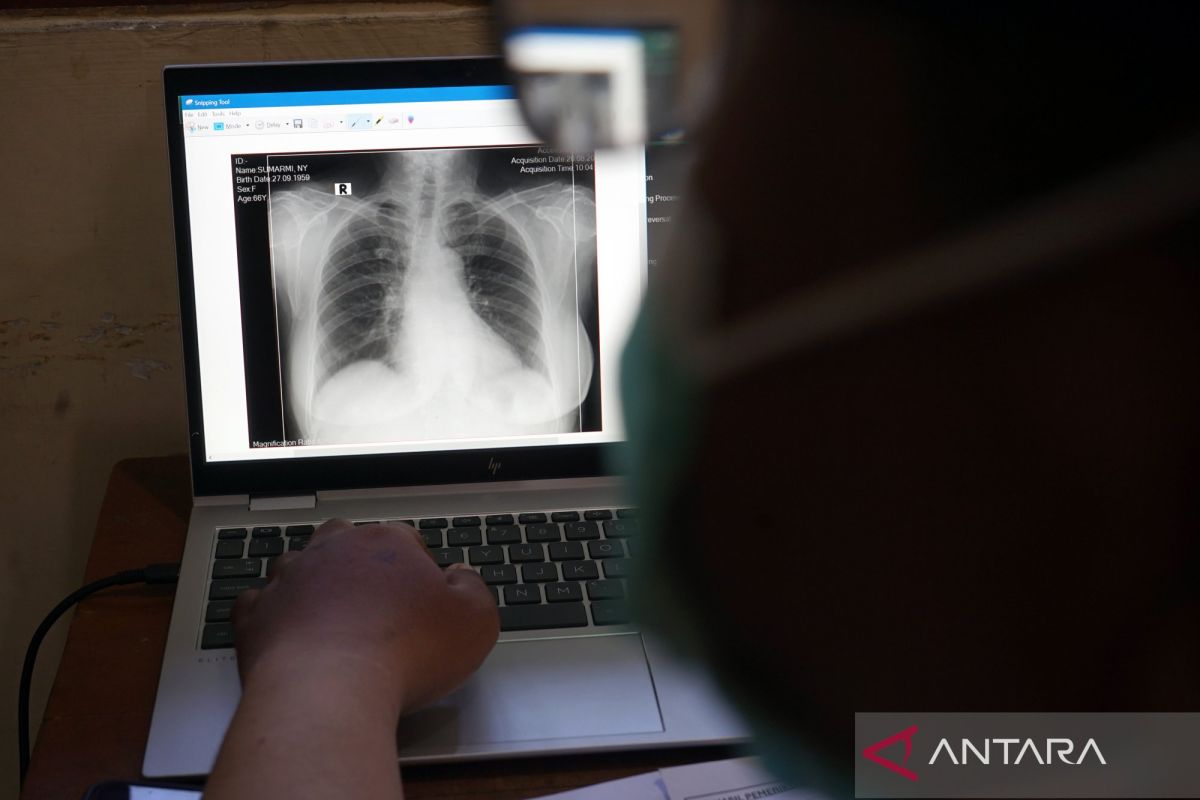
Chest X-rays once waited for human eyes. Now, artificial intelligence (AI) can flag suspicious lung shadows suggestive of tuberculosis in a very short time. However, Indonesia’s biggest problem is not merely how quickly a machine reads images, but how quickly the health system turns that suspicion into diagnosis, treatment, and prevention of transmission.
Tuberculosis (TB) often works in silence. Therefore, TB control must not only wait for patients to come forward after prolonged coughing or worsening condition. The health system must be able to find the disease before the disease finds more victims.
The Global Tuberculosis Report 2025 estimates that Indonesia accounted for around 10 percent of the world’s TB cases in 2024, the second largest after India. WHO previously estimated that around 1.09 million people had TB in Indonesia in 2023, with an incidence of around 387-388 cases per 100,000 population.
Amid these challenges, TBScreen.AI presents a new possibility. This computer-aided detection (CAD) system based on artificial intelligence was developed by a team from Universitas Gadjah Mada (UGM) together with partners to assist TB screening through chest X-rays. In many places, X-ray machines are available, but radiologists or trained doctors are not necessarily at the same location.
AI can provide a radiological suspicion score so that people requiring further examination can be prioritised. The score is not a percentage of certainty that someone has TB and must not be treated as a diagnosis.
Experience in correctional facilities demonstrates the importance of active case-finding. Occupancy density, inadequate ventilation, and health factors make prisons and detention centres high-risk settings. In 2023, the TB Control Programme in correctional facilities recorded 6,039 people diagnosed with TB through routine screening and various active case-finding approaches, including chest X-rays.
In 2024, when case-finding relied more heavily on symptom screening, the number of detected cases was much lower. When X-rays were again applied more comprehensively in 2025, 7,972 TB cases were found.
The year-to-year figures should not be read as direct changes in incidence because coverage, population, and screening methods differ. That is precisely the lesson: the number of cases found is influenced by how actively and sensitively the system searches for them.
Source: jawawa.id (https://jawawa.id/newsitem/ai-reads-x-rays-hunting-tb-before-it-is-too-late-1787824496)
Originally published by Antara (Indonesian) (https://www.antaranews.com/berita/5713629/ai-membaca-rontgen-memburu-tbc-sebelum-terlambat), translated from Indonesian