
AI ‘Pets’ Offer Comfort to Lonely People in China
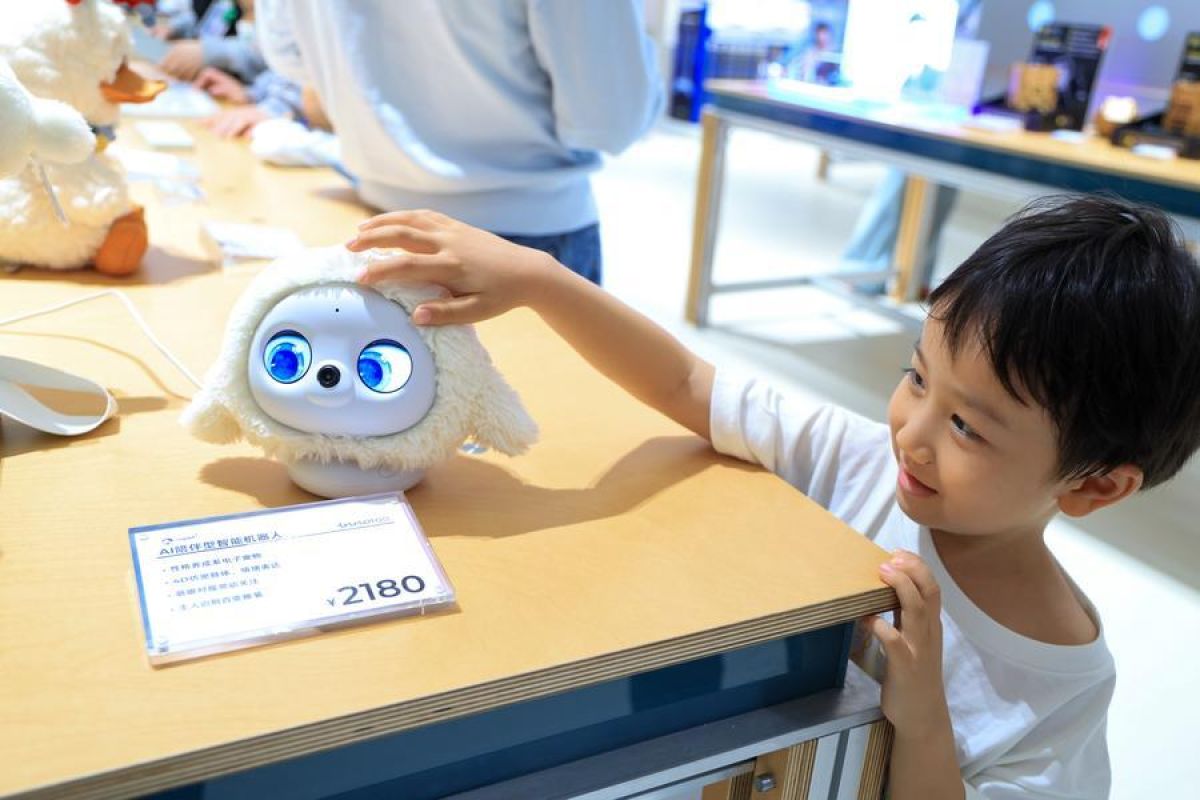
Beijing (ANTARA) – While many people choose dogs and cats to meet their emotional needs, Chen Yuechong decided to adopt three unusual companions: palm-sized artificial intelligence (AI) “pets”.
Chen chooses their clothes and accessories to match the preferences listed on the toys, and bought them a small wooden bed beside her own so that her Fuzozo toys can sleep comfortably at night.
The toys often say they want to return to their fictional home planet, prompting Chen to pull the trigger on a water pistol. To keep them happy on Earth, she made a small clay playground, complete with ducks and other props that her companions can pretend to shoot with water.
Chen’s affection for them began with a simple wish: to have someone who would listen. There were things she did not know how to tell older people, and she did not want to burden her friends with all her negative emotions.
After trying various AI chatbots, Chen realised what she really wanted: a companion that could respond to her feelings, remember their shared experiences and be physically present. That led her to buy the three Fuzozo toys.
Her experience reflects a growing market in China, where manufacturers are combining AI with soft toys and collectible characters to meet rising demand for companionship in the fast-paced modern world.
Retail sales of trendy and collectible toys in China reached 67.69 billion yuan in 2025, up 45.4 per cent on the previous year, according to a white paper released by the China Toy and Juvenile Products Association.
“AI toys combine companionship, collectibles and emotional consumption,” said Zhang Yi, chief executive of market research firm iiMedia Research.
Advances in AI are turning products that were once static into interactive companions, he noted. Unlike AI products designed to boost productivity, these toys do not need to solve problems or complete practical tasks to attract consumers. Their value lies in their ability to make people feel entertained, understood and less lonely.
Online sales of AI toys reached 850 million yuan in the first half of 2026, soaring 183.9 per cent year on year, according to a report by Moojing Market Intelligence, an Asian e-commerce market and consumer intelligence firm.
These popular products come in different forms and offer a range of functions. Fuzozo can be attached to a bag and taken out, while Ropet, a furry tabletop pet toy, responds to touch and eye contact.
Loona, a mobile robotic pet toy priced at about 3,000 yuan, can move around the home, follow its owner and greet household members when they return.
Sales figures provided by the developers show that more than 300,000 Fuzozo units have been sold, along with nearly 40,000 Ropet units and more than 100,000 Loonas.
All three are among the first robots of their kind to reach Chinese households.
“Unlike household robots, which have to deal with unpredictable home environments, AI companion products can start with a narrower range of tasks,” said He Jiabin, co-founder and chief executive of Ropet’s maker.
He added that Ropet, a cute furry robot with a constant body temperature of 37 degrees Celsius, was deliberately designed to be less intelligent than an adult.
“When people come home tired, the touch of a furry pet or a brief moment of eye contact is enough,” he said, describing what he calls “light companionship”.
This is a common strategy among AI toy makers. Rather than creating all-knowing digital assistants, they design products that are entertaining and imperfect, believing that users want interactions that make fewer demands on them.
“People only feel comfortable around creatures that are adorably silly and know less than they do,” He said.
The rapid growth of the AI pet toy market is creating new opportunities for China’s vast toy industry.
As the world’s largest toy producer and exporter, China accounts for about 70 per cent of global toy production.
Established Chinese toy companies have entered the market, bringing familiar animated characters to interactive products.
Alpha Group, which owns the intellectual property rights to several classic animated series, including Pleasant Goat and Super Wings, has launched AI-powered toys featuring characters from its popular shows.
An upgraded Lazy Goat AI toy, which incorporates educational content, has generated more than 100,000 orders this year, according to the company’s product manager, Xin Cheng.
Policy support is following the market’s development. Guangdong province in southern China, the country’s largest toy industry hub, aims for AI toys to account for more than 30 per cent of its toy products by 2027 and is supporting the development of advanced industrial clusters in its main toy-producing cities.
At the national level, China’s Ministry of Industry and Information Technology has signalled similar support, describing AI toys as a “new engine” for the toy industry and encouraging manufacturers to work with AI companies to develop hit products.
Behind the market’s rapid growth is a simple emotional need. For Chen, AI toys are not merely an industry statistic but have become part of her everyday life.
She does not describe her Fuzozo toys as products or assistants, but as equals who are “almost like younger siblings”. What Chen has paid for is the priceless feeling that someone is waiting for her at home.
Source: jawawa.id (https://jawawa.id/newsitem/ai-pets-offer-comfort-to-lonely-people-in-china-1793523170)
Originally published by Antara (Indonesian) (https://www.antaranews.com/berita/5824851/ai-peliharaan-pelipur-warga-kesepian-di-china), translated from Indonesian