
AI Penetration in Indonesia's Medical and Healthcare Industry Continues to Grow Significantly, Here is the Evidence
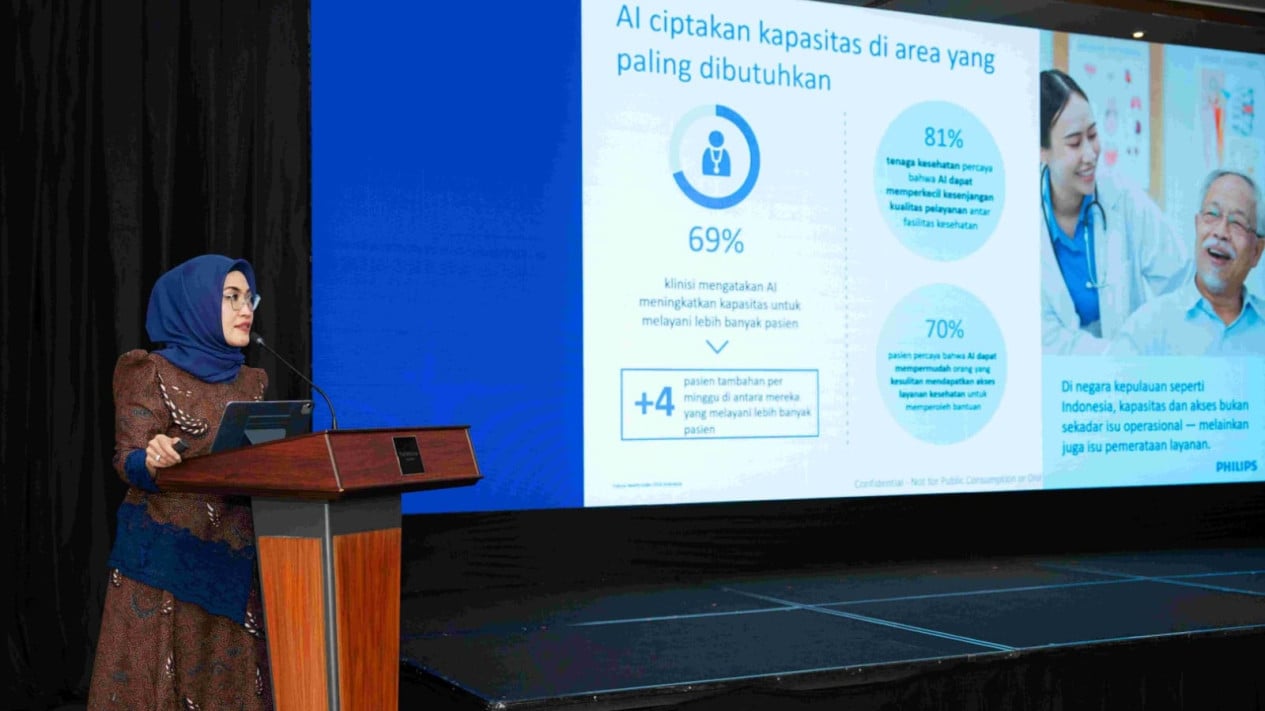
The Dutch health technology company, Royal Philips, has launched the 11th edition of the Future Health Index 2026 for the Indonesian region, revealing that artificial intelligence (AI) has provided real benefits for healthcare workers, patients, and healthcare institutions in Indonesia.
These findings mark a significant shift in the journey of AI usage within Indonesia’s healthcare sector. While the Future Health Index 2025 focused on the importance of building trust and creating conditions to support AI adoption, this year’s report examines how AI has delivered a tangible impact in practice.
“Indonesian healthcare professionals report faster workflows and diagnostic processes, greater capacity to serve patients, better access to information, and reduced workplace pressure,” said the President Director of Philips Indonesia, Astri Ramayanti Dharmawan, in a statement on Monday, 14 September 2026.
Nevertheless, the pace of AI adoption among healthcare professionals is developing faster than the readiness for training, system integration, monitoring, and governance required to support safe and consistent AI implementation on a larger scale.
She stated that discussions regarding AI in healthcare in Indonesia have now entered a new phase. The question is no longer merely whether AI can improve the quality of healthcare services.
“But rather how AI has helped healthcare professionals have more time, strengthen decision-making, and assist them in providing services to more patients,” said Astri.
She admitted that her company’s current priority is to ensure that these initial benefits can be translated into sustainable improvements in healthcare. To achieve this, AI needs to be integrated with clinical workflows and trusted health data, supported by enhanced capabilities of healthcare professionals.
“While still placing human judgement and accountability at the core of every healthcare service,” she added.
It is noted that healthcare professionals in Indonesia report tangible benefits from the use of AI, particularly those directly related to increased capacity and the delivery of healthcare services.
Almost 9 out of 10 healthcare professionals, or approximately 88 per cent, stated that AI has improved workflow efficiency, a figure that is notably high compared to the global average of 71 per cent. Furthermore, 87 per cent of healthcare professionals reported faster access to diagnostic results, while 82 per cent stated that AI has accelerated decision-making related to diagnoses.
Source: jawawa.id (https://jawawa.id/newsitem/ai-penetration-in-indonesias-medical-and-healthcare-industry-continues-to-grow-significantly-here-is-the-1789394352)
Originally published by VIVA.co.id (https://www.viva.co.id/bisnis/1928574-penetrasi-ai-di-industri-medis-dan-layanan-kesehatan-ri-terus-berkembang-signifikan-ini-buktinya), translated from Indonesian