
AI-Optical Networks Poised to Drive New Growth in the AI Era
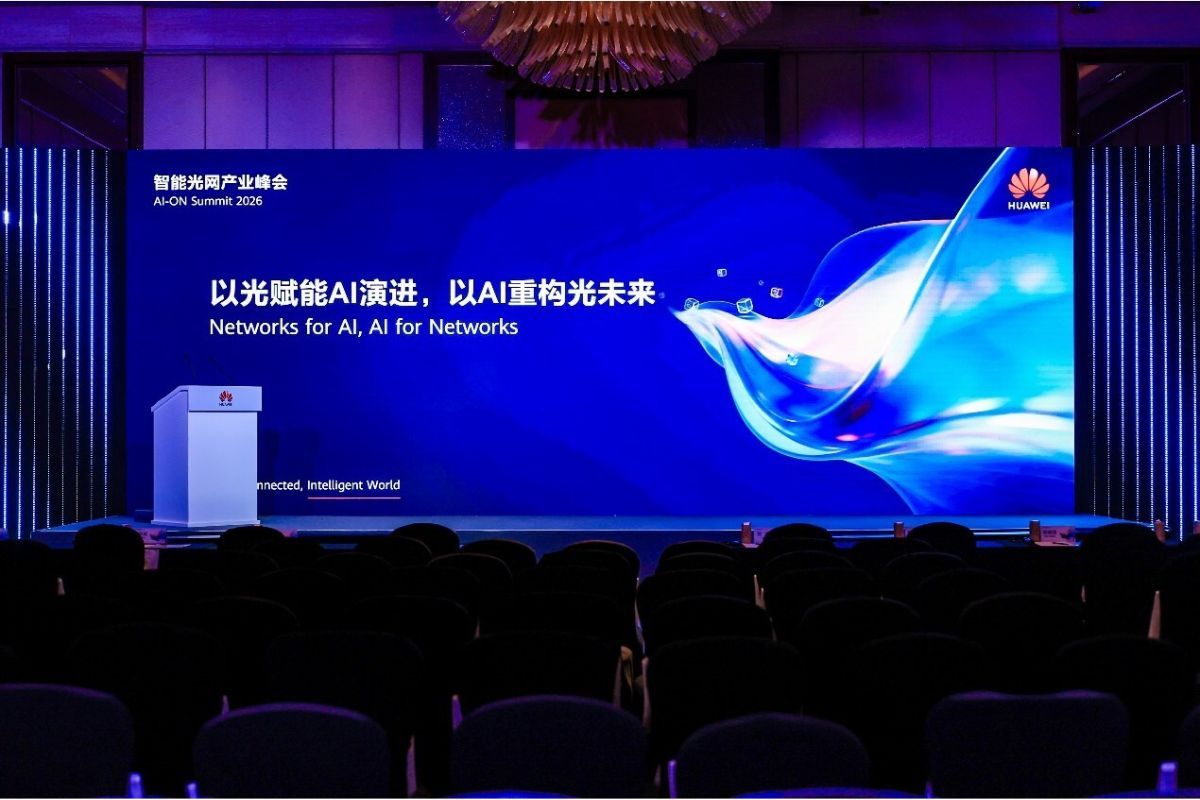
At MWC Shanghai 2026, the AI-ON Summit, themed ‘Networks for AI, AI for Networks’, convened the MIIT, CAICT, global operators, industry partners, and Huawei to discuss optical network trends in the new era of Token monetisation. Participants shared experiences on new services such as ultra-gigabit/10 Gbps packages and network-compute integration. During the session, Huawei introduced 10 innovative AI-Optical Network (AI-ON) products and solutions to help operators build AI-oriented all-optical target networks and promote wider adoption of AI services. In October 2025, the International Telecommunication Union (ITU) launched the ION-2030 vision for next-generation optical networks, charting the future direction for AI-ON. Ao Li, Vice President of CAICT, explained that AI and optical networks will complement each other, with AI-ON efficiently supporting large-scale computing applications and leveraging large models and AI agents to advance towards highly autonomous networks. He added that China is shifting from ‘gigabit everywhere’ to ‘10-gigabit acceleration’, promoting ultra-gigabit broadband services and exploring new ways to enhance broadband quality, while millisecond-level computing moves from system construction to large-scale application, building a solid all-optical network foundation for the digital economy. Operators are entering a new value-driven era, with AI enhancing digital lifestyles and boosting enterprise productivity. Companies like China Mobile, China Telecom, China Unicom, Zain Jordan, and Shunwang Technology shared experiences on leveraging AI to upgrade home broadband services with improved connectivity, intelligent services, and proactive support, delivering premium AI application experiences and broadband services to homes while ensuring high-quality computing access for enterprises. To accelerate the transition to the Token monetisation era, Huawei upgraded 10 innovative AI-ON products and solutions. Kim Jin, Vice President of Huawei’s Optical Business Product Line, stated that Huawei is continuously evolving its optical-AI convergence strategy to drive the development of both technologies. The AI-FAN and AI-OTN portfolios support operators in building AI-oriented all-optical target networks, achieving value-driven ultra-gigabit/10 Gbps networks, delivering high-quality computing access and usage, and promoting wider AI service adoption. To boost the popularity of ultra-gigabit networks, Huawei launched the AI-FTTR product portfolio, including an AI home hub and AI smart box, along with tri-band and dual-band Wi-Fi 7 FTTR products. To strengthen its leadership in the 10 Gbps segment, Huawei introduced the industry’s first high-density 50G PON service card for large-scale commercialisation and upgraded 50G PON FTTR to support tri-band Wi-Fi 7. For 1-millisecond latency computing networks, Huawei launched three solutions: Mini OXC, end-to-end OSU/fgOTN, and OTN & QKD integration. To unlock new opportunities in national and international Data Center Interconnect (DCI), Huawei introduced the industry’s only ultra-large-scale OTN cluster solution and an integrated submarine and terrestrial cable solution. Additionally, to build resilient optical networks, Huawei launched AI DAS and 50 ms WSON resilience solutions.