
AI Enters the K3 Arena: Energy Industry Drives Predictive Occupational Safety Systems
The deployment of artificial intelligence (AI) has begun to form a key part of transforming occupational safety systems in high-risk sectors. The technology is seen as capable of shifting safety practices from reactive to more predictive by detecting anomalies and potential risks before incidents occur.
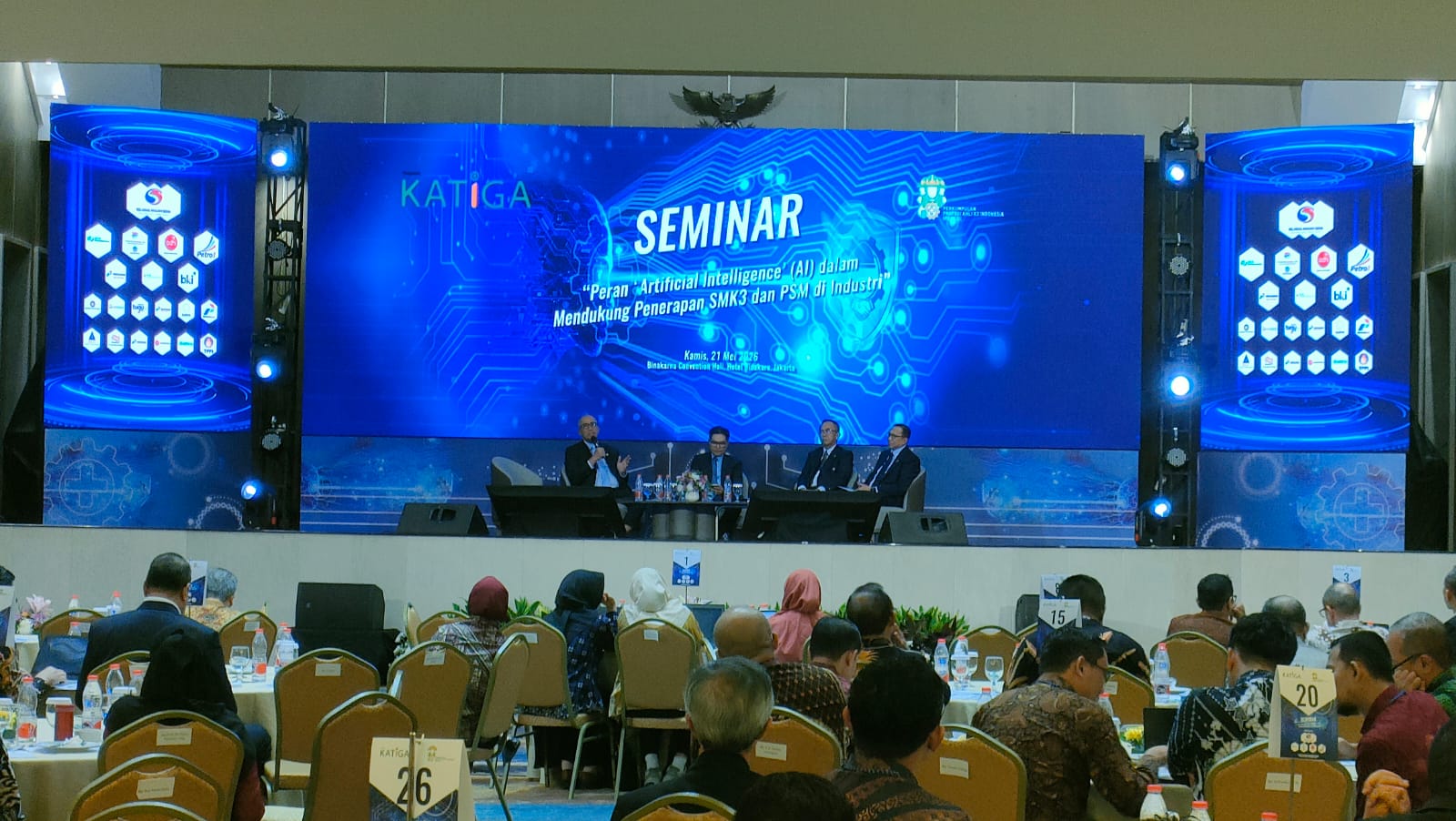
The push emerged at a National Seminar titled ‘The Role of Artificial Intelligence (AI) in Supporting the Implementation of SMK3 and Process Safety Management (PSM)’ organised by the Indonesian Association of K3 Professionals and Katiga Magazine at the Binakarna Auditorium, Hotel Bidakara, Jakarta, on Thursday 21 May.
The event was attended by hundreds of participants from practitioners, academics, to industry leaders, who discussed applying AI to support the target of zero accidents in the workplace.
The seminar featured speakers from academia and the energy and oil and gas sectors, including Bambang Riyanto Trilaksono, Taufik Adityawarman, Indra Pehulisa Sembiring, Avep Disasmita, and Artyom Kachkovsky.
In their presentations, the speakers highlighted AI’s potential to strengthen the implementation of the Safety and Health Management System (SMK3) and Process Safety Management (PSM), particularly for risk management in the hazardous industry sector.
Taufik Adityawarman said AI has strong capabilities to support the concept of predictive safety, i.e., reading data anomaly patterns before accidents or process failures actually occur. He stated that such capability enables companies to take mitigation actions faster, thereby suppressing accident risk.
‘No matter how advanced the technology, the key remains the role of humans,’ he said, quoted from a press release received on Friday 22 May.
He added that investment in AI technology development for occupational safety should not be viewed only in terms of cost, but also the long-term impact on worker safety and the continuity of the company’s business.
The discussion continued through a panel session featuring Ajrun Karim, Jimmy Permadi, Arief Syawaladi, and Yun Firman.
Panelists highlighted a number of challenges in implementing AI on the ground, ranging from readiness of technology infrastructure, human resource competencies, to cybersecurity aspects deemed important in the digitalisation of occupational safety systems.
The chair of the Seminar Steering Committee, Masjuli, assessed that the use of AI in the industrial world is no longer merely a choice, but a necessity that modern companies must anticipate.
Meanwhile, Committee Advisor Dwinanto Kurniawan said the main challenge of occupational safety today is the industry’s ability to move faster and be proactive in responding to potential risks.
According to him, digital technology enables real-time reporting of incidents so that companies can make faster decisions to protect worker safety.
On the other hand, Sudirgo Dhj, the CEO of Katiga Magazine, stated that the publication would continue to promote digital literacy related to occupational safety and health through various media platforms.
In closing, the panel moderator and member of the Steering Committee, Titi Mulyani, said there was a consensus that AI has become an important part of industrial risk mitigation systems.