
AI Data Centres Thirsty for Water: 1 MW Capacity Consumes as Much as an Entire City's Needs
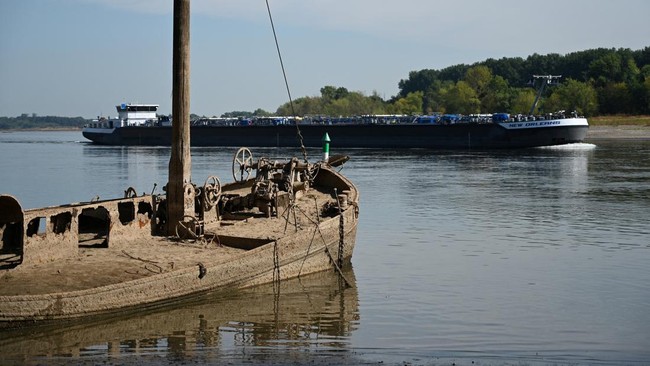
The development of Artificial Intelligence (AI) requires more than just vast amounts of energy; this technology also demands high water consumption to cool the data centres running various AI models.
The World Economic Forum (WEF) has revealed that a data centre with a capacity of 1 megawatt (MW) can consume up to 25.5 million litres of water per year solely for cooling purposes. This amount is equivalent to the daily water consumption of approximately 300,000 people.
Such water consumption exacerbates pressure on water availability, particularly in vulnerable regions already facing water scarcity issues.
Data centres require water for various cooling systems, such as chillers, cooling towers, and liquid cooling. Water consumption also occurs indirectly through power plants that use water-intensive processes, including steam generation.
The WEF noted that a medium-sized data centre with a 15 MW capacity could consume as much water in a year as the annual needs of three average-sized hospitals, or more than two 18-hole golf courses.
A major cause of this high consumption is the limited reuse of water within cooling systems. A portion of fresh water evaporates during the cooling process, while the remainder becomes wastewater that may be contaminated with dust, chemicals, and minerals.
This condition means that wastewater cannot always be immediately reused, as it could reduce the efficiency of the cooling systems.
The growth of AI is further intensifying this issue. AI models such as GPT-3 and GPT-4 require immense computing power, which in turn increases the demand for energy and water to keep the machinery cool.
The WEF estimates that GPT-3 requires approximately 500 millilitres of water for every 10 to 50 responses. When multiplied by billions of uses, the water footprint of AI could become enormous.
The WEF also predicts that global AI demand by 2027 could lead to water withdrawals reaching 1.1 to 1.7 trillion gallons, or approximately 4.2 to 6.6 billion cubic metres. This figure is more than 4 to 6 times the total annual water withdrawal of Denmark.
According to the WEF, data centre water consumption has often been overlooked compared to carbon emissions. Therefore, circular water management, including the optimisation and replenishment of water sources, presents an opportunity to mitigate the environmental impact of the data centre industry.
To mitigate the broader environmental and social impacts of data centres, operators can begin adopting innovative circular water solutions.
These solutions involve the reuse and recycling of water to create sustainable and efficient water management systems.
Practices such as cooling systems that involve wastewater recycling or rainwater harvesting have been proven to significantly reduce freshwater usage, with potential savings of 50-70% at implementation sites.
Integrating circular water management principles is a crucial step to ensure that data centres can continue to support the next wave of technological progress in a world increasingly thirsty for water resources.
Source: jawawa.id (https://jawawa.id/newsitem/ai-data-centres-thirsty-for-water-1-mw-capacity-consumes-as-much-as-an-entire-citys-needs-1790560430)
Originally published by CNBC Indonesia (https://www.cnbcindonesia.com/tech/20260928081653-37-771317/data-center-ai-haus-air-1-mw-sedot-air-kebutuhan-1-kota), translated from Indonesian