
AI Data Centre Spending Tops Rp15,700 Trillion: Who Benefits Most?
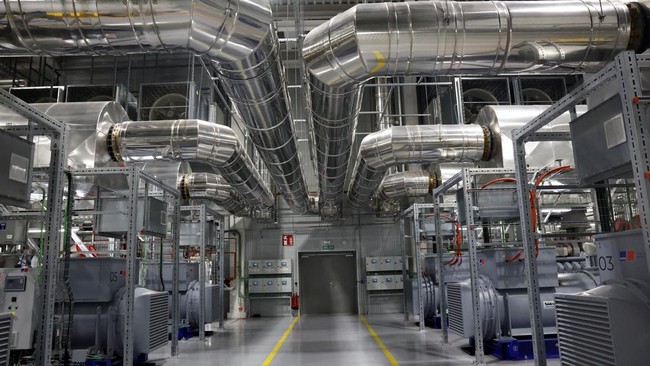
Jakarta, CNBC Indonesia – The global wave of investment in artificial intelligence infrastructure is now costing an almost unimaginable amount. Annual spending on building the AI ecosystem, from chips and data centres to electricity networks, is approaching US$1 trillion, or around Rp15,700 trillion.
This makes spending on AI infrastructure the largest project expenditure since the construction of railway lines in the United States in the 19th century.
According to Derek Thompson, an economics journalist and author of Abundance, AI projects are dramatically reshaping the economic landscape. At the same time, they could trigger an investment bubble that ends in recession.
The huge sums borrowed to build data centres, buy chips and develop electricity and interconnection networks are absorbing capital that could otherwise be used in sectors such as property, healthcare and manufacturing.
Spending on AI infrastructure covers various layers of the technology. Almost half of the money being invested flows directly to the semiconductor and chip industry, now dominated by Nvidia.
Demand for memory chips used to support Nvidia’s GPUs has also surged, pushing up the prices of components for mobile phones and laptops. Meanwhile, ongoing electricity and cooling costs make data centre operations a substantial fixed expense.
Amid this flow of investment, Indonesia has advantages sought by investors: abundant energy supplies, a tropical climate that can support cooling efficiency if facilities are designed appropriately, and a strategic position linking Asia with other regions.
However, the Indonesian government must also weigh the environmental impact of large-scale data centre construction and its effects on electricity supplies. If the regulatory framework can be finalised quickly, trillions of rupiah now flowing to neighbouring countries could instead be redirected to Indonesia.