
AI Could Add US$15.7 Trillion to the Global Economy, What Does Indonesia Get?
Jakarta - The government continues to accelerate digital transformation as one of its strategies to pursue the 8% economic growth target. The development of artificial intelligence (AI), data centres, digital twin technology, and the semiconductor industry is seen as the foundation for Indonesia’s future economy.
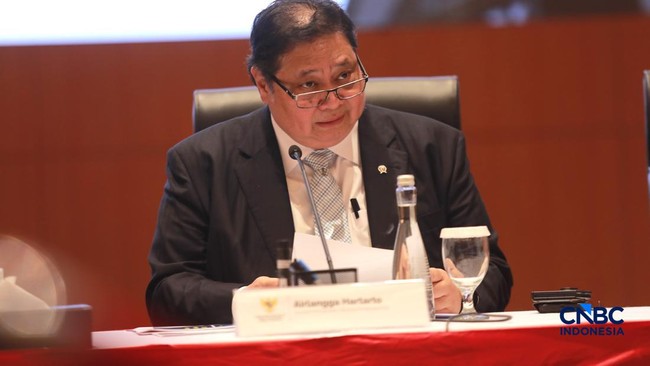
Coordinating Minister for Economic Affairs Airlangga Hartarto said AI development holds enormous economic potential. Globally, AI is estimated to provide additional economic value of up to US$15.7 trillion by 2030.
“Globally, AI has the potential to add US$15.7 trillion to the world economy by 2030,” Airlangga said in his online remarks at the 13th International Conference on ICT for Smart Society (ICT4S) organised by AISX Institut Teknologi Bandung (ITB) on Wednesday (26/8/2026).
He cited PricewaterhouseCoopers (PwC) data showing industries with high AI exposure have recorded revenue growth of 27%.
Indonesia is also considered to have strong momentum in AI utilisation. Airlangga said revenue from AI-based features in Indonesia grew 127% year-on-year in the first half of 2025. This figure is one indicator of the strong commercial momentum of AI in Indonesia within the ASEAN region.
Airlangga said this potential is supported by Indonesia’s large digital ecosystem.
Indonesia’s digital economy value is now approaching US$100 billion based on Gross Merchandise Value (GMV), making it the largest in ASEAN. The ecosystem is supported by around 235 million internet users with a penetration rate of around 81%.
The government wants this digital economic strength not to stop at digital consumption activities, but to become a new engine of national economic growth.
Therefore, the government is encouraging integration between data centres, AI, and semiconductors to support the 8% economic growth target.
“The ecosystem is directed to support the 8% economic growth target through the integration of data centres, AI, and semiconductors,” Airlangga explained.
The government also targets the development of around 600,000 digital professionals each year. In addition, more than 8,000 technology jobs are targeted to be created in areas such as Nongsa.
These measures are expected to transform Indonesia’s demographic bonus into a digital dividend.
Airlangga also revealed that AI adoption in Indonesia is increasingly high. Around 80% of internet users in the country are said to have used AI features in their daily activities. Its utilisation is also expanding to various economic sectors.
In agriculture, for example, AI is used through smart farming concepts and agricultural drones. In the health sector, digital technology is beginning to be used to support healthcare services.
Meanwhile in industry, cloud-based AI is used for real-time monitoring on electric vehicle battery production lines.
Beyond AI, the government is also promoting digital twin technology to connect digital and physical ecosystems. The technology is directed to support smart city development in Nusantara Capital City (IKN) and the modernisation of electricity infrastructure.
To accelerate AI development, Airlangga said the government is focusing on three main pillars: infrastructure, talent, and investment.
On infrastructure, the government continues to strengthen the availability of clean energy and digital infrastructure, including through data centre development. Indonesia is now one of the main investment destinations for data centres in ASEAN, with a pipeline capacity reaching 1.17 gigawatts (GW).
On talent, the government is expanding digital human resource development programmes through the Tech Indonesia Singapore Programme and the Digital Talent Scholarship. The government is also providing a super tax deduction incentive of up to 200% for industries that organise vocational activities.
On investment, the government is strengthening strategic cooperation to build the national AI and semiconductor ecosystem. The partnership between Danantara and Arm Limited, for example, is directed at training 15,000 Indonesian engineers. Meanwhile, cooperation between Indonesia and the United States through a Joint Development Agreement in February 2026 opened initial investment of US$4.89 billion for the development of the Galang area as an integrated semiconductor cluster.
Indonesia is also strengthening digital cooperation at regional and global levels. Airlangga said the ASEAN Digital Economy Framework Agreement (DEFA) is targeted to be signed in November 2026. The agreement is projected to double ASEAN’s digital economy value to around US$2 trillion.
At the global level, Indonesia has also joined as a founding member of the World AI Cooperation Organization (WAICO) alongside 28 other countries. This membership is expected to strengthen Indonesia’s role in shaping global AI standards while opening space for AI technology development cooperation.
Airlangga stressed that digital transformation ultimately must not merely pursue technology adoption. Technology must be translated into increased productivity, competitiveness, quality of public services, and public welfare.
“The most important thing is how we turn AI, digital twins, and digital technology into real benefits for productivity, competitiveness, public services, and the quality of life of the people,” he concluded.
Source: jawawa.id (https://jawawa.id/newsitem/ai-could-add-us-15-7-trillion-to-the-global-economy-what-does-indonesia-get-1787745140)
Originally published by CNBC Indonesia (https://www.cnbcindonesia.com/tech/20260826164140-37-762475/ai-bisa-bikin-ekonomi-dunia-tambah-us-157-triliun-ri-kebagian-apa), translated from Indonesian