
AI Boosts Efficiency of Indonesian Healthcare Workers
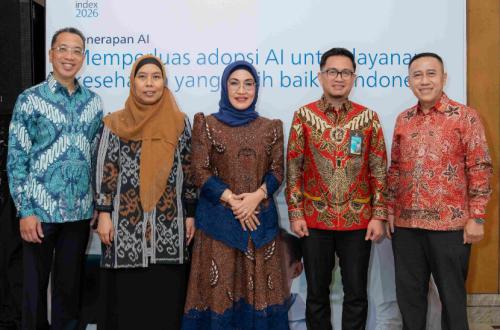
JAKARTA – Artificial intelligence (AI) is beginning to be used to enhance the capacity and efficiency of healthcare workers in Indonesia. A survey shows that 69 per cent of healthcare workers consider AI-based tools help them serve more patients, higher than the global average of 50 per cent.
The finding is contained in the Future Health Index (FHI) 2026 Indonesia conducted by Royal Philips. The survey also shows that 88 per cent of healthcare workers report improved workflow efficiency after using AI.
As many as 87 per cent of respondents said AI speeds up access to diagnostic results, while 82 per cent said the technology accelerates diagnostic decision-making. Some 75 per cent of respondents also said AI makes it easier to access integrated patient data across medical teams.
Among healthcare workers who experienced increased capacity, the median increase reached four additional patients per week. Some 59 per cent of healthcare workers also reported saving an average of at least 88 hours per year.
President Director of Philips Indonesia, Astri Ramayanti Dharmawan, said the use of AI must be accompanied by system integration and the upskilling of healthcare workers.
“Our current priority is ensuring these early benefits can be translated into sustainable improvements in healthcare services. To that end, AI needs to be integrated into clinical workflows and trusted health data, supported by enhanced healthcare worker capabilities, while keeping human judgement and accountability at the heart of every healthcare service,” said Astri in a press release on Tuesday (15/9/2026).
The use of AI in healthcare facilities is also growing. Some 63 per cent of healthcare workers said the use of AI-based tools provided by their institutions has increased over the past year.
However, readiness to use the technology still faces a number of obstacles. Some 58 per cent of healthcare workers admitted to using personal AI tools when devices available at their workplace do not meet their needs.
In addition, 55 per cent of respondents said AI training is difficult to obtain, limited or unevenly distributed. Monitoring of AI use is also not fully in place, with 62 per cent of healthcare workers saying there is no clear process for monitoring AI-based tools at their institutions.
Although AI adoption is increasing, healthcare workers still place humans as the primary decision-makers. Some 94 per cent of respondents consider human involvement to remain essential, while 91 per cent said AI results need to remain under human supervision.
The relationship between healthcare workers and patients is also considered to still require a human role. Some 90 per cent of respondents said AI will not replace the relationships built with patients.
Patients are also beginning to use AI to seek health information. Some 57 per cent of patient respondents use generative AI to search for health information online, while 80 per cent of healthcare workers admit they have had to correct information patients obtained from AI during consultations.
Some 91 per cent of patients also want to be notified when AI is used in their care. The finding indicates that transparency in the use of technology remains a concern in healthcare services.
The FHI 2026 survey was conducted among 2,011 healthcare workers and 20,085 patients across 10 countries. For Indonesia, the research involved 201 healthcare workers and 2,011 patients.