
AI Boom Brings Investment to the Region, with Indonesia in the Running as a Data Centre Hub
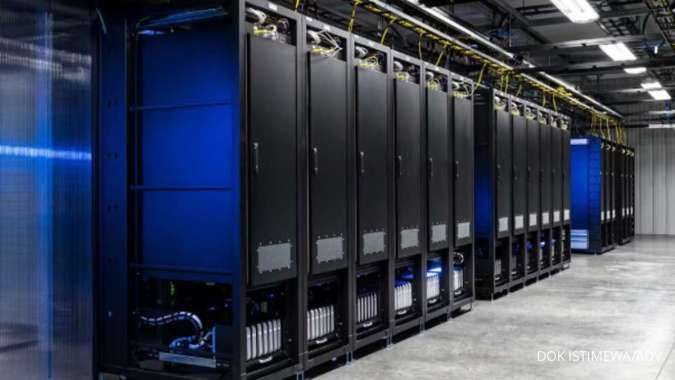
KONTAN.CO.ID – JAKARTA – Indonesia is aiming to drive economic growth to 8%. In line with this target, the Coordinating Ministry for Economic Affairs considers the development of digital infrastructure, including data centres, important to supporting national economic growth.
The Ministry of Communication and Digital Affairs, meanwhile, has stressed the importance of Indonesia participating in the global development of digital technology and artificial intelligence (AI), including by strengthening domestic digital infrastructure and capacity.
Deputy Minister of Communication and Digital Affairs Nezar Patria said stronger AI infrastructure and computing capacity were needed if Indonesia was to secure a more strategic position in the global technology industry’s value chain.
“We do not want to be merely a market or a user. We want to gain a strategic position in the global AI industry value chain,” Nezar said.
Every digital activity generates large volumes of data, from banking and e-commerce transactions to the use of various digital services and business operations. But that data does not automatically have economic value.
To generate benefits, data must be stored, processed, analysed and accessed through adequate computing infrastructure. Data centres therefore play an important role in turning data into a source of value and economic growth.
Data-centre capacity enables services such as cloud computing, fintech, e-commerce, AI, cyber security, digital government services and a range of technology-based businesses to operate at scale.
The scale of this need is beginning to attract substantial investment.
The government has recorded interest in an additional 1.3 GW of data-centre capacity in Indonesia, worth US$15 billion to US$20 billion.
The economic impact extends beyond the construction of data-centre facilities. Such investment also creates demand in construction, energy, telecommunications networks, technology, maintenance and specialist labour.
Data-centre development could therefore stimulate a wider supply chain, increase economic activity and expand the country’s revenue base.
The Chilean government estimates that Amazon Web Services’ (AWS) investment of more than US$4 billion to build three data centres in the country could contribute about US$10 billion to gross domestic product (GDP) and create more than 7,000 full-time jobs each year.
Chile’s experience illustrates how data-centre development can have a broader economic impact, not only through digital infrastructure construction but also through job creation and contributions to the economy.
The value of data-centre investment should therefore be measured not only by the computing capacity built, but also by the economic effects it generates around it.
Regional competition
World Bank data for the first half of 2025 put Indonesia’s data-centre capacity at about 1.17 GW. This remains below Malaysia’s 3.17 GW and Singapore’s approximately 1.25 GW.
Nevertheless, Indonesia has significant growth prospects. CSIS Indonesia estimates that the country’s data-centre capacity could grow by an average of 16.8% a year through 2029, reaching about 1.41 GW.
Growth is being driven by the large domestic digital market, rising demand for cloud and AI services, and new investment in digital infrastructure.
However, increasing capacity alone will not be enough to make Indonesia a leading player in the AI economy.
A large digital market does not automatically make a country a winner. The ability to develop technology, process data, produce digital products and create value-added services is just as important.
Alongside the substantial investment opportunity, data-centre development also presents challenges, particularly in meeting energy and water requirements.
Data centres need large amounts of electricity to run servers and their supporting systems. Demand is increasing as AI computing expands and requires greater processing capacity.
Water needs must also be taken into account, particularly at facilities that use water-based cooling technology.
ITB researcher Professor Reini D. Wirahadikusumah said energy would be a key consideration in the development of AI.
“Energy and artificial intelligence (AI) technology will become important pillars of development. AI itself requires a very large amount of energy to operate,” she said.
Data-centre development must therefore be accompanied by a strategy to ensure energy supplies are adequate, efficient and sustainable.
Indonesia has several advantages that could strengthen its position in the data-centre and AI industries, including a large digital market, growing computing needs and energy resources.
The next challenge is to ensure that incoming investment goes beyond constructing buildings and server facilities.
The development of the data-centre ecosystem should be directed towards creating greater added value for the national economy. This can be achieved by strengthening the digital workforce, developing local technology companies, improving research and AI capabilities, using renewable energy and developing supporting industries.
With this approach, data-centre development would not simply be a race to build computing capacity, but part of Indonesia’s strategy to improve the competitiveness of its digital economy and secure a stronger position in the global AI value chain.