
AI Animation is Proliferating in Indonesia, Are Animators at Risk of Extinction?
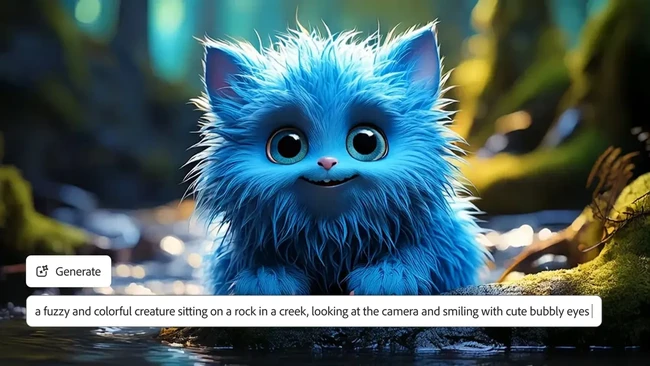
When searching for the keyword ‘AI animation services’ on Google, numerous studios offering AI animation production services appear. One that caught our attention is Visorra, which promises “AI Video Production Services in Just 5 Working Days”.
Visorra is one of five business units under PT Sora Kreatif Indonesia, which focuses on animation production services. Based in Cijantung, Jakarta, the company handles clients from various institutions, ranging from government agencies, state-owned enterprises, to small and medium-sized enterprises.
Director of PT Sora Kreatif Indonesia, Shinta Puspita Kencanasari, stated that Visorra was established in 2018 and began implementing AI technology in the animation production process in mid-2024. Her team required a one-year transition period to adopt AI tools.
That transition period did not go entirely smoothly. There was initial reluctance from the animation team. The reason was that using AI actually added new work stages, namely prompting. The visuals produced by AI tools often still had distortions, requiring more detailed quality control than when working on animations manually.
Despite these challenges, AI tools have helped Visorra save time and costs when handling simple to medium-category animation projects. “For simple animation types, it can take 12 working days with a full manual process. Whereas with AI, it can be completed in 5-10 working days,” Shinta explained.
The prices charged start from Rp2.5-4 million per minute for simple to medium-level AI animation videos. If more complexity is required, the highest price is around Rp8.5-10 million per minute.
For technical animation types that require higher visual consistency, Visorra still emphasises manual processes with minimal AI assistance for creating storyboards or voice-overs (VO). The average time required ranges from 2-3 months. The price is set at Rp18-20 million per minute.
Revenue Increases 50% Thanks to AI
Similar to Visorra, Unicam Studio based in Yogyakarta also began applying AI tools for animation work in 2024, through its subsidiary named Unimasi. CEO of Unicam Studio, Andri Saputro, recounted the initial use of AI stemmed from client demands.
“At that time in October 2024, a client wanted a documentary film made without shooting. I agreed to the request, and the results were satisfactory. From there, my name became known, and there were more requests for AI animation projects from universities, hospitals, and various industries. Even recently, a brand from Australia asked us to create AI animation […]. Next July, I will also go to Russia for an exhibition to showcase our AI videos,” Andri told CNBC Indonesia.
According to Andri, creating AI animations does not entirely eliminate the role of animators. Basic animator skills are still needed to create visual designs and ensure the AI-generated quality meets professional animation standards. However, he does not deny that AI animation production will reduce the number of crew involved, thereby minimising production budgets.
“The budget difference is huge. It’s very economical when using AI. For example, I have a project with a palm oil company that wants to show a future atmosphere. If making it in 3D, it could cost up to Rp500 million or billions because it’s very complex and detailed. When using AI, the budget can be reduced to just two digits. It might only be 10% of the budget that would normally be spent with a manual process,” Andri explained.
In terms of revenue, Andri admitted that Unicam recorded significant growth of 50% after using AI, compared to 2023 when the animation production process was still entirely manual.
Currently, Unicam employs 15 staff, four of whom act as animators. Andri emphasised the crucial role of animators in maximising AI software operations. Instead of layoffs, Unicam plans to recruit new employees, in line with the high demand for AI animation production.
“AI is something we can’t avoid, but must embrace. If we fight it, it’s difficult,” he said.
Founder of Epic Anima, Nurul Maagrufah, holds a similar view. Her company, established in 2017, is relatively new to offering AI animation services, starting in early 2026. Her team has already begun discussing the potential use of AI since late 2025.
“This decision [to use AI] was driven by two things. First, we see the very progressive development of AI that is starting to form new market needs. Second, as a creative company, we need to adapt and prepare ourselves for the future direction of the industry,” Nurul explained.
Currently, the realisation of animation projects at Epic Anima is still dominated by manual work. More specifically, from January to March 2026, Nurul said Epic Anima handled 60% manual animation projects and 40% AI animation projects.
Nevertheless, market trends have shifted towards AI animation. As many as 70% of companies or potential clients of Epic Anima are more interested in AI animation production, compared to 30% for manual animation production.
Nurul emphasised that Epic Anima so far prefers handling animation projects manually, especially for those requiring quality control, brand integration, and result certainty.
Unlike Visorra, Unicam, and Epic Anima, Dipadira Studios based in Yogyakarta has not adopted AI technology in its animation production process.
For information, Dipadira Studios was involved in producing the animated film ‘Jumbo’ which was shown in cinemas in March 2025 and was once recorded as the highest-grossing Indonesian film of all time with more than 10 million viewers, before being overtaken by the film ‘Agak Laen: Menyala Pantiku’.
Dipadira Studios focuses more on animation projects