
AI against fire: the future of forest and land fire mitigation in Indonesia
Forest and land fires may never disappear entirely. However, by harnessing technology appropriately, Indonesia has a great opportunity to shift from merely extinguishing fires to preventing them from the outset.
Jakarta (ANTARA) - Every dry season, Indonesia once again confronts a classic threat: forest and land fires (karhutla). Thick haze blankets settlements, paralyses economic activity, disrupts aviation, triggers health crises, and widens environmental damage.
Despite years of prevention and firefighting efforts, karhutla remains one of the greatest challenges in Indonesia’s environmental and disaster governance.
Meanwhile, the world is now entering the era of Artificial Intelligence (AI). A technology initially popularised through chatbots and industrial automation is becoming increasingly adept at predicting disasters, mapping risks, and supporting real-time decision-making. Could AI therefore become Indonesia’s new weapon in tackling forest and land fires?
This question grows ever more pertinent given recent developments. Although weather conditions in 2025 were relatively wetter than during the previous major El Niño period, forest and land fires still occurred across various parts of Indonesia.
Analyses published by several monitoring institutions indicate that at least 218,000 hectares of land and forest were indicated as burned between January and August 2025. Nearly half of this was within plantation, mining and energy concession areas. These findings reinforce the suspicion that most fires are not purely triggered by natural factors, but also by human activity.
The National Disaster Management Agency (BNPB) has also affirmed that many karhutla cases in Indonesia are linked to land-clearing activities and human negligence. In Riau, for instance, hundreds of hectares of land burned in 2025, and dozens of suspects have been named in forest and land fire cases.
These facts show that the karhutla challenge is not merely a matter of extinguishing fires once they break out. The greater challenge is how to detect risk long before smoke becomes visible. This is precisely where AI offers new hope.
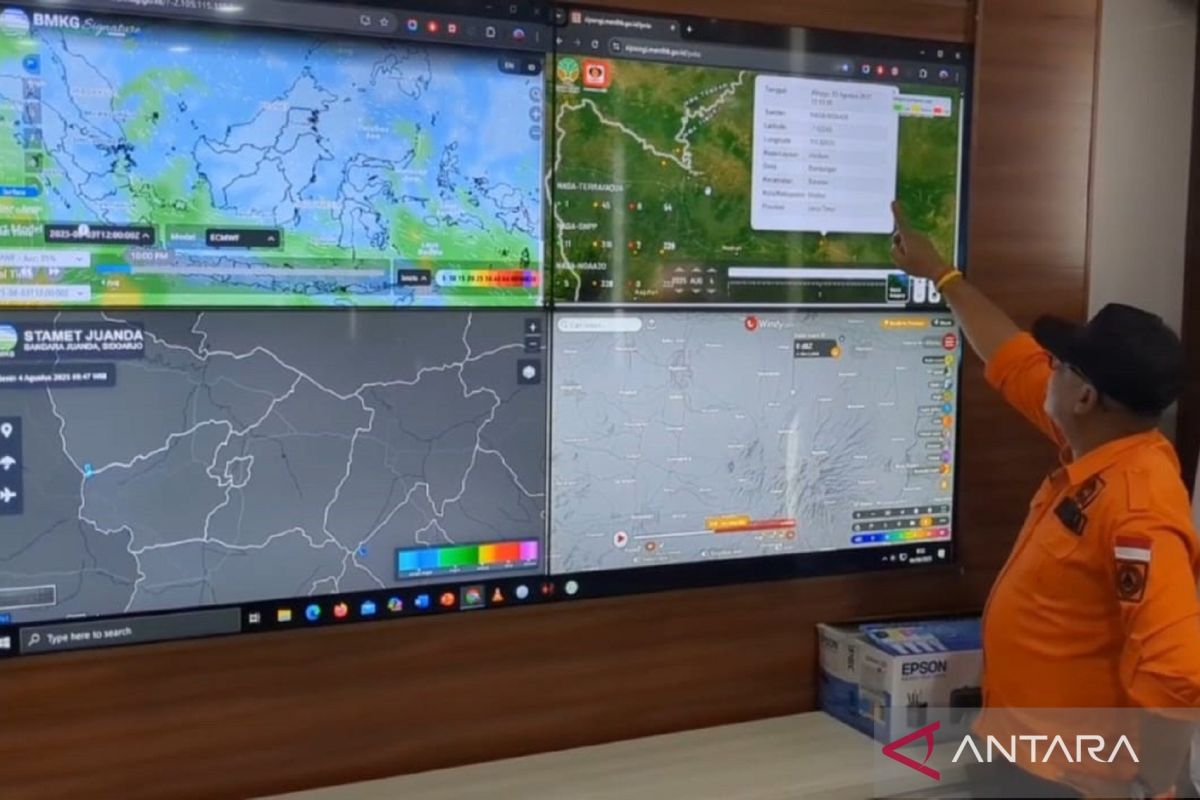
Indonesia’s karhutla monitoring systems have long relied on satellites through platforms such as SiPongi and the Meteorology, Climatology and Geophysics Agency’s (BMKG) hotspot monitoring. These systems gather data from the MODIS and VIIRS satellites to detect hotspots in near real-time.
However, AI enables a more advanced step. While conventional systems focus on detecting fires that have already started, AI can be used to predict the likelihood of fires based on a combination of weather data, air temperature, soil moisture, wind speed, vegetation conditions, fire history, and even human activity in a given area.
This approach has been adopted in several countries facing the threat of forest fires. Canada is one notable example. After experiencing its worst forest fire season in modern history in 2023, various regional governments and technology companies began developing AI-based systems for early fire detection. One such system is SenseNet, which combines smart cameras, gas sensors, satellite data, and predictive analytics. The system is claimed to be capable of detecting potential fires within minutes, even before the smoke becomes clearly visible.