
AHY to Monitor Indonesian Slum Areas Using New Digital Dashboard System
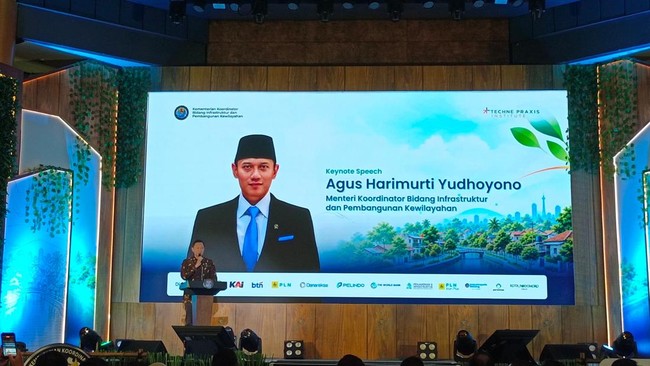
The Coordinating Minister for Infrastructure and Regional Development (Menko IPK), Agus Harimurti Yudhoyono (AHY), is preparing a dashboard system to map and monitor the handling of slum areas in various regions.
AHY stated that the dashboard will serve not merely as a data collection system, but as an instrument to ensure that slum remediation programmes are executed according to their respective authorities and budget years. “We must ensure that our environment is truly monitored using a system. This is an example of what we are working on; it is not just about adding a new dashboard, but it is an instrument to map how many and where slum areas and villages are located,” said AHY during the Integrated Slum Settlement Handling Coordination Forum at the BRIN Auditorium, Jakarta, on Monday (14/09/2026).
According to him, the system will be used to monitor programme implementation with greater transparency and accountability. The government will also be able to compare the progress of slum remediation between different regions. “If we can detect and manage this, including when policies, programmes, and budgets are ready to be realised, we must ensure it runs transparently, accountably, and is comparable,” he added.
AHY emphasised that the dashboard is also designed to allow the public to participate in monitoring and reporting on the results of government work on the ground. He provided examples where citizens could check whether a river promised for normalisation has actually been cleaned, or whether specific alleys and areas included in the programme have been properly renovated.
“This means that a dashboard like this can directly become a forum for interaction between citizens and their government, as well as between Ministries and Agencies (K/L). This allows us to ensure which areas correspond to their budget years and authorities—whether central, provincial, or district/city—and then verify if the work has actually been done,” he explained.
“The public can then report the results: whether the river has indeed been normalised and cleaned, whether certain village alleys have been tidied up, or whether slum areas have been transformed into more beautiful environments,” he continued.
AHY also expressed hope that the system would encourage regional heads to work more seriously in addressing slum areas. He noted that the central government also intends to provide appreciation to regional leaders who demonstrate good performance in slum remediation.
“Regional heads are usually pleased to be monitored, so those who have made efforts to work well can receive appreciation,” said AHY. “Regional heads are happy to be appreciated when they work earnestly. But they will certainly feel nervous if they do not work seriously. Correct, isn’t it?”
AHY mentioned that handling slum areas cannot be the responsibility of a single ministry or agency alone. The government aims to shift the development pattern from a fragmented approach to a more integrated one.
“This is a reflection of infrastructure development: moving from a piecemeal approach, where each entity focuses on its own sector, to something more integrated. Therefore, integration and coordination must be cross-sectoral. The Ministry of Housing and Settlements (PKP) cannot do it alone without the Ministry of Public Works (PU). PU also requires support from others. This is what we need,” AHY concluded.
Source: jawawa.id (https://jawawa.id/newsitem/ahy-to-monitor-indonesian-slum-areas-using-new-digital-dashboard-system-1789376148)
Originally published by CNBC Indonesia (https://www.cnbcindonesia.com/news/20260914132921-4-767717/ahy-pantau-kawasan-kumuh-ri-pakai-sistem-ini-warga-bisa-ikutan-lapor), translated from Indonesian