
AHY Targets 14,000 km of New Railway Tracks, Requiring Rp1,200 Trillion Budget
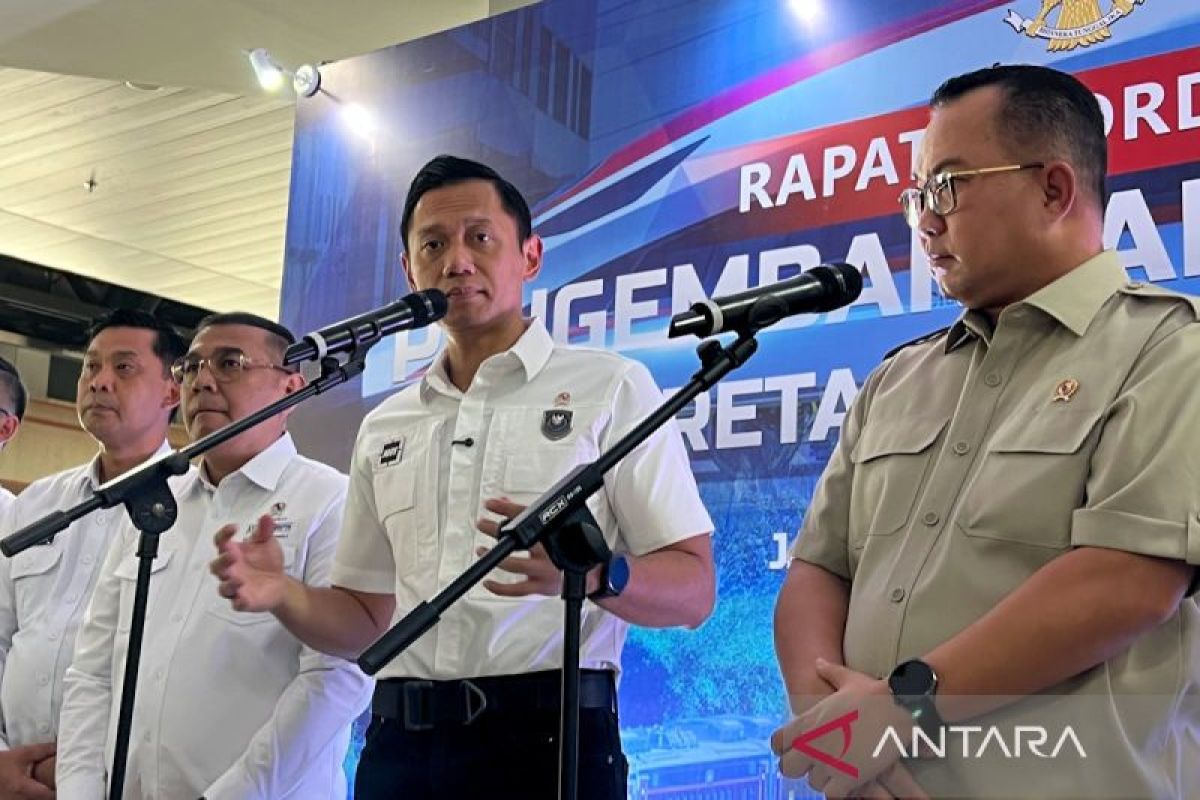
Jakarta (ANTARA) - Coordinating Minister for Infrastructure and Regional Development Agus Harimurti Yudhoyono (AHY) stated that the development of the national railway network is targeted until 2045, requiring a budget of approximately Rp1,200 trillion phased over time.
The budget is directed towards new constructions as well as the reactivation of rail networks spanning around 14,000 kilometres outside Java, covering Sumatra, Kalimantan, and Sulawesi.
“We calculate that if we want to add, say, 14,000 km (for reactivation and construction of railway networks) in the coming years, the cost is estimated at around Rp1,200 trillion until 2045,” said AHY after the coordination meeting on the development of the national railway network at the new Tanah Abang Station, Jakarta, on Wednesday.
The programme forms part of the long-term plan towards the Indonesia 2045 vision, which requires careful planning and sustainable financing support from various sources.
He estimated that the annual budget requirement would reach Rp60 to Rp65 trillion if the investment is spread over approximately 20 years.
“This calculation is not yet final. We will still refine it because building and developing infrastructure is also very dependent on the geographical conditions of the areas to be developed. But at least, this is the initial calculation that we can present as material for discussion,” he said.
The need for rail network development outside Java remains substantial. In Sumatra, the current rail length is around 1,871 kilometres, but an additional approximately 7,837 kilometres is still needed to meet connectivity requirements based on population numbers.
In Kalimantan, the railway network is not yet available, while the minimum construction need is estimated at 2,772 kilometres.
Meanwhile, in Sulawesi, the available rail length is only around 109 kilometres, so an additional approximately 3,284 kilometres is still needed to improve regional connectivity and mobility.
AHY emphasised that railway network development cannot be done instantly but requires medium- and long-term stages with priority on quick-win programmes as initial steps.
“Of course, it cannot be done all at once; it needs a medium-term, long-term process, so there must be quick wins and adequate budgets. This is where we calculate roughly what the needs are over 20 years towards 2045, and roughly per year,” he said.
Several quick-win projects are being studied, including the development of the rail line from Banda Aceh to Besitang in North Sumatra to accelerate connectivity between strategic regions.
He added that the development of public transportation, including railways, is not only the responsibility of the central government but also requires active involvement from regional governments.
In addition to relying on the state budget (APBN), the financing of this project will involve regional budgets (APBD), government and business entity cooperation schemes, as well as private and foreign investments.
The government is also opening opportunities for cooperation with countries that have experience in railway transportation development, both for urban passenger transport and inter-regional logistics.
AHY affirmed that the government will continue to seek creative financing sources to support infrastructure development while encouraging the strengthening of the domestic industry to become more independent and competitive.