
AHY Responds to Proposal to Require Large Data Centres in Industrial Estates
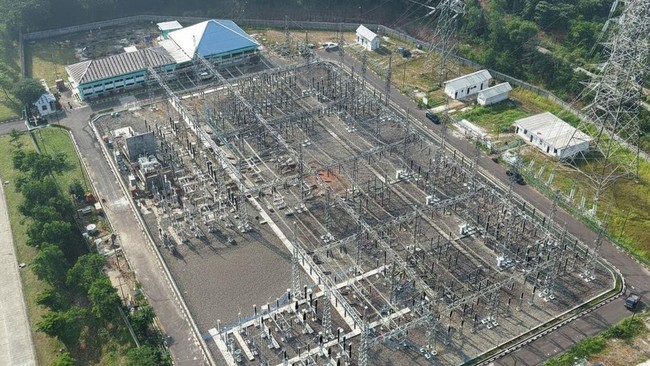
Jakarta, CNBC Indonesia — Coordinating Minister for Infrastructure and Regional Development Agus Harimurti Yudhoyono (AHY) has stressed that data centres should not be built indiscriminately. Their locations must comply with spatial plans, particularly by being placed in designated industrial estates, so they do not disturb the environment or nearby residents, he said on Monday (12 October 2026).
Speaking after the 2026 Digital Infrastructure Summit, AHY said location was an integral consideration in regional spatial planning. Industrial estates have been developed as complete ecosystems in areas specifically designated for that purpose, rather than being separated from or overlapping with residential areas.
“Of course, this is also part of the regional spatial planning prepared by the central government together with local governments. Industrial estates are prepared as an integrated ecosystem,” he said. “We also know that demand is growing. Some say Indonesia has the opportunity not only to provide data centres for domestic needs, but also to become a hub for Southeast Asia.”
AHY said data centres were an unavoidable requirement as the digital economy grows. However, their construction must not come at the expense of residents’ wellbeing.
“The principle is that we should encourage data-centre development without causing harm, especially without disturbing the environmental balance in the area. Our people also have the right to live peacefully, comfortably and healthily, without their basic needs being disrupted,” he said.
Data centres require very large supplies of electricity and clean water. Site planning must therefore carefully account for the availability of these resources to ensure that facilities do not compete with residents’ needs.
“Every data centre requires enormous energy support, including substantial amounts of electricity and clean water. These needs must be calculated very carefully,” AHY said.
Locating data centres in industrial estates would allow electricity and water supplies, as well as access routes, to be specifically planned for industrial requirements, avoiding disruption to networks serving residential areas.
AHY also said his ministry’s role was to coordinate the provision of the physical foundations needed before digital infrastructure could expand. Roads, bridges, ports, airports and basic communications networks all underpin the smooth operation of the data-centre ecosystem. Cooperation with the Ministry of Communication and Digital Affairs is also being strengthened.