
AHY Opens Opportunities for Climate-Resilient Infrastructure Development Collaboration
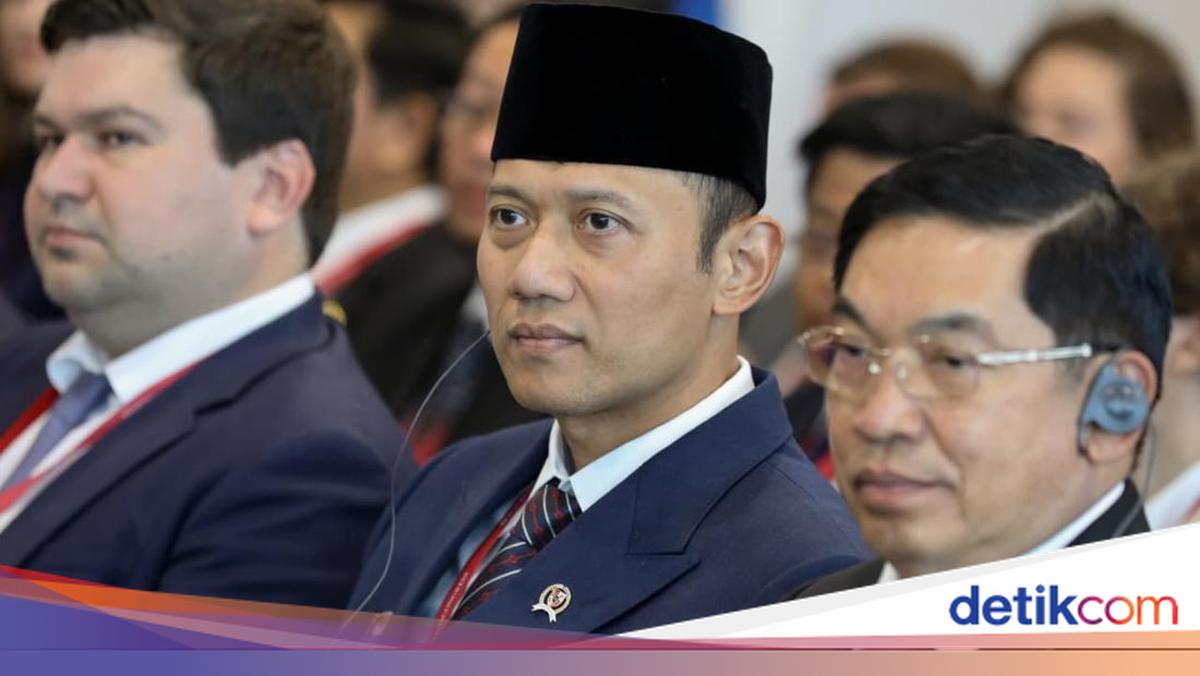
The opportunity for collaboration was presented by the Coordinating Minister for Infrastructure and Regional Development, Agus Harimurti Yudhoyono (AHY), during the EAEU-ASEAN session at the St. Petersburg International Economic Forum (SPIEF) 2026 in St. Petersburg, Russia, on Thursday (4/6/2026).
During the forum, AHY emphasised that the world currently faces increasingly complex challenges, ranging from climate change, global economic uncertainty, and supply chain disruptions to geopolitical dynamics that affect the stability and development of various nations.
According to him, resilience can no longer be viewed as an option. Resilience must become part of a planned and sustainable national development design.
“Resilience must be consciously designed through robust infrastructure development, energy security, food and water security, as well as trustworthy international partnerships,” said AHY.
He asserted that Indonesia continues to prioritise cooperation and collaboration as part of the solution to facing global challenges.
“As stated by President Prabowo Subianto, Indonesia chooses to build friendships with all nations. We believe in dialogue over confrontation, cooperation over competition, and mutually beneficial partnerships for all parties,” he continued.
On that occasion, AHY outlined three main priorities for Indonesia’s infrastructure development. First, the decarbonisation of the transport sector as part of the effort to achieve Net Zero Emissions targets. Second, the strengthening of strategic connectivity through the integration of ports, logistics systems, and the national railway network. Third, the construction of climate-resilient infrastructure, including the protection of coastal areas through the Giant Sea Wall project.
According to AHY, climate change has become a real challenge facing Indonesia, including flooding, coastal erosion, extreme weather, rising sea levels, and land subsidence in several coastal regions. These conditions require measured, integrated, and long-term mitigation steps.
“Indonesia is maturing the development plan for the Giant Sea Wall as part of a broader coastal protection agenda, particularly in the North Coast of Java. This step is not merely about providing physical protection, but also about maintaining the pulse of community life, protecting livelihoods, and ensuring the sustainability of social and economic ecosystems in coastal areas,” said AHY.
He explained that the North Coast of Java is one of the nation’s economic hubs, playing a vital role in supporting industry, trade, logistics, ports, and public mobility. Therefore, protecting coastal areas is a crucial part of the strategy to maintain the sustainability of national development in the long term.
According to AHY, the Giant Sea Wall project opens wide opportunities for international collaboration, ranging from coastal engineering, sea protection and barrier technology, operation and maintenance systems, environmental monitoring technology, to joint research and development.
Furthermore, Indonesia is also opening opportunities for cooperation in the clean energy sector, low-carbon transport, climate-resilient infrastructure, technology-based logistics systems, and a sustainable maritime economy, which are shared needs for ASEAN and Eurasian nations.
“Indonesia is open to various forms of collaboration capable of strengthening national capacity while providing sustainable solutions in facing the challenges of climate change,” AHY stated.
He added that global challenges cannot be addressed through statements and good intentions alone. Real implementation is required to provide direct benefits to the community.
“We need to move from dialogue to action, from frameworks to real projects, and from commitments to results that can be felt by the people,” he said.
AHY invited ASEAN and Eurasian nations to strengthen the spirit of collaboration and long-term partnership in facing various global challenges.
Through closer cooperation with Russia and Eurasian countries, the Indonesian Government hopes to accelerate the development of infrastructure that is more resilient, sustainable, and adaptive to climate change, while providing better protection for the people and supporting long-term economic growth.
“Let us be the generation that chooses cooperation over fragmentation, resilience over vulnerability, and long-term partnership over short-term gain. Let us build not only a stronger economy but also firmer trust among nations,” concluded AHY.