
AHY Offers Russia Cooperation in Maritime and Railway Sectors
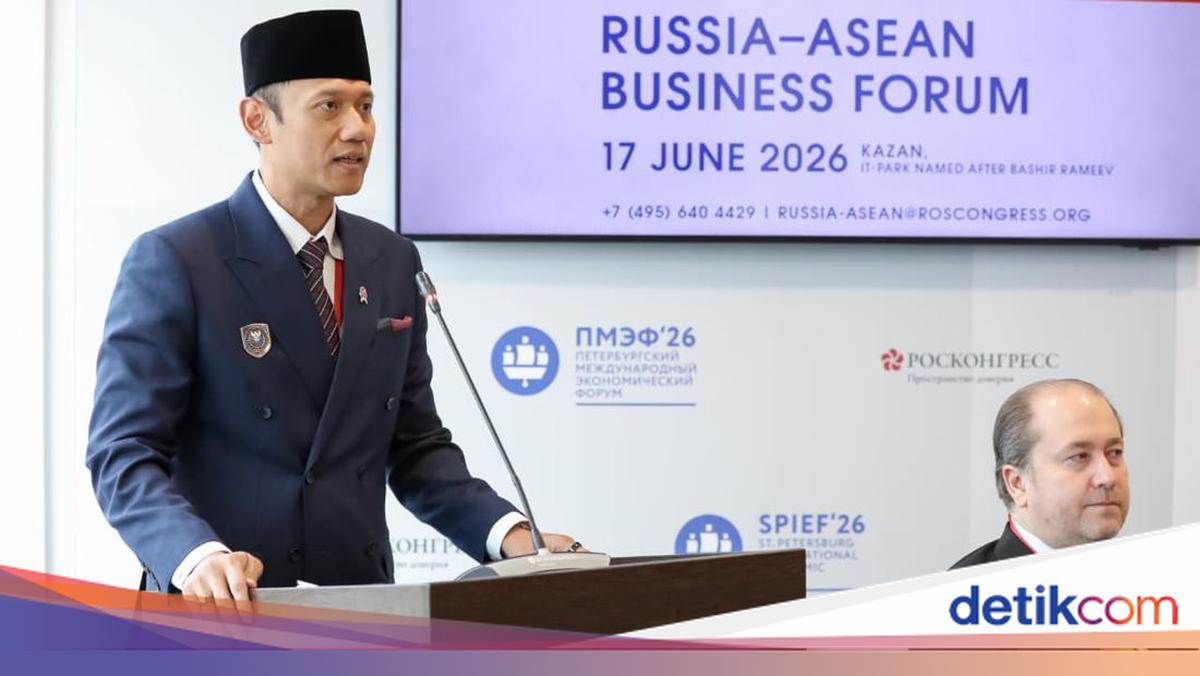
Coordinating Minister for Infrastructure and Regional Development Agus Harimurti Yudhoyono (AHY) conveyed the cooperation opportunities while speaking at the EAEU-ASEAN session during the St. Petersburg International Economic Forum (SPIEF) 2026 in St. Petersburg, Russia, on Thursday (4/6/2026). In his presentation, AHY stressed that strengthening connectivity is a national development priority under the leadership of President Prabowo Subianto. As the world’s largest archipelagic nation with over 17,000 islands, Indonesia requires a more efficient and integrated transport and logistics system capable of reaching all corners of the Nusantara.
“Connectivity is what unites Indonesia, expands opportunities, and strengthens our competitiveness,” AHY stated. He noted that connectivity development not only accelerates human mobility and goods distribution but also serves as an important instrument for opening new economic growth centres, reducing inter-regional disparities, and improving public welfare. The Indonesian Government is currently strengthening various strategic ports and integrating the national logistics system. Indonesia is also developing railway networks across various regions including Sumatra, Kalimantan, Sulawesi, and other new growth areas.
AHY explained that this development agenda opens broad collaboration space for international partners, including Russia and Eurasian Economic Union (EAEU) member states. “This opens opportunities for joint manufacturing of railway and port equipment, technology transfer in signalling and digital logistics, as well as the development of integrated railway corridors, ports, and logistics,” he clarified. Additionally, Indonesia is opening cooperation opportunities in developing more efficient and sustainable transport systems, including digitalisation of logistics services, transport safety enhancements, human resource development, and technology utilisation to boost transport sector productivity and national connectivity.
AHY assessed that Russia possesses strong experience and technological capacity in transport, logistics, manufacturing, infrastructure engineering, and the maritime industry. Therefore, Indonesia-Russia cooperation holds great potential for further growth, not only in trade but also in investment, technology transfer, strategic industry development, and human resource capacity building. “Beyond the transport and logistics sector, Indonesia is also opening wider collaboration space in maritime affairs. As the world’s largest archipelagic nation, Indonesia continues to push for port modernisation, strengthening inter-island connectivity, developing the shipbuilding industry, and improving national supply chain efficiency,” he explained.
According to AHY, maritime connectivity plays a crucial role in maintaining the smooth distribution of goods, strengthening national economic resilience, and supporting regional integration. He also assessed that enhancing sea connectivity, including exploring direct shipping routes between major ports, could be a strategic step to strengthen economic and trade relations between Indonesia, Russia, and the broader Eurasian region. “Our goal is to create more efficient human and logistics mobility to unlock new economic potential across the entire Nusantara,” AHY said.
Furthermore, AHY emphasised that connectivity development must go hand in hand with the sustainability agenda. Consequently, Indonesia is also promoting low-carbon transport development, energy efficiency, and the use of technology that supports economic growth while preserving environmental sustainability. He stated that the cooperation built must generate tangible benefits for the public, whether through improved transport service quality, job creation, strengthening national industries, or enhancing economic competitiveness. The government hopes that closer partnerships between Indonesia, Russia, and Eurasian countries can strengthen regional connectivity, increase investment, expand technology transfer, and create greater economic benefits for all parties. “For Indonesia, the most important thing is not merely building relations between countries, but ensuring that every cooperation delivers real benefits to the people,” AHY concluded.