
AHY: Indonesia's connectivity development cannot rely solely on toll roads
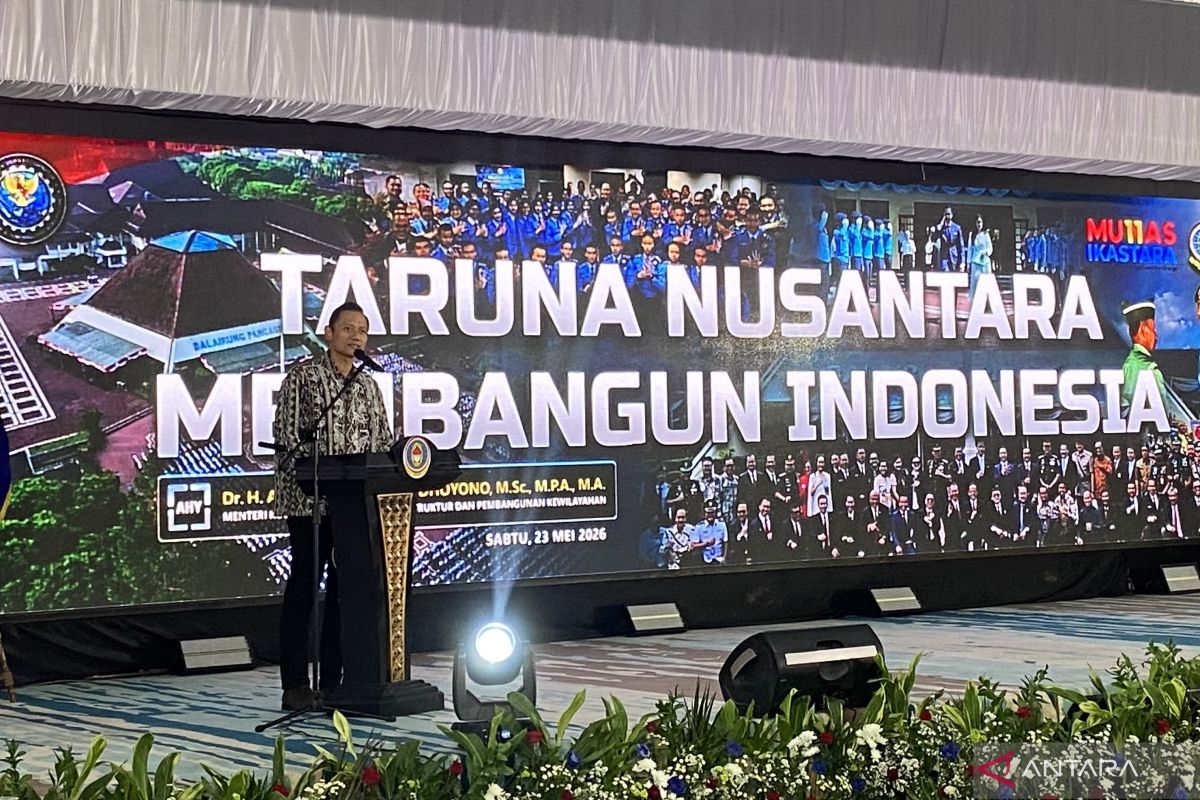
Jakarta (ANTARA) - The Coordinating Minister for Infrastructure and Regional Development Agus Harimurti Yudhoyono (AHY) has stressed that connectivity development in Indonesia cannot rely solely on tolled roads, but must be reinforced with sea and air transport.
According to AHY, the approach to infrastructure development in Indonesia cannot be equated with continental states that rely on road networks. As an archipelagic country, Indonesia requires a more comprehensive connectivity strategy.
“Development must not be Java-centric. We are not a continental country, so connectivity development cannot follow the playbook of continental nations,” AHY said at the Ikatan Alumni SMA Taruna Nusantara (Ikastara) event in Jakarta on Saturday.
He explained that countries such as the United States, China, India, and Russia have large, connected continental landmasses, making land infrastructure development the backbone of connectivity.
Meanwhile, he said Indonesia, a maritime nation with more than 17,000 islands, requires a balance between land, sea, and air transport.
AHY emphasised that strengthening inter-island connectivity is key to promoting balanced development while reducing national logistics costs.
Without an integrated transport system, the distribution of goods and services would remain costly and impede economic growth in various regions.
Furthermore, the Coordinating Minister for Infrastructure and Regional Development highlighted the importance of transport safety in light of a number of incidents recently, particularly in the rail sector.
He stressed that system improvements and strengthening safety and security measures must be a priority.
“The safety of transport is paramount. Not only for trains but all modes of transport must receive serious attention,” he said.
In addition, AHY stressed the importance of reducing logistics costs to improve the efficiency of development and economic growth.
He noted that the Incremental Capital Output Ratio (ICOR) indicator is heavily influenced by the affordability of transport, both for human mobility and the distribution of goods and services.
“The more efficient transport costs are, the lower construction costs can be, and we can focus more on growth and productivity,” he said.
Moreover, AHY highlighted the importance of sustainable infrastructure development that is resilient to disasters.
He referred to major disasters that occurred at the end of last year in several regions such as Aceh, North Sumatra, and West Sumatra, which had a wide impact on communities and infrastructure.
He said such conditions show the need for more resilient construction with appropriate innovation and technology, as well as adequate budget support.
Separately, the government is targeting the construction of a Kalimantan railway network spanning 2,772 kilometres as part of efforts to strengthen connectivity and logistics distribution in the region.
He said the plan is still in the calculation and thorough planning stage.
The government will also form a dedicated committee involving various ministries and agencies to accommodate input and refine the planning of the national rail network.
AHY added that development should not only focus on growth but also on equity. He said that without broad distribution of development, its benefits would not be felt by all communities.
“Without equity, development is pointless. Therefore, we must ensure that growth and economic development are distributed across all regions of Indonesia,” AHY said.