
AHY: ASRI Movement Complements 3 Million Houses Programme
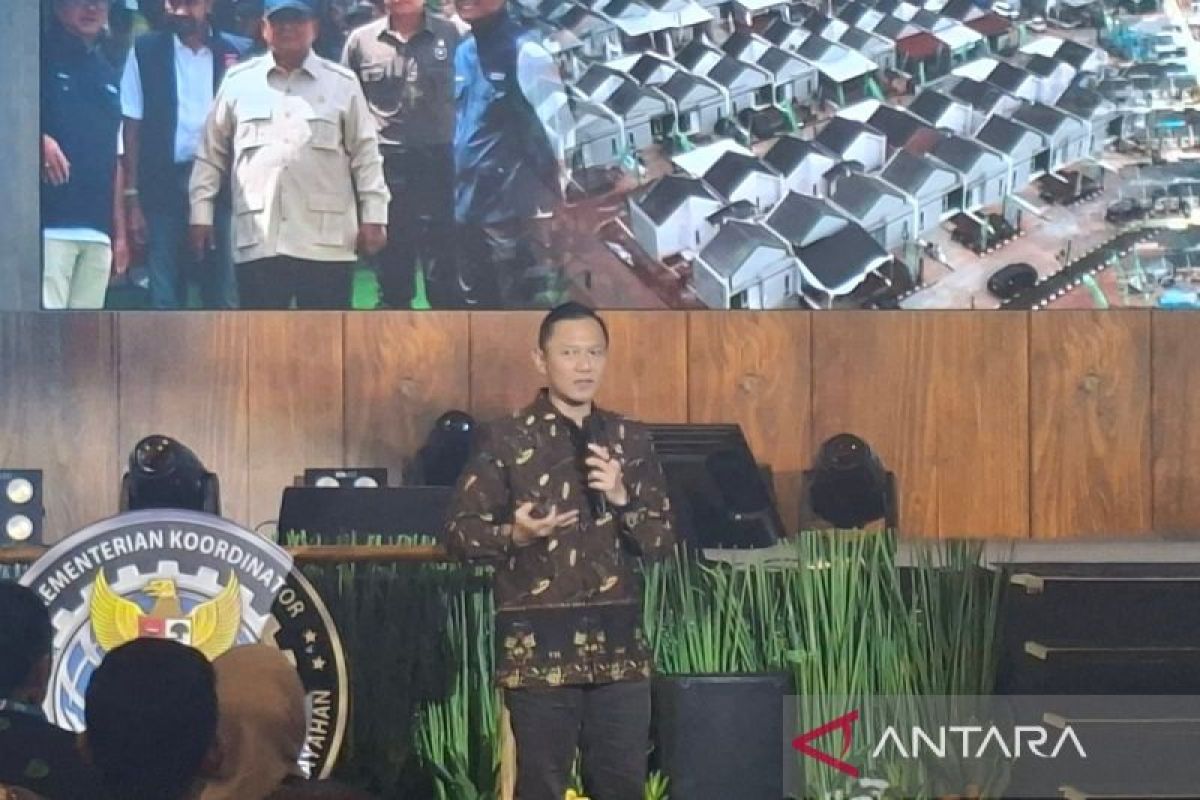
Jakarta (ANTARA) - The Coordinating Minister for Infrastructure and Regional Development (Menko IPK), Agus Harimurti Yudhoyono (AHY), has stated that the Indonesia ASRI (Safe, Healthy, Clean, and Beautiful) movement supports the 3 Million Houses programme.
“The President has also launched the Indonesia ASRI Movement. Therefore, we are combining and marrying two main policies and programmes: first, building 3 million houses, and second, improving community housing conditions through the Indonesia ASRI Movement. A manifestation of this includes providing arrangement, improvement, or revitalisation of slum areas,” AHY said in Jakarta on Monday.
During the Integrated Slum Area Management Coordination Forum, AHY noted that there are approximately 7,000 slum areas in Indonesia, categorised into light, medium, and heavy levels.
“We have also divided the authority regarding which areas must be handled by the central government; areas exceeding 15 hectares fall under central jurisdiction, while 10 to 15 hectares fall under provincial authority, and areas below 10 hectares are the responsibility of regencies/cities. We are mapping this carefully,” he said.
Through various policies, programmes, and instruments, the government is striving to help ease public access to decent housing and the Housing Financing Liquidity Facility (FLPP).
Furthermore, programmes such as the Self-Help Housing Construction Stimulant Assistance (BSPS), also known as ‘Bedah Rumah’ (House Renovation), and others including Housing Microcredit (KUR), are expected to provide better access for low-income communities to obtain more decent housing.
AHY stated that the ultimate goal is for Indonesia to become more organised and for the quality of life for its citizens to improve.
“The spirit brought to this forum is how we can increase integration and good coordination between various ministries and agencies, including between the central and regional governments, as well as collaboration across various elements of society. This is because we want the community to participate directly. These communities are vital,” AHY concluded.