
AHY Announces Indonesia to Begin New Era of 'Green' Aviation Fuel in 2027, Here Are the Details
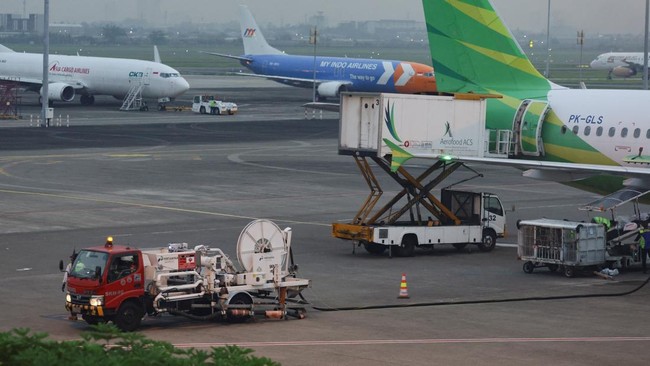
The Indonesian government is preparing the initial steps towards decarbonising the aviation sector by mandating the use of 1% Sustainable Aviation Fuel (SAF) for international flights from Soekarno-Hatta Airport and I Gusti Ngurah Rai Airport starting in 2027. This policy is one of the government’s strategies to build a more environmentally friendly aviation ecosystem while simultaneously enhancing the competitiveness of national airports.
Coordinating Minister for Infrastructure and Regional Development Agus Harimurti Yudhoyono (AHY) stated that the use of SAF will be a milestone in the transformation of the national aviation industry towards a low-emission airport concept. “So, in 2027, the spirit is that we use sustainable aviation fuel. This means it is an alternative to conventional avtur. It is much cleaner. We are focusing first on 1 percent of international flights from Cengkareng, from Soekarno-Hatta, and also from Ngurah Rai. Just those two,” AHY said during a ministerial-level coordination meeting at his office in Jakarta on Thursday.
He explained that the initial implementation of SAF will only apply to international flights departing from the two main airports. The government is targeting this implementation to serve as a foundation before the use of environmentally friendly fuel is expanded in the future. “Departures from the two main international cities, 1 percent. So hopefully this can kick off in 2027 as an initial milestone, before we more aggressively promote the use of sustainable aviation fuel,” he stated.
AHY said the government also aims to build a domestic SAF supply chain from upstream to downstream, so that Indonesia has a competitive advantage and does not depend on foreign supplies. “Of course, we hope that production can also be upstream to downstream within the country. And it must meet quality standards and refer to the sustainability standards set by ICAO (International Civil Aviation Organization),” he said.
He noted that the policy is part of the aviation sector’s decarbonisation agenda currently being prepared by the government. The measures include reducing energy consumption, converting energy sources, and increasing resource efficiency within airport areas. “So that the airport ecosystem is also oriented towards decarbonisation. The net zero emission airport concept. This is not something far-fetched, but something we can implement, and there are a number of airports in the world that have already adopted various infrastructure approaches that are zero or net zero emission,” AHY said.
On the other hand, he reminded that the aviation industry still faces global challenges due to geopolitical turmoil affecting energy prices. According to him, fuel costs currently account for about 40 percent of total operational costs for airlines. “Fuel accounts for 40 percent of the total operational costs of airlines in Indonesia,” he said.
Therefore, the government considers the transformation towards sustainable aviation fuel to be an important strategy to strengthen the long-term competitiveness of the national aviation industry, while supporting economic development targets that remain aligned with environmental protection.