
AHY and Luthfi Plant Mangroves in Demak Using HexBricks Innovation to Combat Coastal Erosion
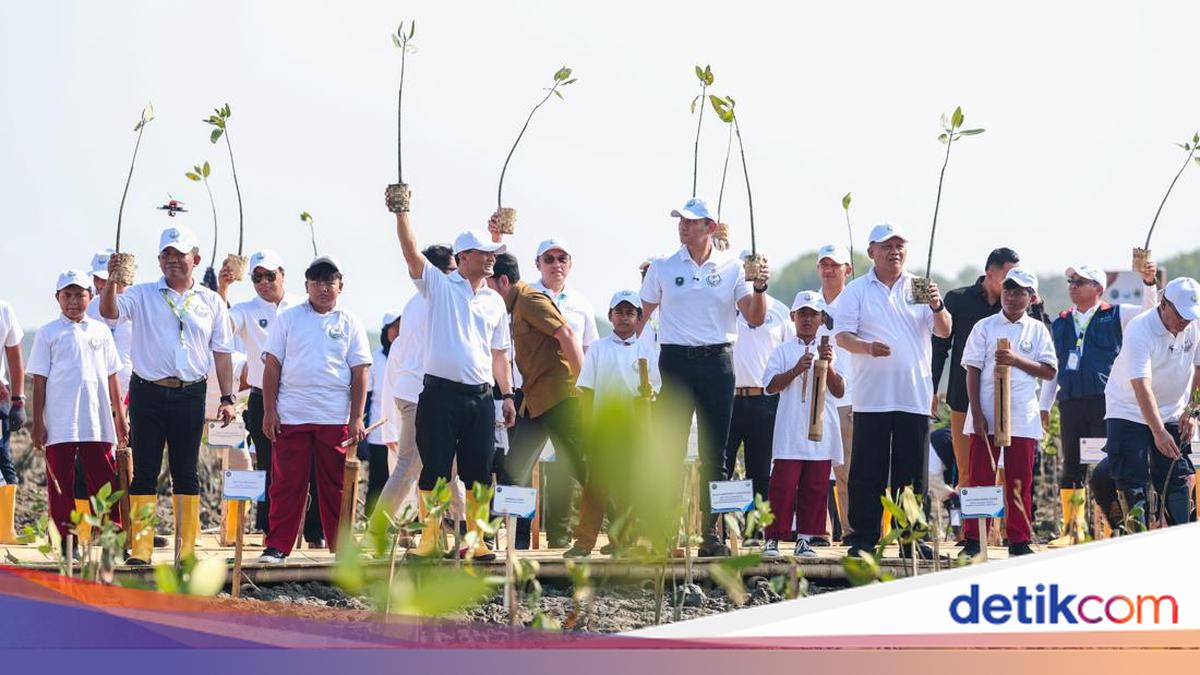
The innovation is a nature-based solution (NbS) to protect coastal areas along Java’s northern coast. Luthfi said planting mangroves was one preventive measure to reduce the impact of erosion and tidal flooding, which have long threatened Central Java’s coastline.
“Today’s effort is preventive: planting mangroves,” Luthfi said in a statement on Monday (19 October 2026).
He said Central Java has 651 kilometres of northern coastline spanning 17 regencies and municipalities. The area faces coastal damage, tidal flooding and land subsidence, all of which require an integrated response.
One initiative undertaken by the Central Java Provincial Government is the Mageri Segoro movement. In 2025, the programme recorded the planting of around 2.34 million mangrove trees across 257 hectares, in 107 villages, 54 subdistricts and 17 regencies and municipalities.
Luthfi said he hoped HexBricks would help ensure the success of mangrove restoration in coastal areas.
HexBricks is an innovation developed by the National Research and Innovation Agency (BRIN): a modular structure designed to support the restoration of mangrove areas. The technology is being used alongside raised earth embankments and bamboo structures in a pilot project at Timbulsloko.
The site covers 6.56 hectares of mangrove area, with an initial planting area of 1,200 square metres. The effectiveness of HexBricks will be evaluated by monitoring mangrove growth, sedimentation, structural performance and benefits to the community.
Coordinating Minister for Infrastructure and Regional Development Agus Harimurti Yudhoyono (AHY) said mangroves help absorb the energy of sea waves and can therefore reduce coastal erosion.
AHY said using HexBricks also offered economic benefits, as the modules are produced by local residents.
“This also means creating jobs and providing income for people living in coastal areas,” he said.
AHY said protection of Java’s northern coast would follow a hybrid approach, combining physical infrastructure such as coastal and offshore sea walls with nature-based solutions.
He said the approach formed part of a strategy to address rising sea levels and land subsidence, which threaten settlements and economic activity in coastal communities.
At the same event, Didit Herdiawan Ashaf, head of the North Java Coast Management Authority (BOPPJ), said the work at Timbulsloko was a demonstration plot to study how coastal protection could be applied in line with local natural characteristics.
“This may not necessarily be done in the same way elsewhere, because we need to study together the different themes and conditions in each area,” Didit said.
Didit stressed that coastal protection along Java’s northern coast must take residents’ livelihoods into account, particularly those of fishers and fish farmers. Access to the sea and fish ponds would therefore not be completely closed off.
Source: jawawa.id (https://jawawa.id/newsitem/ahy-and-luthfi-plant-mangroves-in-demak-using-hexbricks-innovation-to-combat-coastal-erosion-1792396305)
Originally published by detikcom (https://news.detik.com/bangun-indonesia/d-8713754/atasi-abrasi-ahy-luthfi-tanam-mangrove-di-demak-dengan-inovasi-hexbricks), translated from Indonesian