
AHWA and the Trust to Restore NU's Dignity
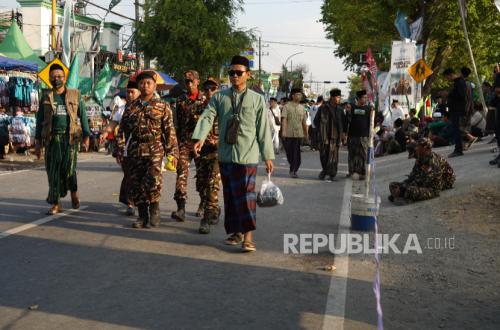
There is one message that the author considers very important for all Nahdlatul Ulama members to reflect upon ahead of the strategic decisions of the 35th NU Congress in Tambakberas.
The message came from KH Ma’ruf Amin, a scholar, Mustasyar of the PBNU, and a figure who understands NU from within as well as from long experience in national life.
He said that the AHWA must be filled by the best scholars, possessing scholarly capacity, being wary in attitude, not easily influenced by improper interests, and choosing based on conscience, not on orders or the interests of certain parties. Kiai Ma’ruf even stressed that those chosen should be ‘the most afdhal among those available.’ He also reminded that the Congress should not be tainted by money politics because that is not befitting for NU.
The message is not merely advice ahead of the Congress. It is a call to safeguard the dignity of NU. And therefore, whoever is entrusted to become a member of the Ahlul Halli wal Aqdi (AHWA) bears an extraordinarily great moral responsibility.
We must be realistic. No human being is perfect. There is no candidate for General Chairman of the PBNU whose entire life is without shortcomings. Every candidate has strengths as well as limitations, experience as well as deficiencies, strengths as well as risks.
Therefore, the measure for choosing must not be built on the assumption that we are looking for a flawless person. Islam in fact teaches a more realistic consideration: choosing the one with the greatest benefit and the least harm.
In the tradition of fiqh there is a maxim: ‘Repelling harms takes precedence over attracting benefits.’
There is also the principle: ‘The leader’s policy towards the people must be based on the public interest.’
Both principles teach that leadership decisions must not be based on personal preference, closeness, group pressure, let alone material gain.
The question must be far greater: Who brings the most benefit to NU as a whole and has the least potential for harm to NU, the ummah, the nation and the state?
That is the comprehensive way of thinking.
AHWA is not a new transactional space. Therefore, the idea of making AHWA one of the important instruments in the NU leadership process must be kept pure from the outset.
The mechanism for electing the General Chairman through the AHWA is indeed still one of the options to be decided by the Congress participants; Rais Aam KH Miftachul Akhyar stressed that whether the General Chairman is elected directly or through the AHWA will be returned to the Congress forum.
If the AHWA mechanism is strengthened, let us not make a new mistake. Let us not allow the transactional politics feared in direct elections to merely shift into influence politics over the AHWA.
Let us not allow the contest for votes to turn into a contest for the people who have the authority to determine votes. Let us not allow money politics to change form into influence politics.
Therefore, KH Ma’ruf Amin’s words must become a moral fence: AHWA is not an order. AHWA is not a package of interests. AHWA is not a transaction. AHWA is a representation of scholars entrusted to consider the future of the jam’iyah.
The kiai who enter the AHWA must be able to stand above all candidate interests. Not become part of anyone’s team. Not become an extension of any group. Not carry anyone’s entrustment. And most importantly: not carry their own self-interest.