
Ahok Exposes Origins of Pertamina LNG Losses in Court Proceedings
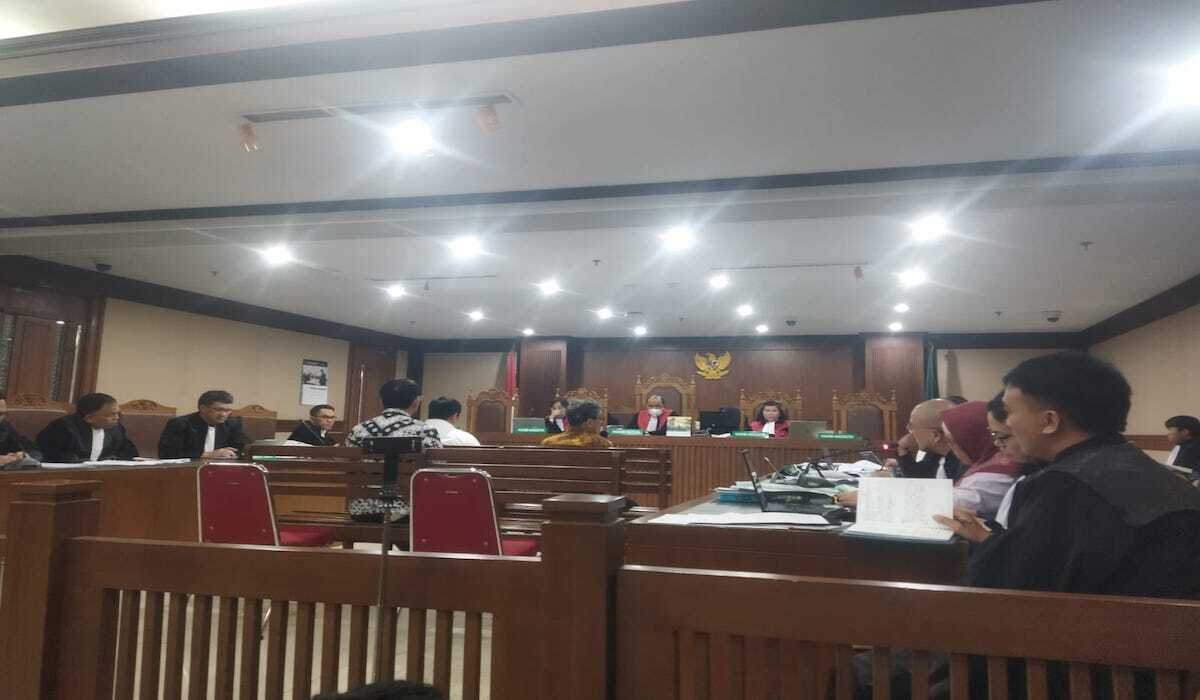
Former Chief Commissioner of PT Pertamina (Persero), Basuki Tjahaja Purnama alias Ahok, has disclosed the origins of the discovery of substantial losses in the management of Liquefied Natural Gas (LNG) within Pertamina.
He conveyed these facts whilst giving testimony as a witness at the Corruption Court (Tipikor) in a case involving alleged corruption in LNG procurement, with defendants Yenni Andayani (YA), Director of Gas at PT Pertamina (Persero) for the period 2015-2018, and Hari Karyuliarto (HK), Director of Gas at PT Pertamina (Persero) for 2012-2014 at the Corruption Court in Jakarta on Monday 2 March.
Ahok explained that information regarding the threat of losses emerged during a routine joint meeting of the Board of Directors (BOD) and Board of Commissioners (BOC) in January 2020, shortly after he officially took office as Chief Commissioner in November 2019.
“So, what I remember, sir, was that when I first arrived, in January there was a routine BOD-BOC meeting. And in that meeting it was conveyed that there would be losses from LNG sales,” Ahok stated before the Attorney General’s Office.
According to Ahok, during the meeting the Board of Directors presented the existence of LNG cargo that had already been purchased but did not yet have confirmed buyer commitments or offtakers. This condition was deemed irregular, as in standard LNG business practice, purchases are typically made only after buyer certainty is secured.
“Usually, with LNG, if you want to buy, you already have buyer commitments,” Ahok emphasised, stressing the fundamental principle of gas business.
He revealed that based on data received at that time, initial losses exceeded US$100 million. Moreover, in 2020 additional cargo was projected to lack buyers, meaning potential losses could surge to approximately US$300 million.
“There were losses of more than 100 million, then in 2020 additional cargo was projected that also had no buyers. Well, if that happened, losses could perhaps reach 300 million dollars,” he stated.
This situation prompted the Board of Commissioners to question the basis for the decision to purchase LNG without a definitive sales contract. Ahok noted that this discovery was subsequently addressed by requesting the internal audit function to conduct an in-depth examination.
From the results of the internal audit, he continued, the LNG purchase was classified as “material” within the context of the company’s Articles of Association.
“Data emerged from the internal audit function, where it was stated that this LNG purchase is material within the Articles of Association,” said Ahok.
He explained that material status means the expenditure value has a significant impact on the company’s financial condition and should receive attention and approval in accordance with applicable governance mechanisms (Good Corporate Governance).
“In the Articles of Association, material means the value of money expenditure that will have an effect on the company. That means it is considered material,” he stressed.
In this case, Hari Karyulianto is the defendant in alleged corruption charges regarding the procurement of LNG from Corpus Christi Liquefaction LLC (CCL) at Pertamina for the period 2011-2021. Additionally, former Vice President Strategic Planning Business Development of the Gas Directorate at Pertamina for 2012-2013, Yenni Andayani, also sits as a defendant.
Both are alleged to have caused state financial losses totalling 113.84 million US dollars or equivalent to Rp1.77 trillion. The actions are said to have enriched former Pertamina Managing Director for the period 2009-2014, Karen Agustiawan, as well as enriching CCL by US$113.84 million.
The court proceedings in this case continue with witness examination scheduled to fully expose the alleged irregularities in the management of national energy procurement.