
Ahmad Vahidi: Hardliner General Defies Trump with 'Go Ahead If You Want to Continue the War'
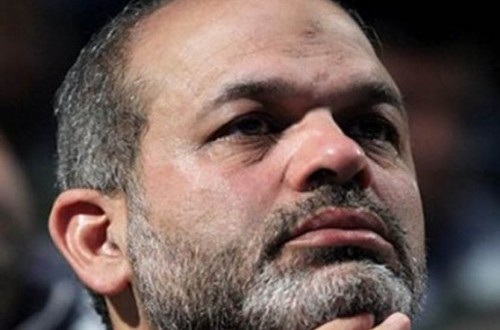
Maintaining the closure of the Strait of Hormuz, attacking neighbouring countries around the Persian Gulf, and refusing US demands to cease uranium enrichment are part of Iran’s firm stance during the ceasefire period. According to geopolitical experts cited by Sweden Herald on Monday, 25 May 2026, this firm stance is attributed to the resolute leadership of General Ahmad Vahidi, current head of Iran’s Islamic Revolutionary Guard Corps (IRGC).
Vahidi has not been seen in public for three months and is believed to be one of the few individuals who can communicate directly with Iran’s Supreme Leader Mojtaba Khamenei. A long-standing central figure in Iran’s political and military power circles, Vahidi has previously served as both defence and interior minister.
In March 2026, Vahidi was appointed IRGC chief after his predecessor, General Mohammad Pakpour, was killed in an attack at the start of the war against the US and Israel. When Vahidi took over the IRGC, as reported by the New York Times (NYT), Iran adopted a harder stance in indirect communications with US President Donald Trump.
The NYT, a newspaper known to be relatively friendly with Trump, labelled the general as ‘Trump’s main obstacle to peace’. According to the Washington-based Institute for the Study of War (ISW), Vahidi and his close associates now control not only Iran’s military operations but also its negotiation policies.
A source with knowledge of US-Iran negotiations told the Associated Press that Vahidi’s role became critical after April’s talks in Pakistan failed to produce any agreement.
Among Vahidi’s key wartime decisions was Iran’s continued closure of the Strait of Hormuz, cutting off access to fossil fuel markets in the Persian Gulf, contributing to the global energy crisis feared since the war began. Additionally, under Vahidi’s leadership, the IRGC has attacked oil facilities, hotels, and infrastructure in Arab nations, creating regional instability.
‘He is influential and part of a system,’ said Ali Vaez, director of the Iran Project at the International Crisis Group, cited by CNN on Sunday, 24 May 2026.
‘Decisions are made through consensus, but Vahidi undoubtedly has a very strong voice in the room,’ Vaez added.
To illustrate Vahidi’s hardline background, he has been a wanted Interpol fugitive since 2007, accused of playing a major role in the 1994 bombing of a Jewish community centre in Argentina that killed 85 people and injured hundreds.
Vahidi’s rise as an elite decision-maker indicates that US and Israeli strategies of eliminating Iran’s top political and military leadership have not resulted in moderate successors. According to Danny Citrinowicz, former head of Israeli military intelligence, Vahidi is ‘highly dominant’ and ‘radical’, deeply committed to the principles of the Islamic Revolution.
‘You cannot agree on anything without his approval,’ Citrinowicz said.
‘He is among those who say, “If we don’t get what we want, and Trump wants to restart the war, then go ahead,”’ Citrinowicz added.