
Ahmad Luthfi Partners with KPK to Overhaul Mining Governance from Upstream to Downstream
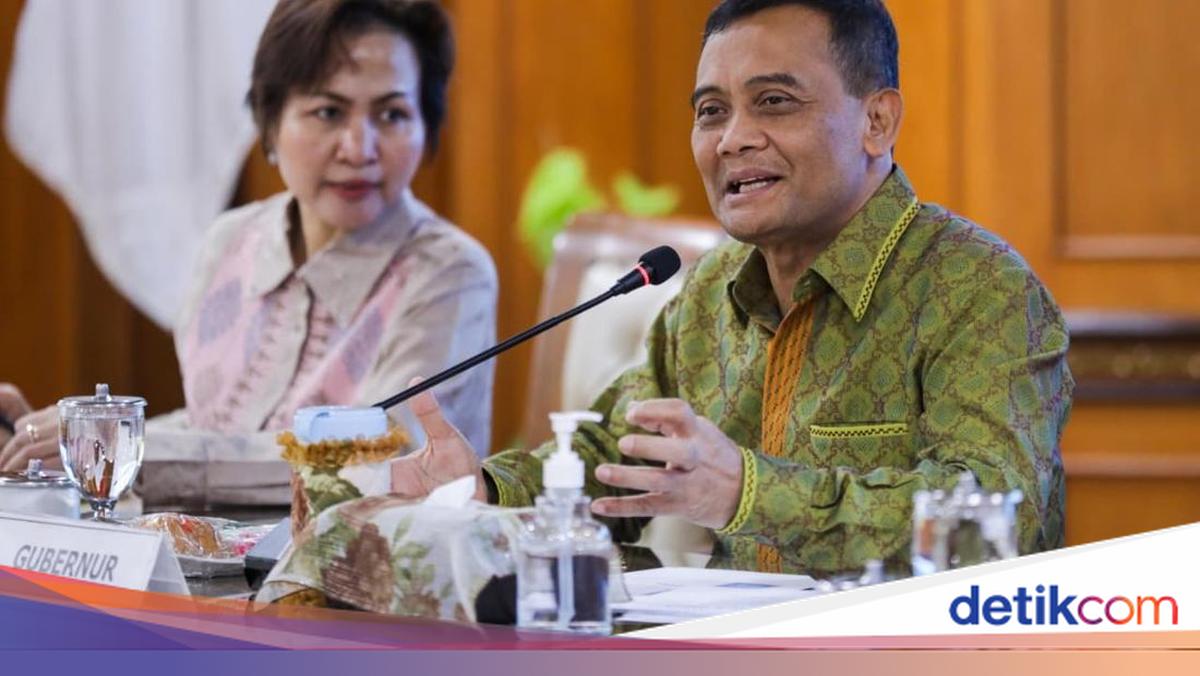
The Governor of Central Java, Ahmad Luthfi, stated that the MBLB sector plays a vital role in supporting infrastructure development and driving the regional economy. However, governance must be improved to prevent legal issues, environmental damage, and the potential loss of regional revenue. This was stated during a Coordination Meeting for the Follow-up of MBLB Mining Governance Reform alongside the Corruption Eradication Commission’s (KPK) Deputy Team for Coordination and Supervision at the Central Java Governor’s Office today.
“The KPK will accompany us. I want the mining governance to be transparent so that no legal violations occur,” Luthfi said in a written statement on Friday (12/06/2026).
According to Luthfi, the reforms will be implemented from upstream to downstream, covering the licensing process, the accuracy of mining coordinates, reclamation and post-mining obligations, and field activity supervision.
He requested that all regulations and weaknesses in mining governance be mapped out first. This approach ensures that preventive and supervisory measures are strengthened before moving towards law enforcement.
“Let us establish the regulations first. Then, identify the weaknesses. We want pre-emptive and preventive efforts to take precedence, with law enforcement as the final step,” he said.
The Central Java Provincial Government noted that as of 4 June 202lar, there were 505 active mining permits in Central Java. These include 80 Rock Mining Permits (SIPB), 128 exploration mining business licences (IUP), 157 production operation IUPs, 105 extensions of production operation IUPs, and various other permits.
On the other hand, the challenge of illegal mining remains a significant concern. In 2025, there were 128 recorded cases of Unlicensed Gold Mining (PETI), while up to May 2026, 49 cases have been recorded. Based on data from the National Police Criminal Investigation Agency (Bareskrim Polri) and the Central Java Regional Police Special Crimes Directorate, there were 13 enforcement actions in 2025 and 5 enforcement actions up to May 2026.
Luthfi emphasised that the reform of mining governance is not intended to hinder investment. On the contrary, the government wants to ensure that the demand for construction materials is met through mining activities that are legal, orderly, and environmentally responsible.
This is particularly crucial as Central Java still requires large supplies of materials for several strategic infrastructure projects, such as the Jogja-Bawen, Semarang-Demak, and Klaten-Jogja toll roads.
“Central Java is currently undertaking major infrastructure developments. Our supply is still insufficient. However, we must first establish the regulatory framework before proceeding with law enforcement related to the developments we are undertaking,” he said.
The Central Java Provincial Government has also revoked the permits of mining businesses that do not comply with regulations. During the 2025-2026 period, permits were revoked for several companies, including CV Raksanam Lokapala in Boyolali, PT Parama Miguno Bumi in Kendal, CV Wishnu Pratama in Sragen, and PT Dinar Batu Agung in Banyumas.
Meanwhile, the MBLB sector remains a pillar of the regional economy. In 2025, the MBLB tax option contributed Rp 23.2 billion, and as of May 2026, it reached Rp 10.6 billion. This sector also supports 811 downstream companies with a total investment of Rp 30.4 trillion and employs approximately 12,184 local workers.
Source: jawawa.id (https://jawawa.id/newsitem/ahmad-luthfi-partners-with-kpk-to-overhaul-mining-governance-from-upstream-to-downstream-1781247247)
Originally published by detikcom (https://news.detik.com/bangun-indonesia/d-8529112/ahmad-luthfi-gandeng-kpk-benahi-tata-kelola-tambang-hulu-ke-hilir), translated from Indonesian