
Ahmad Luthfi Outlines Strategy to Strengthen Worker Welfare in Central Java
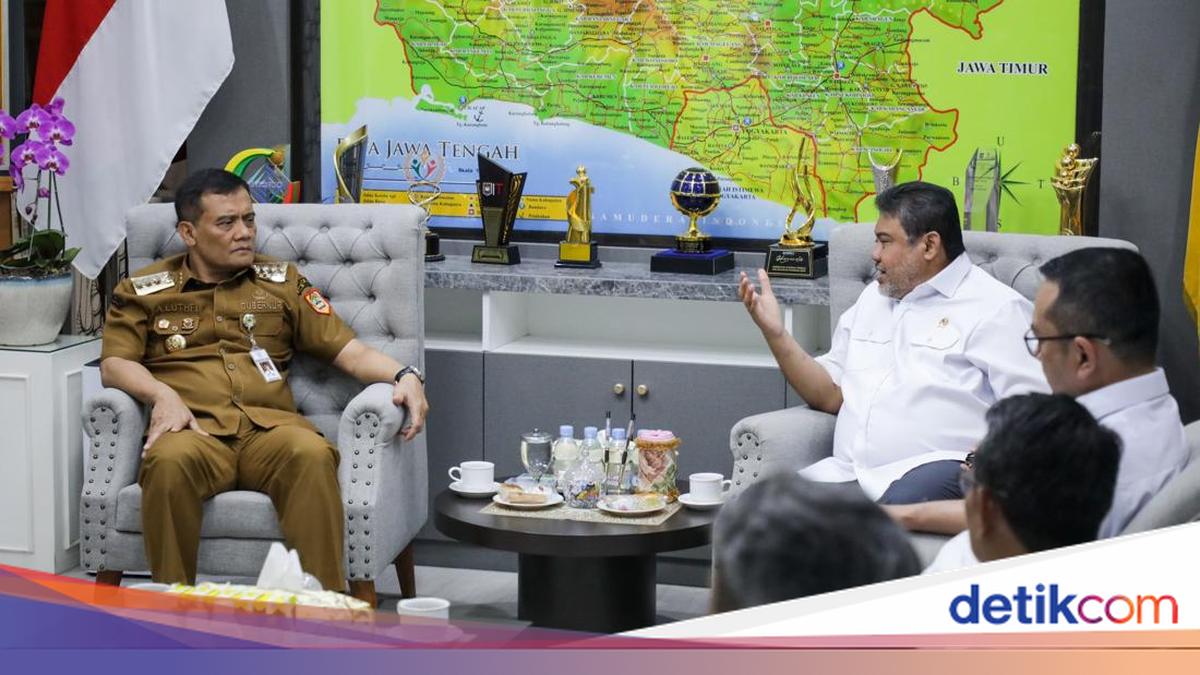
The matter came to light when Ahmad Luthfi received Presidential Special Adviser for Employment and Worker Welfare, Said Iqbal, at his office. Among the policies is the formation of a layoff task force. This task force will work preventively when a company begins to show signs of trouble. The task force is tasked with ensuring workers’ rights are fulfilled if layoffs cannot be avoided, including severance pay, old-age benefits, job loss insurance, overtime pay, and leave compensation.
In terms of non-wage welfare, Ahmad Luthfi has reduced the Trans Jateng bus fare for workers from Rp2,000 to Rp1,000 per trip. The Central Java Provincial Government is also promoting the provision of free daycare and a Women Workers’ Protection House in industrial areas.
Furthermore, the provincial government has established the Central Java Prosperous Workers Cooperative to provide basic necessities at more affordable prices. The first cooperative was set up in the Wijayakusuma Industrial Estate in Semarang, which is home to around 29,000 workers.
This pro-worker stance is also reflected in wage policy. Ahmad Luthfi set the 2026 Central Java Provincial Minimum Wage at Rp2,327,386.07, an increase of 7.28 percent compared to the previous year. The calculation uses an alpha coefficient of 0.90, the highest limit permitted by regulations.
During the meeting, Said Iqbal conveyed a message from the President, instructing the government to intervene immediately when layoff issues arise. He emphasised that the President’s directive is to protect the weak, not the strong.
Iqbal also specifically highlighted the layoffs at PT Victory Apparel in Semarang, urging a resolution through dialogue between the government, the company, and the workers. Ahmad Luthfi explained that the company’s problems stemmed from the impact of the Covid-19 pandemic, flash floods, declining orders, and financial pressures.