
Ahead of the New Academic Year, the Social Affairs Minister Urges Strengthened Governance of Sekolah Rakyat
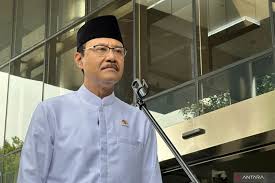
The Minister of Social Affairs (Mensos) Saifullah Yusuf, also known as Gus Ipul, emphasised the importance of strengthening governance in the administration of Sekolah Rakyat ahead of the start of the 2026/2027 academic year. The improvements cover facilities and infrastructure, human resources, financial management, as well as the learning system and student discipline within the school environment.
Gus Ipul made the remarks during an online coordination meeting with Sekolah Rakyat heads on Tuesday (19 May). He said the meeting aimed to coordinate and align perceptions on matters to be followed up in the days ahead regarding the administration of Sekolah Rakyat for 2026-2027.
In his address, he urged all levels of Sekolah Rakyat to maintain the quality of governance of facilities and infrastructure, including ensuring cleanliness, neatness and orderliness of the school environment.
‘We must ensure that what has been built can truly motivate and energise us to work more optimally. Everything must be tidy and orderly so that strengthening the discipline of teachers and students can be planned.’
He also encouraged productive use of school land in line with regional conditions, suggesting school grounds could be used for vegetable gardens, livestock, or other needs that support learning and student independence.
Furthermore, he argued that human resource governance at Sekolah Rakyat must be implemented proportionally. As a boarding-school concept operating 24 hours a day, all members of the school community must be ready and highly disciplined, from the principal to cleaners.
‘The human resources there must be ready in mind and soul, because even the gardener becomes a moral compass for the children,’ he explained.
On financial management, he stressed the importance of a transparent and accountable system. In the future, Sekolah Rakyat will become a separate work unit with the authority to manage its budget independently.
‘We will give large responsibility to the principal and their team so they can manage money themselves. No longer centralized purchasing of uniforms, shoes, etc. Everything has been decentralised but with proper oversight,’ he said.
Gus Ipul added that learning management at Sekolah Rakyat will be more complex, not only focusing on teaching but also supervising students in 24-hour dormitories. To support this supervision, the government will employ integrated monitoring technology.
‘We will involve technology here so that from Jakarta we can monitor every corner there, and if there is potential sexual misconduct, we can mitigate it more quickly,’ he said.
He also urged heads of schools to build harmonious relations with the surrounding community and local government, hoping Sekolah Rakyat can be accepted and become part of the local social environment.
‘Invite nearby residents to get to know Sekolah Rakyat, rotating invitations to youth groups, women’s groups, farmers, and parents of students, and involve them in Sekolah Rakyat events,’ he concluded.
Gus Ipul also explained that data collected by village operators will be the fundamental basis for the Badan Pusat Statistik (BPS) in conducting updates. He noted that Sekolah Rakyat is a microcosm of a poverty alleviation programme that is structured, integrated, and sustainable.
Minister of Social Affairs Saifullah Yusuf (Gus Ipul) urged social pillars in South Kalimantan Province to unite in implementing the President’s flagship programme.