
Ahead of the 2027 Zero ODOL Target, These Are the Most Common Violations
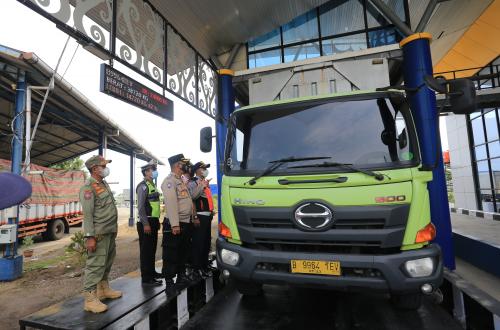
JAKARTA — Document and load-capacity violations dominated findings from inspections of freight vehicles between January and October 2026. The Ministry of Transportation is stepping up monitoring ahead of the implementation of its Zero Over Dimension Over Loading (ODOL) target in 2027.
Director General of Land Transport Aan Suhanan said that, of the 89 Vehicle Weighing Implementation Units (UPPKB) in operation, around 1.8 million vehicles, or 73.66 per cent, had no recorded violations. More than 676,000 vehicles, or 26.34 per cent, were found to have committed violations.
“From January 2026 to 30 October 2026, document-related offences remained the most common,” Aan said in a written statement in Jakarta on Tuesday (3 November 2026).
Document violations involved 446,000 vehicles, or 50.25 per cent. Load-capacity violations followed, involving 430,000 vehicles, or 48.45 per cent.
Other violations included vehicle-dimension breaches involving 6,777 vehicles, or 0.76 per cent; improper loading procedures involving 4,601 vehicles, or 0.52 per cent; and technical-requirement violations involving 143 vehicles, or 0.02 per cent.
Of the vehicles recorded as violating the rules, 205,016, or 30.32 per cent, were subject to enforcement. The most common measure was a warning, issued to 191,353 vehicles, or 93.34 per cent of those subject to enforcement.
“Fines were issued to 6,976 vehicles, or 3.40 per cent; UPPKB-issued citations to 6,022, or 2.94 per cent; and police-issued citations to 665, or 0.32 per cent,” Aan added.
Freight-vehicle monitoring is also conducted using Weigh In Motion (WIM) technology at 11 UPPKB sites: Aek Batu, Balonggandu, Guyangan, Kertapati, Kulwaru, Pelawan, Tabalong, Talang Kelapa, Tenayan, Wanareja and Muara Lembu. The technology has detected more than 3.5 million vehicles.
“Blu-e was detected for 1.6 million vehicles, or 46.03 per cent, while it was not detected for 1.9 million vehicles, or 53.97 per cent,” Aan said.
Monitoring data also identified five companies with the highest numbers of violations: PT SIL, with 2,544 vehicles; PT EW, with 1,969; PT IP, with 1,913; CV SKE, with 1,599; and PT SA, with 1,548.
By type of cargo, the most violations were found among vehicles carrying mixed goods, at 42,433. This was followed by parcel goods, at 36,797; sand, 26,055; crude palm oil (CPO), 18,470; and cement, 15,246.
Aan said monitoring covered 8.91 per cent of daily vehicle traffic in 2026, an increase of 1.44 percentage points from 7.47 per cent in 2025.
The ministry is also continuing to check the completeness and consistency of data from WIM systems and Online Weighbridges (JTO) following repairs. It is coordinating with Land Transportation Management Centres (BPTD) and UPPKB units to improve monitoring performance.
“We are also continuing to coordinate with BPTD and UPPKB to improve monitoring. Trends in violations, particularly those that remain prevalent, will of course be reviewed regularly,” Aan said.
Source: jawawa.id (https://jawawa.id/newsitem/ahead-of-the-2027-zero-odol-target-these-are-the-most-common-violations-1793677954)
Originally published by Republika (https://ekonomi.republika.co.id/berita/tnwo4p416/jelang-zero-odol-2027-ini-pelanggaran-yang-paling-banyak-ditemukan), translated from Indonesian