
Ahead of NU Congress, KH Zulfa Mustofa Urges Revival of Scholarly Writing Tradition
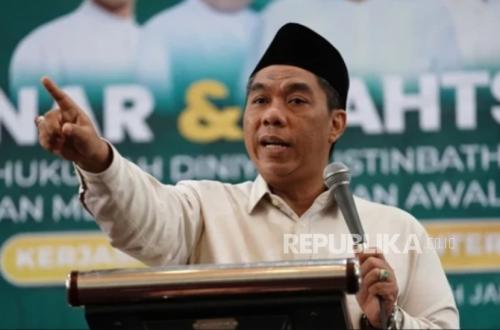
Wakil Ketua Umum Pengurus Besar Nahdlatul Ulama (PBNU), KH. Zulfa Mustofa, has urged scholars, kiai, academics, and pesantren communities to revive the tradition of writing kitab (scholarly books) as part of an effort to preserve the continuity of knowledge and build Islamic civilisation. He noted that since the early days of Islam and its development in the archipelago, civilisational progress has been supported not only by the emergence of pious and knowledgeable ulama but also by the intellectual works they left behind. The books of past ulama serve as bridges connecting knowledge across generations, remaining alive hundreds of years after their authors have passed away.
“The tradition of the ulama is the tradition of knowledge. And the tradition of knowledge will not be strong without the tradition of writing. That is why past ulama not only educated students but also left behind books as an intellectual legacy for the ummah,” Kiai Zulfa stated. He acknowledged that pesantren have long been known as centres for transmitting Islamic knowledge through the study of classical texts, but he argued that they must also continuously produce new works in response to the developments of the times and the dynamics of society.
According to him, the challenges facing the ummah today are increasingly complex, ranging from technological developments and social changes to national and humanitarian issues. These challenges, he said, require scholarly answers born from ulama who understand tradition while also being able to read contemporary realities. “It is indeed important and necessary for us to read, study, and examine the works of past ulama. However, ulama also have a moral responsibility to produce works that can become references for future generations. This is how the relay of knowledge continues,” he said.
He stressed that writing a kitab is not merely an academic activity but also a form of da’wah and service to the ummah. Through written works, knowledge can be inherited, studied, developed, and can reach communities far beyond the limits of space and time. In his view, history shows that great ulama are remembered not only for their vast knowledge or the number of their students but also for the works they left behind. A kitab serves as proof of scholarly authority as well as an intellectual footprint that continues to provide benefits across the ages.
“Lectures can move hearts in their time. But books keep knowledge alive throughout the ages. Therefore, every ulama should have the spirit to leave behind a work as part of a perpetual charitable deed of knowledge,” he said. He expressed hope that the spirit of producing Islamic scholarly works will grow again within the Nahdlatul Ulama community, whether in pesantren, universities, or bahtsul masail forums. According to him, the tradition of reading must go hand in hand with the tradition of writing so that the treasury of Indonesian Islamic knowledge continues to develop and contribute to the world.
This idea also forms the background for the launch of KH. Zulfa Mustofa’s book, Ithafu Ummati Al Muqtafa, which will be presented and discussed on Friday, 10 July 2026, at the Sakinah Hall of Sunda Kelapa Mosque in Menteng, Central Jakarta. The book launch is expected to serve as a momentum to revive the intellectual tradition of ulama through the birth of works rooted in scholarly chains of transmission, addressing the challenges of the times, and enriching the treasury of Indonesian Islamic literacy.