
Ahead of Market Close, Investors Rush to Buy Shares; 657 Stocks Green as JCI Surges 6.5%
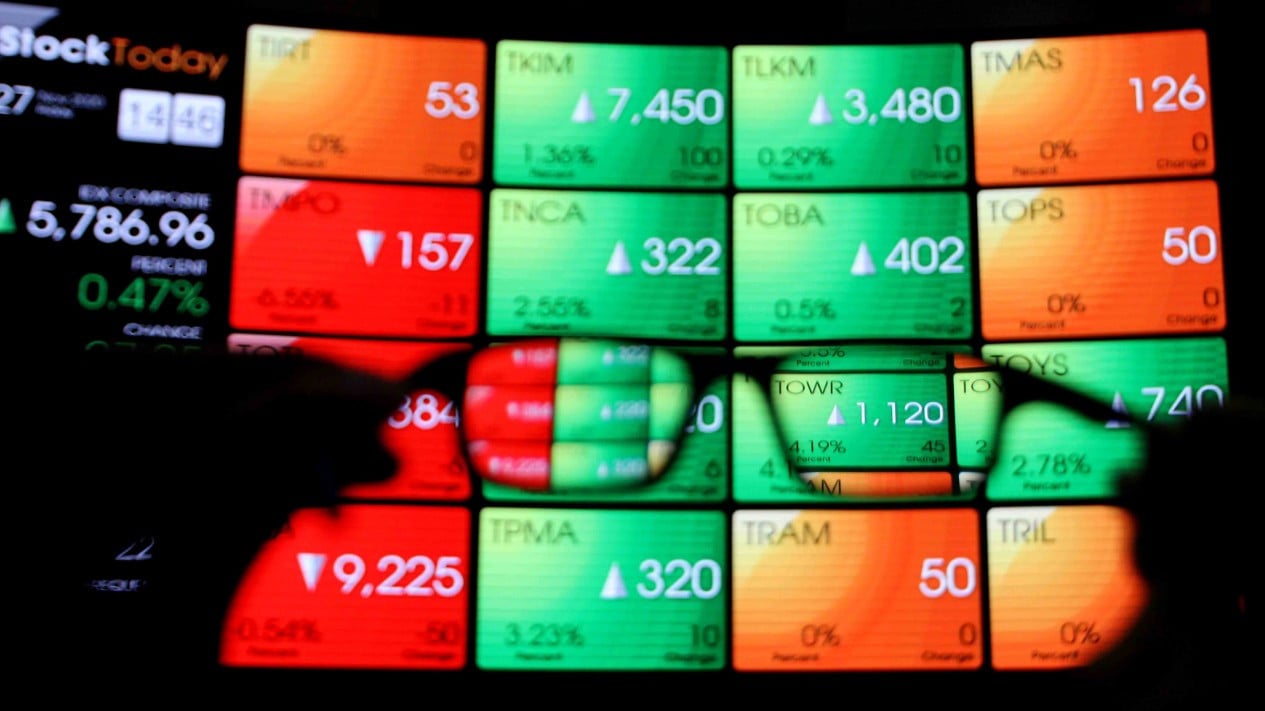
Heavy buying characterised trading on the Indonesia Stock Exchange (BEI) on Tuesday, 9 June 2026. Ahead of the market close, investors scrambled to snap up shares, propelling the Jakarta Composite Index (JCI) sharply higher by 6.5 percent to a level of 5,692.85. The surge represents one of the largest single-day gains in recent times. The positive movement was not only reflected in the main index but also evident in the dominance of stocks trading in the green throughout most of the session. Trading data as of 15:19 WIB showed that 657 stocks had strengthened. Meanwhile, only 126 stocks declined and a further 176 stocks remained stagnant. The predominance of advancing stocks indicated robust investor buying interest as the trading day neared its end. The inflow of funds into the stock market was also visible from the high transaction activity occurring throughout the day. The market euphoria was not only reflected in the index surge and the number of gaining stocks. The recorded transaction value also demonstrated exceptionally high trading activity. Approaching the close, the transaction value reached Rp21.59 trillion. Trading volume was recorded at 34.54 billion shares exchanged in 2.26 million transactions. The heightened activity helped push the Indonesia Stock Exchange’s market capitalisation up to Rp9,952 trillion. The rush by investors to accumulate shares near the close signals that market participants are beginning to rebuild optimism after the market came under pressure in recent times due to global sentiment and the rupiah’s depreciation. Although it ultimately closed with a sharp gain, the JCI’s journey throughout the day was not entirely smooth. In the first session, the index had even recorded a gain of more than 5 percent. However, the rally was temporarily halted after the market responded to Bank Indonesia’s surprise decision to raise its benchmark interest rate, the BI Rate, by 25 basis points to 5.50 percent. The decision initially triggered caution among market players because higher interest rates typically impact funding costs and investment activity. Yet conditions reversed near the close when investors began to view the policy as a positive step towards maintaining national economic stability.