
Ahead of Mandatory Halal Certification, Religious Affairs Ministry Says It Offers Certainty, Not Just a Label
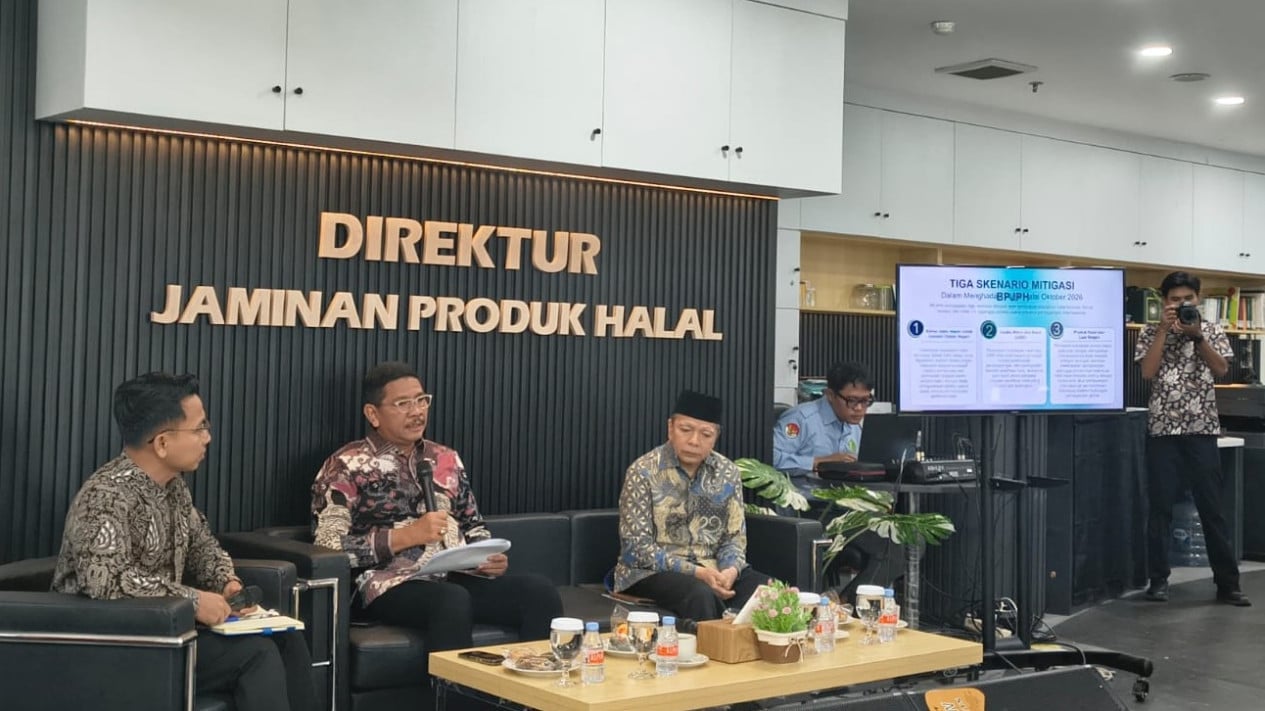
Jakarta – The Ministry of Religious Affairs (Kemenag) has stressed that mandatory halal certification, which comes into force on 18 October 2026, is a government measure to protect consumers and increase confidence in products made by producers.
Abu Rokhmad, the ministry’s Director General of Islamic Community Guidance, said halal certification was more than just a label. Certainty about a product’s halal status reassures consumers and adds value for producers in making, using and marketing products.
“It gives consumers peace of mind when buying or using products that comply with religious law,” Abu said at a press conference in Jakarta on Wednesday, 14 October 2026, ahead of the requirement taking effect.
Abu said mandatory halal certification was part of efforts to ensure that products circulating in Indonesia, particularly food, beverages and cosmetics, meet the applicable requirements.
He said the mandatory halal policy had been in preparation for several years and was being implemented through coordination among ministries and agencies, including the Coordinating Ministry for Economic Affairs, the Halal Product Assurance Agency (BPJPH) and the Ministry of Religious Affairs.
Abu urged businesses to use the time available to ensure their products meet halal certification requirements, as stipulated in Government Regulation No. 42/2024 on Halal Product Assurance.
“We hope that by October 2026 all products — food, beverages and cosmetics included — will have a halal label or certification,” Abu said.
He acknowledged that some businesses, including micro, small and medium-sized enterprises (MSMEs) and certain industries, still need time and support to meet halal certification requirements.
Businesses’ readiness therefore needs to be strengthened through assistance tailored to the circumstances and needs of each sector. This is necessary to ensure the mandatory halal policy is implemented effectively.
Abu also highlighted the role of traditional and social media in raising public understanding of halal certification requirements. Feedback from various parties, he said, could help the government identify obstacles and strengthen implementation.
Meanwhile, M. Fuad Nasar, the ministry’s Director of Halal Product Assurance, said growing public interest in halal products was an important factor in strengthening Indonesia’s halal ecosystem.