
Ahead of Mandatory Halal Certification, DPR Urges BPJPH to Expand Assistance for MSMEs
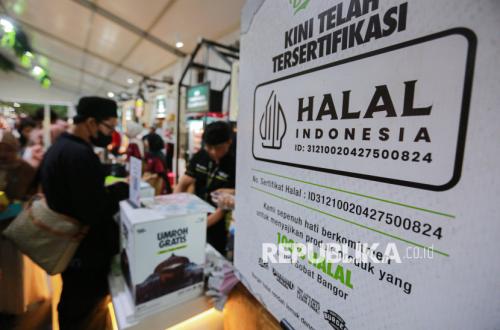
The government plans to enforce mandatory halal certification for food, beverages, and slaughter products for Micro and Small Enterprises (MSMEs) starting 18 October 2026. Sandi Fitrian Noor, a member of Commission VIII of the Indonesian House of Representatives (DPR RI), has requested that system readiness and assistance be prioritised to ensure the implementation of this obligation does not burden MSME operators.
Sandi stated that system readiness must be addressed before the mandate takes effect. He noted that while business owners have been given time to adjust to halal certification requirements, the intention must be supported by mature systems rather than just paper deadlines.
“We appreciate the government’s commitment to making halal product assurance a form of state protection for the community. The legal basis is clear and business actors have been given years to adjust. However, this good intention must be guarded by mature system readiness,” Sandi said in a statement on Sunday (20/9/2026).
Sandi highlighted the gap between the legal norms that have been in place since 2014 and the enforcement instruments. BPJPH Regulation Number 2 of 2026 regarding the Imposition of Administrative Sanctions was only promulgated on 5 June 2026, less than five months before the implementation deadline.
“This situation raises questions about whether field supervisors are truly prepared to enforce the rules fairly and consistently,” the Golkar legislator remarked.
According to Sandi, the scope of products required to be halal-certified at this stage is broader than previous phases. The scope includes food and beverages, slaughter products, cosmetics, chemical and genetically engineered products, natural medicine, as well as daily goods such as prayer equipment and stationery.
“This expansion of scope means the compliance burden for MSMEs increases significantly within a relatively short period,” said Sandly.
Sandi also noted that the disparity in capacity between regions poses a challenge to the implementation of these obligations. He argued that the socialisation and assistance for halal certification, including the Free Halal Certification (SEHATI) Programme, may not reach MSMEs evenly, particularly in areas outside Java.
“In South Kalimantan, many MSME operators run small businesses, relying on stalls and home production. They are not rejecting the rules, but are often hindered by technical issues such as business legality, Business Identification Numbers (NIB), and access to information on how to register. If sanctions are strictly enforced without considering these conditions, it is the small people who want to comply but have not yet had the chance who will suffer,” said Sandi.
He added that the ability of large companies to meet certification requirements differs from that of home-based food traders, stalls, caterers, and cake and beverage producers. He noted that additional costs, documentation, changes in raw materials, or production processes could impact the capital and sustainability of MSMEs.
“We must not equate the capacity of large companies with small traders. For large companies, certification costs and processes can be integrated into their compliance systems. For MSMEs, additional costs, documentation, changes in raw materials, or production processes can directly affect their capital and business continuity,” Sandi said.
Sandi proposed that the Halal Product Assurance Agency (BPJPH) implement law enforcement gradually and proportionally for MSME operators, starting with coaching and written warnings before moving to administrative sanctions.
He also requested that the BPJPH expand the quota and reach of the SEHATI programme, especially in regions that have received less socialisation. Furthermore, cross-ministerial and inter-agency coordination, involving the BPJPH, the Ministry of MSMEs, and local governments, is necessary for technical assistance in managing NIB and business documents for MSMEs.
“We in Commission VIII fully support the vision of Indonesia as a global halal industry hub. But support does not mean without criticism. We want to ensure this policy runs fairly, does not become a new burden for the common people, and truly provides added value for business actors, rather than merely adding administrative complications,” concluded Sandi.