
Ahead of Hajj Pilgrim Movement to Medina, Hajj Minister Evaluates Health Services
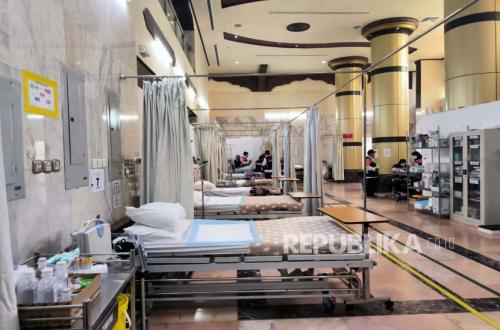
Ahead of the second wave of Hajj pilgrims moving from Mecca to Medina, Indonesian Hajj and Umrah Minister Mochammad Irfan Yusuf visited the Indonesian Hajj Health Clinic (KKHI) in Medina on Thursday (4/6/2026). The visit aimed to review the readiness of health services, including medical personnel, treatment rooms, polyclinics, and medical facilities at the clinic. Accompanied by the Amirul Hajj delegation, the minister inspected service rooms from the ground floor to the top floor. At each room, the delegation received explanations from KKHI Chief Dr Enny Nuryanti. “Services at KKHI are not permitted to accept inpatients, in accordance with the regulations of the Government of Saudi Arabia,” said Dr Enny. “We have prepared several beds for certain patients to provide inpatient care. However, we could face a reprimand if we serve inpatients,” Dr Enny added. After inspecting every room and floor, the minister assessed that the operations of KKHI in Medina require a thorough evaluation. “Overall, there is readiness, but going forward, this kind of service model needs to be reconsidered,” said Gus Irfan. He highlighted the use of the KKHI building, which he deemed not yet optimal. Out of a total of five floors, only two are utilised for health services, while the rest are used for other functions that he believes could still be repurposed. “I see there is wastefulness. This will be evaluation material for further discussion in Jakarta,” he said. Additionally, Irfan touched upon input from Saudi authorities regarding the limited function of the KKHI. According to him, the facility can only be used for a maximum observation period of two hours (120 minutes) before a patient must be referred to a hospital. “With a building this large, is it effective if it is only for two-hour examinations? We need to think of another model that complies with regulations in Saudi,” he stated. From a regulatory standpoint, he admitted that Indonesia is lagging in adapting to Saudi Arabia’s latest policies, which change every year. The service pattern currently used is still considered to refer to the old system. “We are still using patterns from 5–10 years ago, so we often have difficulty adjusting. Even every year there are always obstacles in processing operational permits,” he explained.