
Ahead of Godzilla El Niño, Agriculture Minister Ensures National Rice Stock is Secure
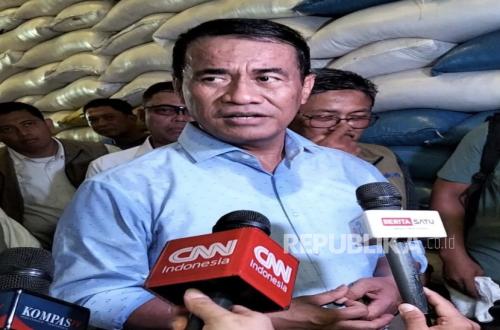
Agriculture Minister Andi Amran Sulaiman stated that the government has anticipated the potential impacts of the extreme El Niño phenomenon, or “Godzilla El Niño”, expected this year, by ensuring the availability of national food stocks remains secure until next year.
Amran said signs of El Niño are beginning to be felt, but its intensity is estimated not to be worse than the similar event in 2015. He emphasised that the government has experience in managing the climate impacts, including during the periods of 2015, 2023, and 2024.
“It’s starting to be felt. They say it’s dry for six months. But it seems the 2015 El Niño was still worse,” said Amran at the Bulog Panaikang Warehouse Complex, Makassar, on Sunday (5/4/2026).
According to him, the Indonesian government estimates the dry period due to El Niño will last around six months. However, this condition is believed not to disrupt national food security because the current rice stock is at the highest level in Indonesia’s history.
Amran mentioned that the national rice stock currently stands at around 4.5 million tonnes and is projected to increase to 5 million tonnes within the next 10 to 20 days. “Our stock now is the highest since independence. Insha Allah, in 10 to 20 days, it will be 5 million tonnes,” he said.
In addition to government stocks, he added that there are rice reserves in the hotel, restaurant, and catering sector (horeca) amounting to 12.5 million tonnes. On the other hand, production still in the fields or standing crops ready for harvest is estimated at 11 million tonnes.
Thus, the total national rice availability, both from stocks and potential production, is estimated to exceed 23 million tonnes. Amran estimates this amount is sufficient to meet public consumption needs for up to 11 months ahead.
“That means for the next 11 months, it’s secure. For the Indonesian people, the stock is safe,” he said.
He assessed this condition as far better than the potential duration of the drought due to El Niño, which is estimated to last only six months. Thus, said Amran, the risk of supply disruptions can be minimised.
In addition to relying on existing stocks and production, the government is also optimising irrigation and pump programmes to maintain agricultural productivity during the dry season. These programmes are targeted to produce at least an additional 2 million tonnes per month.
If these programmes run for six months of drought, the additional production could reach around 12 million tonnes. “That means until March at the peak next year, it’s secure. Even up to April,” said Amran.
He emphasised that these various measures are part of the government’s strategy to anticipate potential global food crises triggered by climate change and geopolitical dynamics.
Amran also touched on the heating geopolitical situation in the Middle East, including conflicts involving Iran, Israel, and the United States, which could affect global food price stability. However, he assured that this condition does not significantly impact domestic food prices.
“In the midst of the heating Middle East political situation, will it affect food prices? Alhamdulillah, no. Why? The rice is already there,” he said.
In addition to rice availability, Amran highlighted the government’s readiness to ensure fertiliser supplies. He said the government has anticipated fertiliser needs since the beginning of the year by securing raw materials.
According to him, these steps were taken on the instructions of President Prabowo Subianto, who is seen as having a strong vision and instinct in reading potential global crises, including energy and food crises.
“At the beginning of the year, we already bought fertiliser raw material stocks. Now our fertiliser stock is plentiful,” he said.
Furthermore, continued Amran, Indonesia has the potential to export urea fertiliser to several countries because domestic production meets national needs. He mentioned that there are already requests from three countries, although negotiations are still ongoing.
“We will export urea. There are already three countries requesting, but still in the negotiation stage,” he said.
With a combination of high rice stocks, substantial potential production, and support from irrigation infrastructure and fertiliser availability, Amran is optimistic that Indonesia can face the El Niño impacts without experiencing a food crisis.
He emphasised that the government will continue to monitor climate developments and ensure anticipatory measures run optimally to maintain national food stability amid global uncertainties.