
Ahead of Final Decision, 2027 Hajj Costs Urged Not to Focus Solely on Popularity
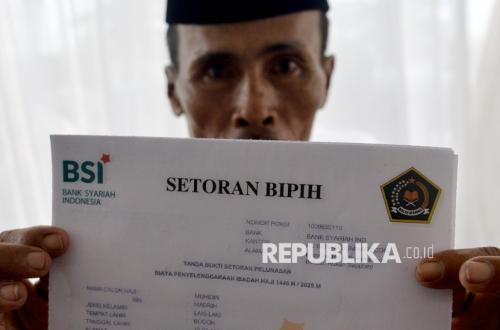
Hajj and Umrah observer, Ade Marfuddin, has reminded the government that the determination of the Hajj Organising Fee (BPIH) should not merely serve populist policy goals. Ade’s statement comes amidst government proposals regarding the BPIH structure, where benefits from fund management would subsidise up to 60 per cent of the cost, while the Hajj Travel Cost (Bipih) paid by pilgrims would only account for 30 per cent.
“The Ministry of Hajj and Umrah is (present) to maintain the dignity of the Hajj; it must not be tarnished,” Ade told Republika on Tuesday (15/09/2026).
Ade stated that the Hajj pilgrimage must return to its true essence and meaningful interpretation of ‘istithaah’ (capability). He noted that pilgrims are capable of departing using their own personal funds. The fund benefits should instead be utilised for matters that support pilgrims in achieving ‘mabrur’ (blessed) status before, during, and after their departure.
“The fund benefits (from Hajj funds) are not for personal consumption; they must be returned to the social good,” he said.
Previously, the Ministry of Hajj and Umrah proposed a BPIH for the year 1448 H/ 2027 AD amounting to Rp 107,340,172.02. From this total proposal, the portion of Bipih to be paid directly by pilgrims is designed to be 40 per cent, or Rp 42,936,068.81. Meanwhile, the remaining 60 per cent, or Rp 64,404,103.21, is supported by the benefits from Hajj funds managed by the Hajj Financial Management Agency (BPKH).
Ade requested that the government consider not only this year’s Hajj but also the following year. Furthermore, he noted that there are two Hajj operations within a single year, meaning the fund benefits will be heavily utilised. “Therefore, the sustainability of the fund benefits must be considered; our note is that the 60 per cent figure (from the benefits) is eroding a significant portion of the Hajj fund benefits,” he said.
As for the ideal BPIH, he explained that if the use of fund benefits is forced, the ideal structure would be for pilgrims to pay 60 per cent, supported by 40 per cent from the fund benefits.
Previously, Ade also reminded that the Hajj fund benefits are derived from the collective management of funds belonging to pilgrims. Therefore, he argued, their use must be handled with caution, especially when used to suppress the amount of costs to be paid by pilgrims.
“The benefits belong to the public, not to individuals. Therefore, be careful, ladies and gentlemen, the Hajj pilgrims, regarding the use of these benefits. In quotation marks, it is not necessarily ‘halal’, it is not necessarily pure, it is not necessarily clean,” said the Hajj and Umrah observer.