
Ahead of Eid al-Adha, Central Java Faces Shortfall of Thousands of Cattle for Eid Sacrifices
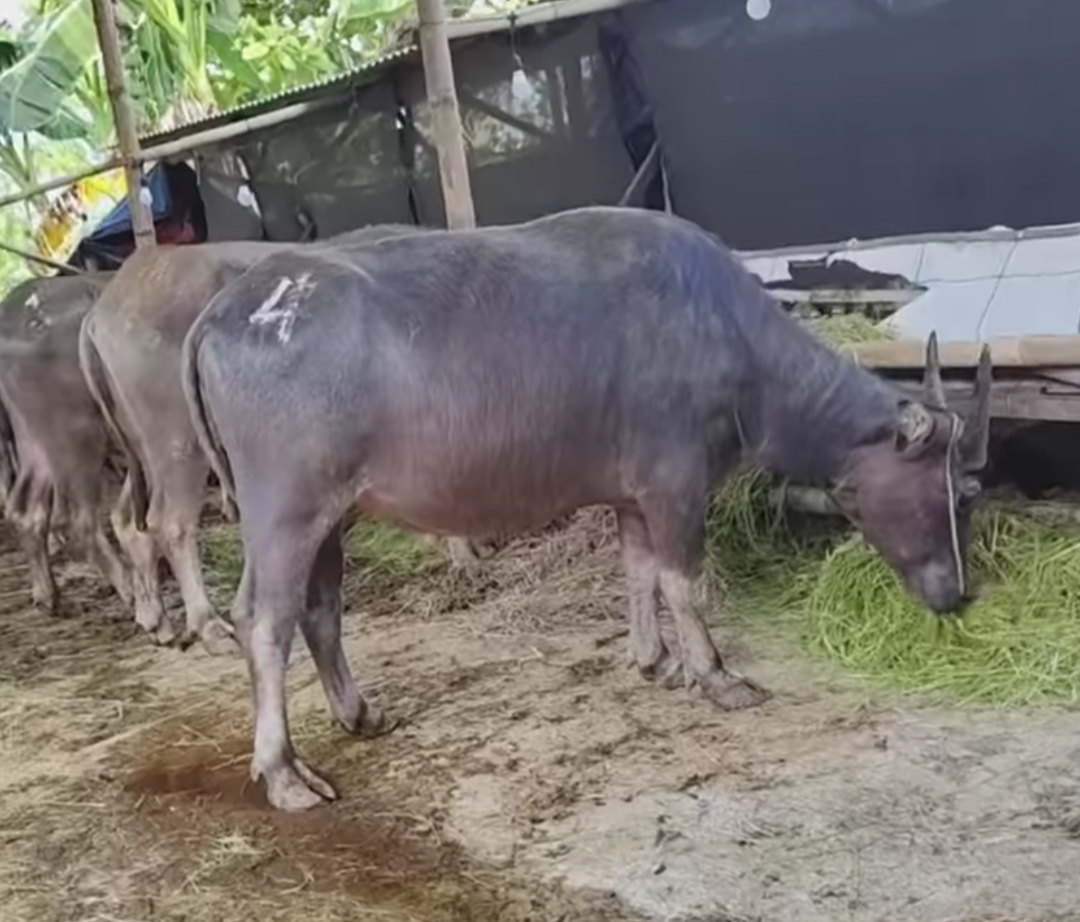
Central Java is still short of thousands of buffalo to meet the needs of qurbani for Eid al-Adha next week, with buffalo supplies to be imported from neighbouring provinces to cover the deficit. Media Indonesia observed on Wednesday, 20 May, a week before Eid al-Adha, that residents in several districts of Central Java began seeking livestock for sacrificial purposes, with some visiting villages to buy cattle, goats, sheep and buffalo directly from farmers. Although hundreds of temporary stalls selling animals for Eid abound in various regions, many residents prefer buying directly from farms where prices are lower and the animals are believed to be better cared for.
Ridwan, 55, of Candi, Semarang, said: “I am searching with some neighbours for animals directly in remote villages; besides cheaper prices, they are well maintained.” In Kudus, Rochmad said that for this year’s sacrifice they have been going from village to village and around the area but have not found what they want, because mosques in Kudus have decided to choose buffalo for Eid. “Although more expensive than cattle, perhaps travelling further will help,” he added.
In some livestock markets near Kudus, buffalo are noticeably scarce; among hundreds of cattle and goats for sale, only a handful are available, and prices are significantly higher, differing by around 3-5 million rupiah compared with cows of similar weight.
Didik Tri Prasetiyo, head of the Kudus Regency Agriculture and Food Office (Dinas Pertanian dan Pangan), confirmed a shortage of buffalo. With Eid al-Adha a week away, the province needs 1,910 buffalo but only 1,224 are available, so imports from other areas are required to close the gap. “Even though other animals such as cattle, goats and sheep are plentiful, local tradition has long prioritised buffalo,” he said.
Similarly, Defransisco Dasilva Tavares, head of Central Java’s Department of Agriculture and Livestock (Distannak), disclosed a shortage of buffalo: from a required 4,472 buffalo, only 1,204 are currently available, even as other types of livestock are abundant in Central Java. This year, Central Java’s livestock population stands at about 6.3 million, while qurbani demand is estimated at around 9-10 percent, or 593,168 animals. To address the buffalo shortfall, imports from other regions are being sought.
Data from Media Indonesia shows Aceh has the largest buffalo population in the country, at 108,522 head (14 percent of Indonesia’s total 755,468), followed by South Sulawesi and East Nusa Tenggara (NTT). (H-2)
Surakarta City Government requires livestock entering the city to be accompanied by veterinary documents detailing the health and suitability of the animals.
The Manonjaya Livestock Market recorded 254 cattle and buffalo originating from Tasikmalaya, Ciamis, Banjar, Pangandaran, Cilacap and Madura, with 46 sold.
More than 100 livestock stalls are reported in Surabaya, of which 61 have been inspected.
During inspections, cases of Foot-and-Mouth Disease (FMD) and Lumpy Skin Disease (LSD) have been found in several districts.
Sacrificial animals of varying weights were priced from around Rp2.5 million for approximately 12 kilograms to Rp5 million for around 40 kilograms.
Authorities and public health measures include the Central Java Provincial Government maintaining eight hospitals and 883 community health centres to prevent and anticipate the spread of Hantavirus, though no cases have yet been reported in the region.
Tight checks on the movement of sacrificial animals are being conducted in districts including Rembang, Blora, Karanganyar, Sragen and Wonogiri.
In a related development, AK (42), a resident of Dompol, Kemalang District, Klaten, was arrested following a report to the Klaten Police Criminal Investigation Unit on Wednesday, 13 May.
Jawa Tengah is promoting circular economy-based household waste management.
Copyright @ 2026 Media Group - mediaindonesia. All Rights Reserved