
Ahead of Eid, Ahmad Luthfi Returns to Inspect Basic Commodity Prices at the Market
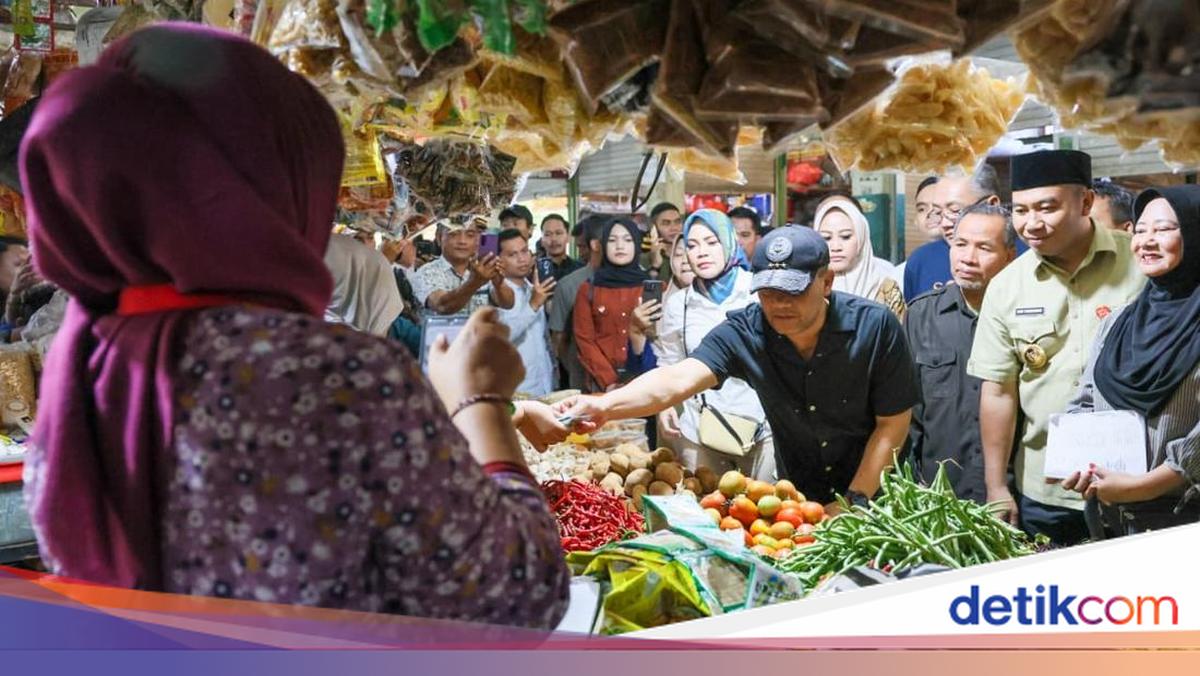
Central Java Governor Ahmad Luthfi personally inspected Pasar Bunder in Sragen Regency today. The inspection was to ensure that prices remain controlled and supplies are secure amid the increasing demand from the public.
During the inspection, Ahmad Luthfi was accompanied by several regional apparatus, such as the Food Security Agency (Dishanpan) and the Industry and Trade Agency (Disperindag) of Central Java. The visit was carried out as a pre-emptive step by the local government to safeguard public purchasing power while controlling inflation ahead of Eid.
The atmosphere at Pasar Bunder Sragen was bustling with public activities as people began stocking up on basic necessities ahead of Idul Fitri. Traders’ stalls were crowded with buyers, and sales transactions increased, particularly for several food commodities.
During the inspection, Ahmad Luthfi also engaged directly in dialogue with traders and buyers. He inquired about the prices of several commodities and ensured that supply conditions at the market level remained secure.
A warm interaction was evident when Ahmad Luthfi bought a quantity of goods from traders and distributed them to residents around the market. The action was enthusiastically received by the public present at the location.
“The provincial government has the Siaga application to monitor prices, but that is not enough. We must check directly in the field, especially approaching H-2 Eid, to ensure there are no price fluctuations,” said Ahmad Luthfi in a written statement on Wednesday (18/3/2026).
According to him, there are two main indicators in maintaining food stability, namely availability and affordability.
“The two keys are availability and affordability. Both are fulfilled. If there is a price increase, it is still within reasonable limits due to the increased demand from the public,” he explained.
He gave the example of cayenne pepper prices, which previously approached Rp 100,000 per kilogram, now starting to drop to around Rp 70,000. Meanwhile, beef prices are in the range of Rp 130,000 to Rp 140,000 per kilogram, depending on quality, and still within normal limits.
Based on monitoring results, rice prices at Pasar Bunder are stable and still within the Highest Retail Price (HET) range. Meanwhile, horticultural commodities such as shallots and garlic are experiencing gradual increases due to supply and distribution fluctuations between regions, as well as increased demand during Ramadan.
However, overall, price conditions remain controlled, and no significant spikes were found. Supplies of basic necessities are also ensured to be secure.
Luthfi explained that if price spikes occur in certain markets, the Central Java Provincial Government will immediately intervene through regional apparatus and food BUMDs.
The Central Java Provincial Government will continue to strengthen price monitoring, supply distribution, and market interventions to maintain price stability and ensure that public needs are met ahead of Eid.
“As soon as there is an increase in one market, we immediately intervene through the relevant agencies and BUMDs. Whether it’s meat, chillies, or onions, we control everything so that no spikes occur,” he emphasised.
Meanwhile, the Head of the Central Java Industry and Trade Agency, Julie Emmy, stated that on average, prices of inflation-contributing commodities are currently relatively stable.
“Including the price of red cayenne pepper, which is always a bogeyman. Alhamdulillah, all have decreased; yesterday Rp 70,000, now Rp 65,000,” said Julie.
She also assured that stocks of rice, both premium and medium, are secure. The same applies to Minyakita stocks, which continue to be supplied by Bulog to markets.
In addition to monitoring through the application, price control is also carried out through direct field checks and market interventions via PT Jateng Agro Berdikari (JTAB) as the food BUMD.
“JTAB through the Kendil programme and Dishanpan through the Cheap Food Movement (GPM) programme,” she said.
JTAB Director Totok Siswanto added that price monitoring is conducted daily in 35 regencies/cities in Central Java as the basis for taking intervention steps.
“When there is a significant price increase, we immediately deploy through market operations. Like when chilli prices were above Rp 100 per kilogram, interventions were carried out so that prices could be brought down,” he concluded.