
Ahead of Christmas and New Year, KAI Deploys 1,156 Infrastructure Staff and Monitors 107 Risk Hotspots in Java
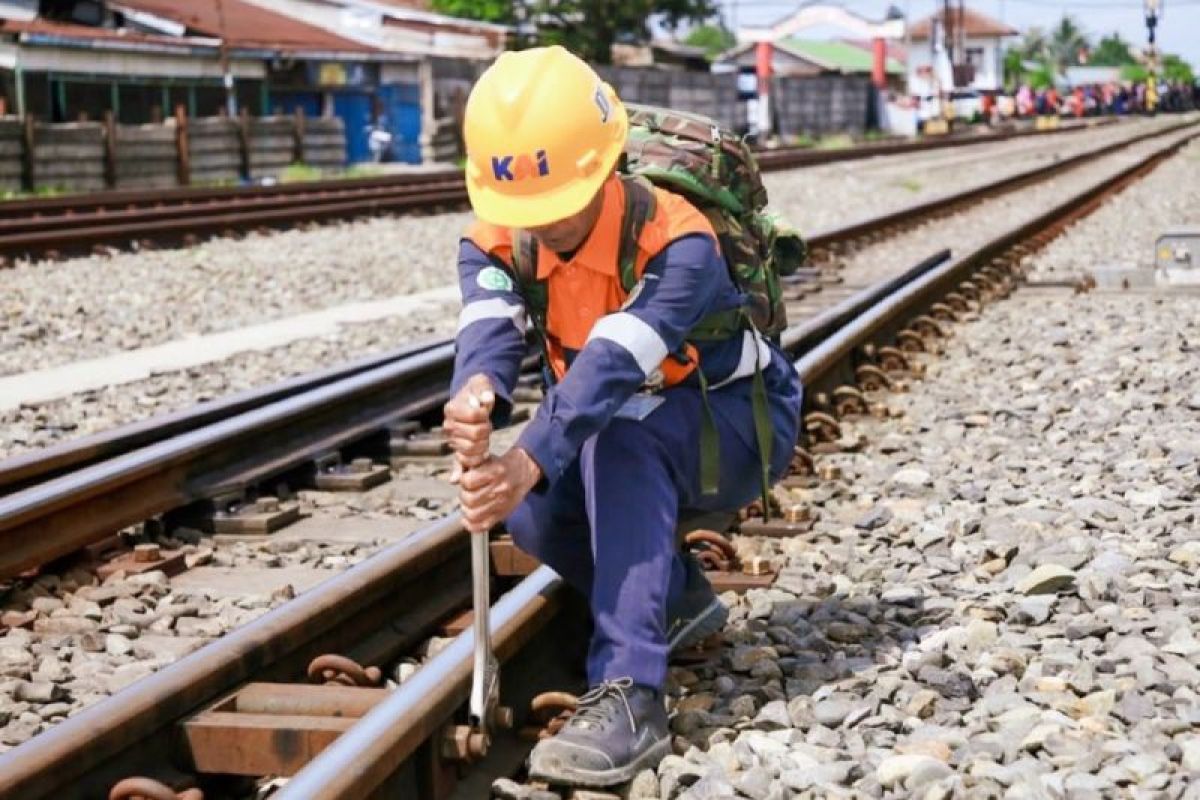
Inspections of railway tracks, bridges, signalling systems and level crossings are being stepped up to anticipate potential disruption during the year-end holiday period.
Jakarta (ANTARA) – State-owned railway operator PT Kereta Api Indonesia (Persero), or KAI, is increasing its infrastructure preparedness ahead of the 2026 Christmas and 2027 New Year travel period, which runs from 17 December 2026 to 3 January 2027. Measures include inspections of railway tracks, bridges, signalling systems and overhead power lines, as well as intensive monitoring of locations that could be disrupted by extreme weather.
KAI Vice-President for Corporate Communications Anne Purba said infrastructure readiness was a key priority in maintaining the safety and smooth operation of train services, particularly as public mobility increases during the year-end holiday period.
“We are stepping up infrastructure inspections and monitoring ahead of the Christmas and New Year travel period. Every track, bridge, level crossing and item of supporting equipment is included in our mitigation efforts so that people can travel safely and comfortably,” Anne said.
To support these preparations, KAI is deploying 1,156 additional infrastructure staff across Java: 778 level-crossing attendants, 271 track inspectors and 107 staff assigned to vulnerable areas. They will strengthen monitoring at level crossings, inspect track conditions and keep watch over locations requiring particular attention.
KAI has also identified 107 special monitoring locations, known as Daerah Pemantauan Khusus (Dapsus), across Java. These comprise 35 flood-prone points, 28 landslide-prone points, 24 areas of unstable ground and 20 structures or other infrastructure, such as bridges, requiring special monitoring. By operating area, Bandung’s Daop 2 has the most locations, with 55, followed by Jakarta’s Daop 1 and Semarang’s Daop 4, with 13 each.
Monitoring includes checking soil conditions and track geometry, watching for ground movement in landslide-prone areas, and inspecting water flow and levels at sites at risk of flooding. KAI is also paying attention to rail conditions during extreme temperatures, as well as bridge abutments, supporting structures and drainage channels near railway lines.
“Each location has different risk characteristics. Staff therefore carry out inspections according to local conditions, including monitoring the weather, ground stability, bridges and track condition. Early detection is important so that potential disruptions can be dealt with before they affect train services,” Anne said.
To support the response to disruptions, KAI has positioned emergency materials and equipment, known as Alat Material untuk Siaga (AMUS), at strategic locations. Its inventory includes 77,941 sandbags, 7,225 used concrete sleepers, 3,952 wooden sleepers, 13,428 rail fasteners, 1,675 used rails and 1,227 units of ballast. Other equipment includes track-maintenance machinery, rail cutters and drills, lighting, generators and emergency-response supplies.
Preparedness also covers more frequent checks of signalling and telecommunications systems and overhead power lines. KAI has prepared critical spare parts for signalling equipment and stationed rapid-response teams, or flying gangs, at locations vulnerable to disruption from lightning, flooding, landslides or equipment failure. Maintenance teams will also be on standby around the clock to follow up on findings in the field.
For level-crossing safety, KAI is increasing monitoring at crossings with heavy vehicle traffic and at locations without permanent attendants. According to readiness data as of 9 November 2026, 190 civil works projects for level-crossing posts had been completed, and 24 listed crossing points were operational. KAI urged road users to take care at both guarded and unguarded level crossings by slowing down, stopping briefly and looking both ways to ensure it is safe to cross.
“We urge all road users to make safety their priority at level crossings. Whether a crossing is guarded or unguarded, make a habit of stopping briefly, looking both ways and checking that no train is approaching before crossing. Obey signs, signals and staff instructions, and never drive around a closed barrier. Railway safety is a shared responsibility that requires the care and discipline of the whole community,” Anne said.
Source: jawawa.id (https://jawawa.id/newsitem/ahead-of-christmas-and-new-year-kai-deploys-1-156-infrastructure-staff-and-monitors-107-risk-hotspots-in-java-1795510569)
Originally published by Antara (Indonesian) (https://www.antaranews.com/berita/5874667/jelang-nataru-kai-siagakan-1156-petugas-prasarana-dan-pantau-107-titik-rawan-di-jawa), translated from Indonesian