
Ahead of 1 July Implementation, Here's the Progress on B50 Biodiesel Readiness
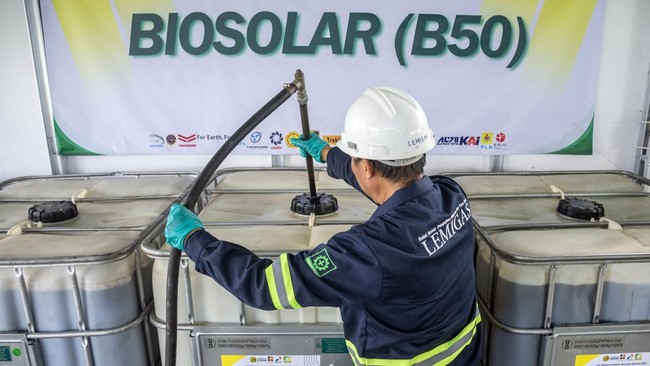
The Ministry of Energy and Mineral Resources (ESDM) has announced that trials for the B50 biodiesel programme, which mandates a 50% blend of palm oil-based fuel with diesel, have yielded positive results across six key sectors. The programme is scheduled for implementation on 1 July 2026.
Director General of New, Renewable Energy and Energy Conservation (EBTKE) Eniya Listiani Dewi stated that the quality standard for B50 has been agreed upon by all stakeholders. She noted that producers have confirmed their readiness to increase production in line with the new specifications, which include a reduced water content of 20 PPM and adjusted monoglyceride levels.
“The specifications are settled. From heavy equipment, the specs have been confirmed, water content down to 20 PPM and so on, monoglycerides and the rest. They have agreed to meet these specifications. So it is all set,” she explained at the Ministry’s office in Jakarta.
The government is currently finalising two ministerial decrees to provide a legal framework for the mandate. One regulation will focus on determining the specifications and mandatory usage rules, while the other will detail the allocation volume for the second half of the year through coordination with the Directorate General of Oil and Gas.
Eniya added that volume calculations are being refined by considering national energy demand projections until the end of the year. This coordination aims to ensure the supply readiness of Fatty Acid Methyl Ester (FAME) so that distribution remains stable across all regions, particularly during peak consumption periods such as Christmas and New Year.
According to ministry data, the B50 programme is projected to save up to Rp 157.28 trillion in foreign exchange. The policy is also expected to boost national employment, targeting the absorption of more than 2.2 million workers. From an environmental perspective, the use of B50 is estimated to reduce greenhouse gas emissions by 46.72 million tonnes of CO2 in 2026.
As of mid-April 2026, national biodiesel distribution had reached 3.90 million kilolitres, accounting for 24.9% of the initial annual allocation of 15.65 million kilolitres. Technical specifications for B50 have been enhanced to maintain engine performance, including limiting water content to a maximum of 300 ppm and monoglycerides to 0.47% mass, while oxidation stability has been strengthened to a minimum of 900 minutes to ensure fuel quality during storage and distribution.
The government aims to complete all automotive sector trials by June 2026, with trials in strategic sectors such as heavy equipment and railways to be finalised in stages by the end of the year. With interim results showing reliable and safe performance, B50 is poised to strengthen national energy self-sufficiency.