
Agroforestry Programme Boosts Community Economy
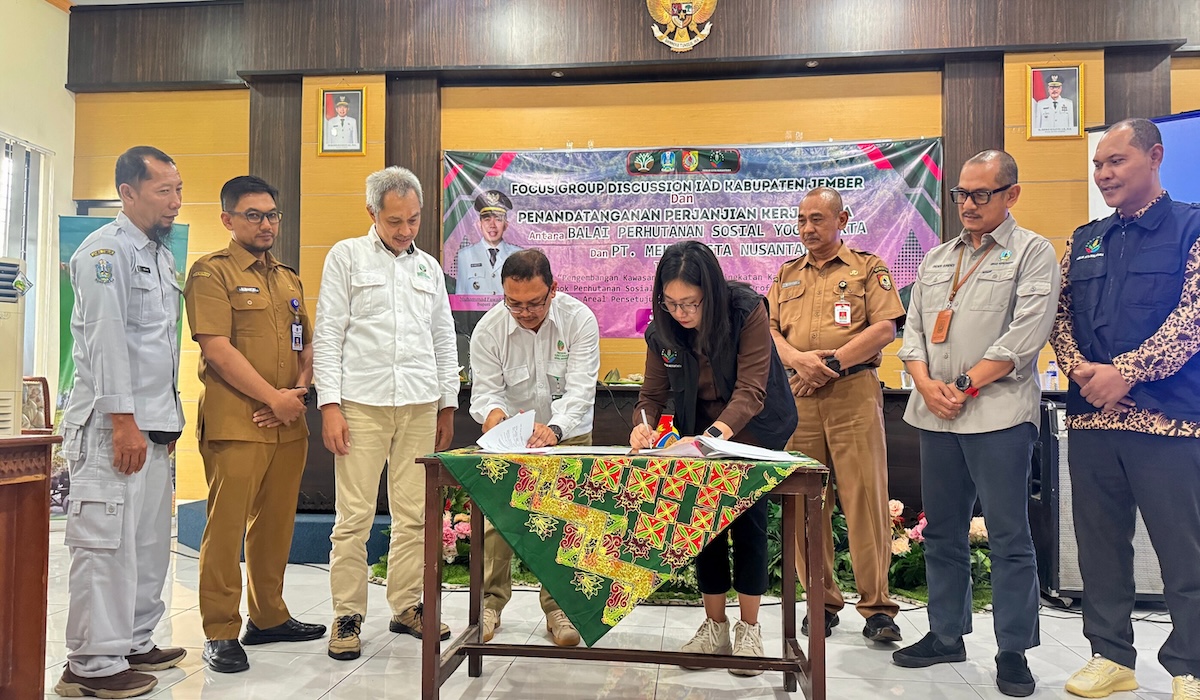
The government, through the Yogyakarta Social Forestry Agency, Directorate General of Social Forestry under the Ministry of forestry, is promoting agroforestry in East Java’s Social Forestry areas. The initiative aims to optimise productive forest zones while strengthening food security and local community economies. This development was marked by a cooperation agreement (PKs) between the Yogyakarta Social Forestry Agency and PT Mekar Asta Nusantara (MANU), encompassing forest area development and capacity building for Social forestry Groups (KPS) in East Java. Yogyakarta Social Forestry Agency Chief Wahyudi Ardhyanto stated that managing Social Forestry must align with efforts to preserve and restore forest functions. He emphasised agroforestry as a key approach to maintain productivity while sustainability. ‘Through this collaboration, we hope Social Forestry management will not only benefit communities economically but also preserve and restore forest functions. Agroforestry, combining timber and annual crops like maize, is crucial for sustainable productivity,’ said Wahyudi recently. The programme is expected to create new economic opportunities for surrounding communities. Agroforestry allows forest areas to be used for food commodity development, such as maize, while considering environmental sustainability. MANU will support agroforestry through guidance, capacity building for groups, and developing economically valuable commodities. This support aims to help KPS improve productivity and expand economic benefits from forest areas. PT Mekar Asta Nusantara’s Director Evi Febriana Suhardi said Indonesia’s food sustainability requires多方 synergy to create long-term community impact. ‘Food sustainability isn’t just about today; it’s about building an ecosystem that grows with communities long-term. Currently, we’re developing agroforestry land by planting annual crops like maize while maintaining sustainability and productivity,’ Evi stated. Evi hopes the agroforestry initiative will deliver tangible benefits, from capacity building to continuous economic value creation.Future agroforestry development based on maize and other food commodities will focus on Jember, with potential expansion to other regions. The programme aims to strengthen national food security through optimising productive forests and empowering Social Forestry communities.