
Agroforestry becomes solution for Sarmi cocoa farmers facing climate change
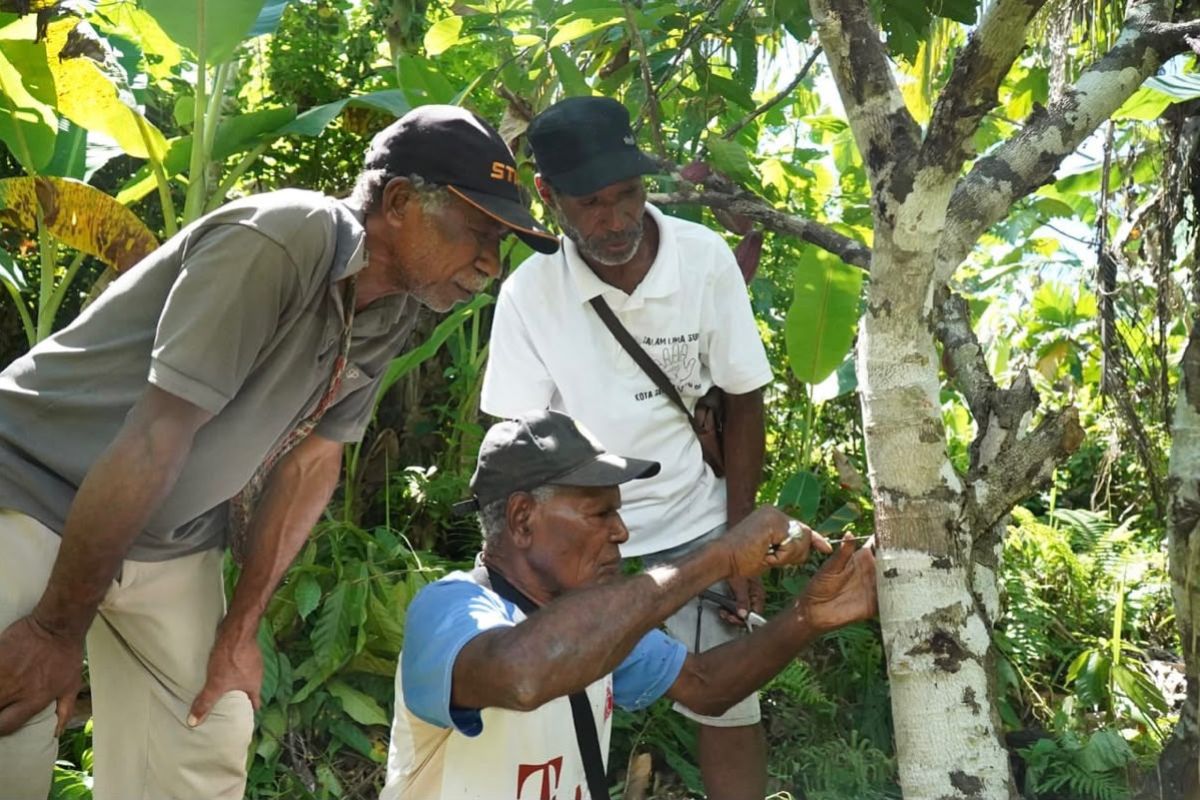
Jakarta (ANTARA) - The EcoNusa Foundation is encouraging cocoa farmers in Kampung Anus, Sarmi Regency, Papua, to adopt an agroforestry system to build resilience against the impacts of climate change, which have begun to affect the productivity of cocoa plantations in the region.
EcoNusa Program Associate Simon Bonay stated that changing seasons, floods, and abrasion are challenges faced by farmers, necessitating more climate-adaptive cultivation practices.
‘Agroforestry is a practice that is resilient for the climate, food security, and the economy of farmers,’ Simon said in a written statement received in Jakarta on Friday.
He explained that the agroforestry approach encourages farmers not only to plant cocoa as a monoculture but to combine it with other crops such as coconut, banana, areca nut, gamal, and matoa. This planting pattern is considered capable of maintaining soil moisture, increasing biodiversity, and providing alternative sources of income when cocoa prices fall.
According to EcoNusa, land management practices still used by some farmers, such as clearing all vegetation and burning crop residue when opening land, potentially degrade soil quality by disrupting the ecosystem balance and reducing the role of decomposing microorganisms.
To increase farmers’ capacity to face climate change, EcoNusa held a Climate-Smart Cocoa Cultivation Practices Training on 15-20 June 2026 in Kampung Anus, attended by around 20 cocoa farmers.
In addition, participants received training on harvest and post-harvest processes, including the fermentation of cocoa beans to improve the quality of the yield. During the activity, EcoNusa and the community built two fermentation box units to support the improvement of cocoa bean quality so that it has a higher selling value.
One of the farmers from Kampung Anus, John Firtar, said the training encouraged a change in farmers’ behaviour in managing their gardens.
‘Even before the session started or after the activity finished, farmers immediately moved to clean their respective gardens. We immediately asked if there were any superior seedlings so they could be planted in the garden right away,’ said John.
EcoNusa hopes that increasing farmers’ capacity through the implementation of climate-smart cocoa cultivation can help restore cocoa productivity in Sarmi while strengthening the economy of communities that depend on the commodity.
The experience of Kampung Anus cocoa farmers in developing agroforestry-based agriculture serves as an example of sustainable economic practices in Papua.
This approach will be part of the discussions at the Papeda Summit, which will be held in Sorong on 2-4 September 2026. The forum will encourage the exchange of ideas on sustainable development, local innovation, and natural resource management strategies aligned with the needs of the Papuan people.