
Agro-Industry Downstreaming Supports Exports
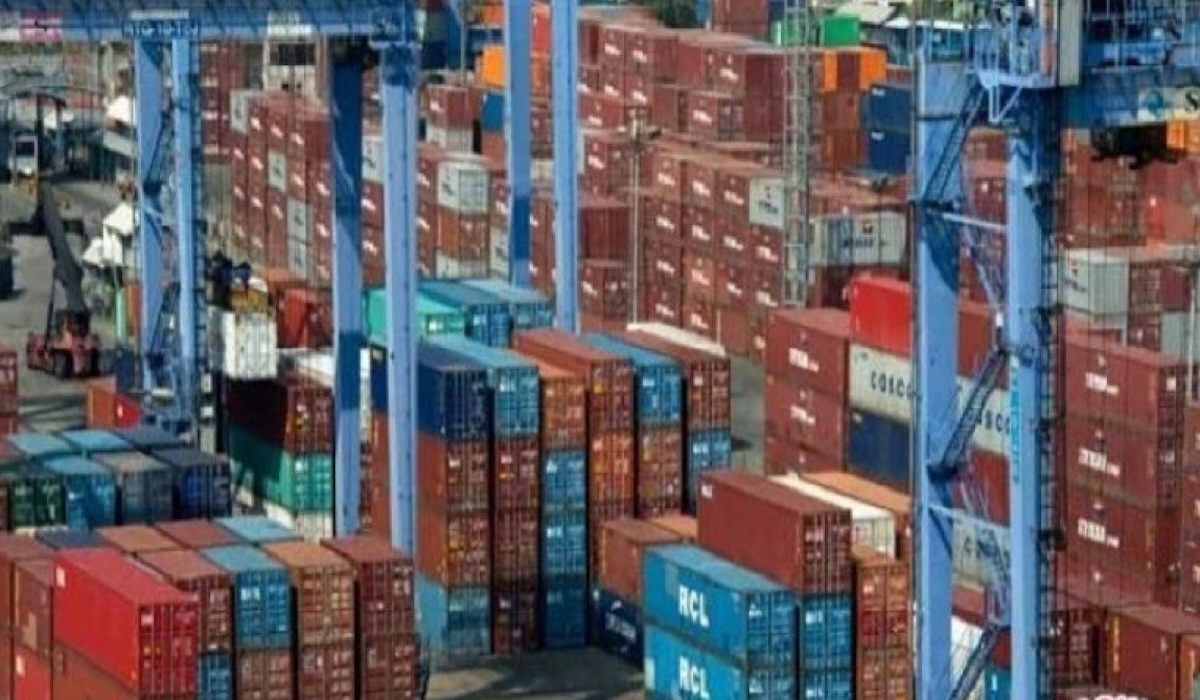
Processed and value-added products from the agro-processing industry sector are contributing to the achievement of national export targets. This is evident from the positive growth of several key commodities originating from the processing and agricultural sectors.
The Minister of Trade, Budi Santoso, stated that Indonesia’s total export value in April 2026 reached US$25.30 billion. This monthly export increase was supported by a 13.66% rise in non-oil and gas exports, despite a 9.81% decline in oil and gas exports.
“Several key non-oil and gas commodities with the highest export growth include coffee, tea, and spices, which increased by 54.44%, as well as tobacco and cigarettes at 43.49%,” he said.
Throughout the January-April 2026 period, Indonesia’s total exports reached US$92.15 billion, an increase of 5.48% compared to the same period the previous year. This achievement was driven by non-oil and gas exports, which grew by 6.28% to US$87.74 billion.
This increase was driven by growth in the processing industry sector, which rose by 9.78%. “The export growth of these commodities was driven by high global demand followed by price increases in the international market. This condition has had a positive impact on the export performance of Indonesia’s processing industry,” said Budi.
The Deputy Minister of Industry, Faisol Riza, noted that the global artisan food and beverage market is currently growing. The market value for artisan food and beverages is expected to reach US$332 billion in 202 and is projected to increase to US$627.3 billion by 2032.
This situation presents an opportunity for Indonesia, as it possesses strong resource capital. Indonesia can play a leading role in the agro-industry among the member countries of the BRICS international organisation.
Abundant biological resources are considered a foundation for developing the agro-industry and opening opportunities for cooperation with BRICS nations. Furthermore, the government is prepared to take a leading role in the global agro-industry.
“Why are we proposing this? Because Indonesia has immense strength to become an agro-industry-based nation that can assist various nations and countries in developing agro-industries similar to those in Indonesia,” said Faisol.
Several sub-sectors with prospects for growth include the tobacco, coffee, and processed cocoa industries. Indonesia is even recorded as the sixth-largest exporter of tobacco products in the world.
“In the tobacco products industry, export performance also shows a strong ability to place Indonesia as the sixth-largest exporter. One of the flagship tobacco products is premium cigars based on Deli and Besuki tobacco, which have been recognised in the global market,” he said.
Meanwhile, Indonesia is the fourth-largest producer of processed coffee, with exports reaching US$692 million, an increase of 4.36%. For processed cocoa products, Indonesia holds the fourth position, while for cocoa bean production, it ranks seventh.
The General Chairman of the Indonesian Cocoa Association (Askindo), Jeffrey Haribowo, stated that most of the national cocoa commodities are currently sent abroad in processed forms such as butter, powder, and liquor. “However, the reality is that most of the raw materials for the cocoa industry in Indonesia are still imported, so the added value in trade cannot yet be optimised,” he said.
Imports remain necessary to cover domestic supply limitations, given that the total requirement for the national cocoa industry currently reaches approximately 450,000 tonnes per year and cannot yet be fully met by local supply.
“Additionally, cocoa bean imports will still be required to provide the desired flavour for chocolate producers and/or food/beverage products containing chocolate,” he added.
He noted that the government’s plan to rejuvenate 240,000 hectares of cocoa plantations by 2027, through funding from the State Budget (APBN) and the Plantation Fund Management Agency (BPDP), deserves appreciation. This collaborative step is expected to increase productivity and national cocoa production to support the needs of the processing industry in the future.
The Deputy Head of Business Climate and Global Value Chain Studies at LPEM FEB UI, Christina Ruth Elisabeth, mentioned that strategic sectors have high forward and backward linkages. This means they have strong relationships in both the upstream and downstream sectors of the agro-industry.
Using BPS data, she observed the input-output linkages of the agro-industry. Overall, tobacco, cocoa, and coffee are already above the one-point threshold. “These indeed have high forward linkages and are strategic to develop,” she said.
She exemplified that the tobacco products industry (IHT) can absorb upstream inputs such as seeds, fertiliser, pesticides, agricultural machinery, and logistics services. Such linkages ensure that the economic impact is felt directly by society at the grassroots level.
“Downstreaming in the agricultural sector has great potential to increase the welfare of farmers upstream. Therefore, the economic growth, if we push agricultural downstreaming or agro-based raw material industries, is actually more inclusive compared to the mineral sector,” explained Christina.
Furthermore, Christina highlighted the export potential for production from the agro-downstream industry, which will grow larger in the future. By becoming a supplier of value-added raw materials, there will be an increase in domestic value-added as well.
“Through what? In my opinion, through the expansion of processed products, diversification, and market penetration in the regional market, while still contributing to domestic value-added,” she explained.