
Agrinas Palma to Involve Cooperatives in Managing Oil Palm Land
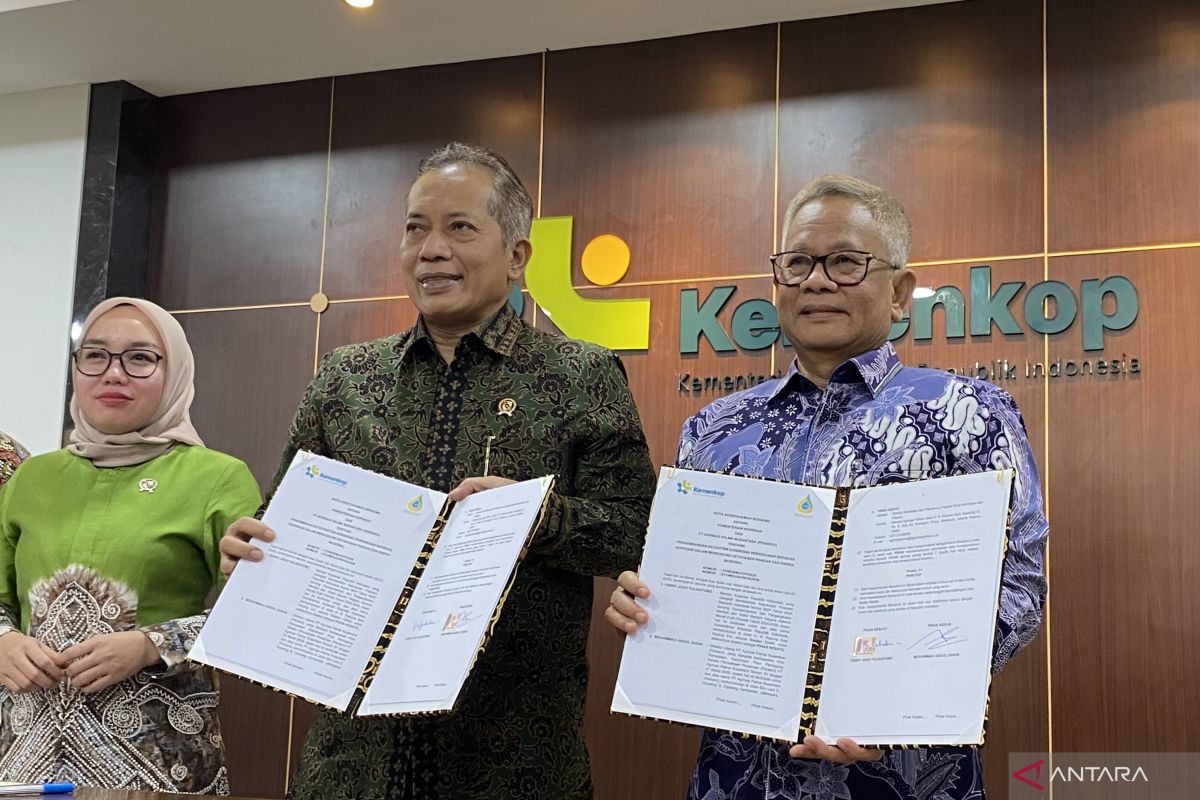
State-owned enterprise PT Agrinas Palma Nusantara (Persero) will involve cooperatives in managing oil palm land through a plasma partnership scheme as part of developing a cooperative-based plantation ecosystem. The commitment was marked by the signing of a memorandum of understanding between PT Agrinas Palma Nusantara President Director Mohammad Abdul Ghani and Minister of Cooperatives Ferry Juliantono at the Ministry of Cooperatives office in Jakarta on Thursday. Abdul Ghani said Agrinas Palma Nusantara currently manages around 850,000 hectares of oil palm land resulting from a government assignment through the Forest Area Enforcement Task Force that has been verified. This area is targeted to increase by around 400,000 hectares, reaching 1.25 million hectares. In accordance with applicable regulations, at least 20 per cent of the total plantation area must be allocated for plasma estates managed by the community. “This means there are 250,000 hectares in the long term at a minimum, of course depending on government policy we will follow, a minimum of 250,000 hectares equals 250 cooperatives,” Ghani said during a press conference after the signing. In addition, he noted that within the 850,000-hectare area currently managed by Agrinas, there are also around 120,000 hectares of smallholder oil palm plantations that do not yet have formal institutional structures. According to him, these smallholder oil palm farmers will also be gathered into cooperatives so they have a stronger business entity and can formally partner with Agrinas Palma Nusantara. “The smallholder oil palm plantations have so far not had a formal bond. We will form cooperatives. So for the plasma, cooperatives will be formed, and the smallholder oil palm farmers will also be gathered into one cooperative group,” he said. Meanwhile, Minister of Cooperatives Ferry Juliantono said this cooperation is an initial step in building a cooperative-based oil palm plantation ecosystem. He mentioned there are currently 1,135 cooperatives operating in the oil palm plantation sector, and the ministry will strengthen guidance for these cooperatives so they can become partners of Agrinas Palma Nusantara. “We will help guide the oil palm farmer cooperatives so they are managed professionally,” Ferry said. He added that cooperatives will not only be involved in managing plasma estates but will also be encouraged to enter the palm oil industry value chain, from processing fresh fruit bunches into crude palm oil to its derivative products. As an initial stage, Ferry said the Ministry of Cooperatives will soon inaugurate a cooperative-based CPO factory in Musi Banyuasin. The factory stands on an area of approximately 3,100 hectares with a production capacity of 60 tonnes per hour and will serve as a model for oil palm cooperative development in other regions. Ferry considers the involvement of cooperatives across the entire palm oil business chain important to create a fairer trading system for farmers. “So far, the plantations are private, the CPO factories are private, and even the derivative products are private. Going forward, cooperatives must be involved from the plantation, processing, to the derivative products,” he said.