
Agriculture Office: South Sumatra rice production rises 5 per cent during dry season
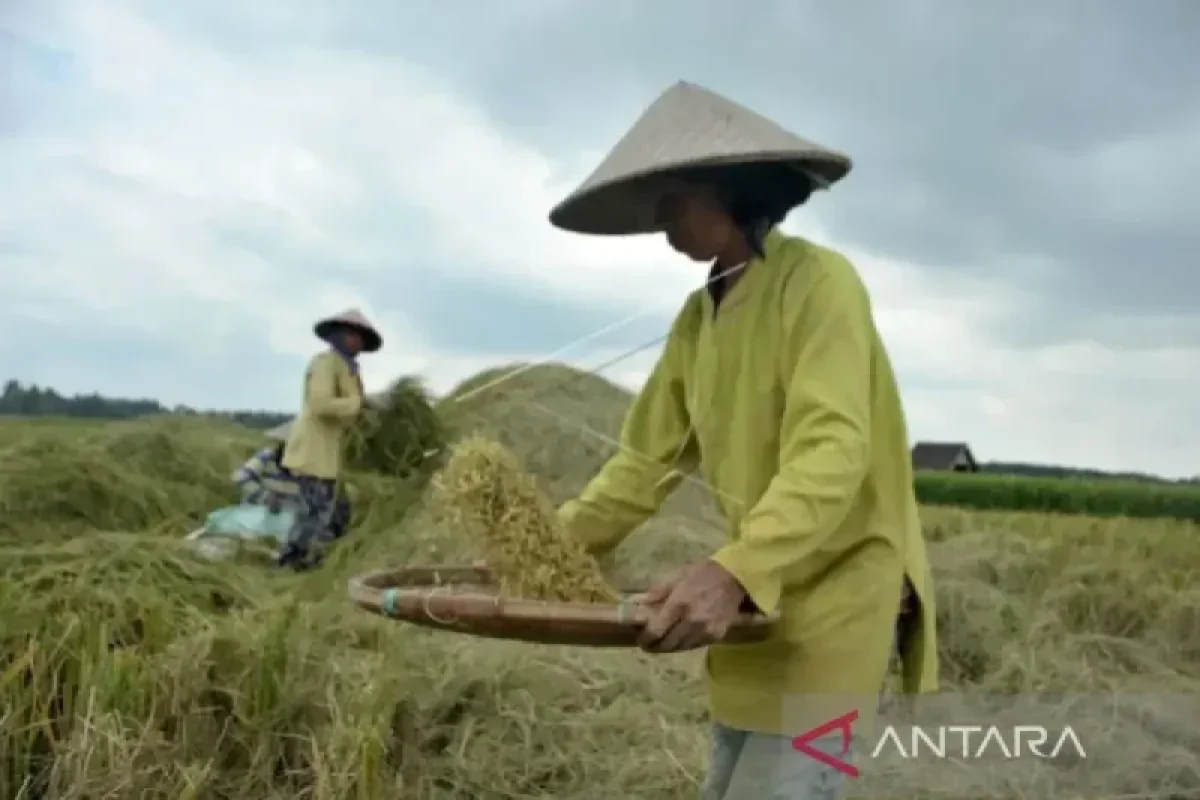
Palembang (ANTARA) - The Food Crops and Horticulture Agriculture Office of South Sumatra Province recorded that rice production in the region increased by around 5 per cent in January-August 2026 compared with the same period the previous year, despite the region facing the dry season.
The head of the South Sumatra Food Crops and Horticulture Agriculture Office, Bambang Pramono, said in Palembang on Tuesday that the increase in production was based on figures released by the Central Statistics Agency (BPS).
“Alhamdulillah, based on the BPS release, comparing January to August 2026 with January to August 2025, our production has increased by 5 per cent,” he said.
Despite the increase in production, the office remains wary of the impact of drought on rice crops that are still in the fields.
To anticipate water shortages, the office has prepared pumps as a support measure for farmland that is beginning to experience drought.
Farmers’ groups whose rice crops are short of water have been asked to report immediately so that the government can take action before the condition of the crops deteriorates further.
“The first thing we do is secure the existing plantings by preparing support pumps, so that drought does not occur,” he said.
In addition to relying on pumps, the South Sumatra Agriculture Office is also optimising swampland where water levels have receded so it can be planted during the dry season.
Around 73 per cent of South Sumatra’s territory is swampland. This condition presents potential for the agricultural sector because land previously submerged can be utilised as the water level begins to recede.
Drought anticipation measures have been in place since the beginning of the year, when the Governor of South Sumatra issued a decree on a planting movement to face the impacts of El Nino. However, the prolonged drought has also increased the potential for forest and land fires, particularly in dried-out swamp areas.
“The swamplands that carry the potential for forest and land fires must be turned into rice fields. With support from the central government through the rice field printing programme, we propose that forest and swamp fires that cause haze and spread to other land do not occur,” he said.
The South Sumatra Agriculture Office is developing floating rice technology to utilise land that remains submerged. The programme has been developed over two years in cooperation with Bank Indonesia, with one site located in the Jakabering area.
“South Sumatra’s productivity is currently around 5.8 tonnes of dry milled unhusked rice (GKG) per hectare. For floating rice, it is still around 4 to 4.2 tonnes,” he disclosed.
Nevertheless, the technology still has room for development because South Sumatra has around 115,000 hectares of mid-lebak wetland that can be used for rice cultivation when the land is still flooded.
Bambang assured that monitoring of rice plantings would continue until the end of the dry season, which is expected to last until October.
“Farmers’ groups experiencing drought with rice crops in their fields should report to us immediately so we can anticipate it. We must not let drought strike,” he said.
Source: jawawa.id (https://jawawa.id/newsitem/agriculture-office-south-sumatra-rice-production-rises-5-per-cent-during-dry-season-1789476950)
Originally published by Antara (Indonesian) (https://www.antaranews.com/berita/5742344/dinas-pertanian-produksi-padi-di-sumsel-naik-5-persen-saat-kemarau), translated from Indonesian